


One for All, and All for One! Saudi-Turkey-Pakistan Alliance
"[Joint statement announcing the signing of the] Mecca Joint Defence Agreement.""[A] shared commitment to further strengthening collective security and to promoting peace, security and stability in the region and beyond."Saudi Arabia, Turkey, Pakistan"The agreement does not represent an effort to establish a military axis or a sectarian bloc.""Nor is it linked to any nuclear ambitions or arms race. Rather it is focused on building sustainable capabilities.""[The agreement] does not constitute a threat to the security of any country in the region."Saudi Deputy Minister for Public Diplomacy Rayed Krimly"[The alignment] is clearly oriented toward Iran and meant to address Iran's new strategic approach which is geared toward dominance of the broader Gulf region.""[The fact that Turkey and Pakistan border Iran means they could exercise a different kind of leverage [on Tehran]."Umar Karim, Saudi foreign policy expert, University of Birmingham, England
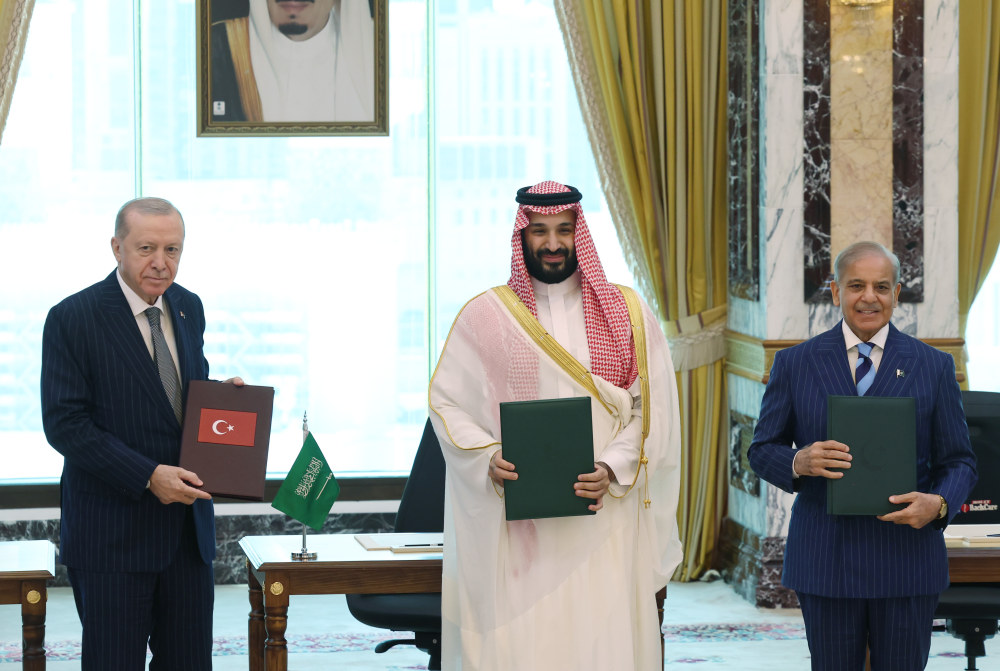 |
| Turkish President Recep Tayyip Erdoğan, Saudi Crown Prince Mohammed bin Salman and Pakistani Prime Minister Shehbaz Sharif sign a trilateral joint defense agreement Friday in Mecca, Saudi Arabia. Murat Cetinmuhurdar / Anadolu via Getty Images |
What an alliance. Saudi Arabia, the keeper of the holiest site in Islam; Mecca. Turkey, with its second-largest military within the membership of the North American Treaty Organization. And Pakistan, the sole Islamic country that possesses nuclear weapons. Saudi Arabia has been confronted by Iran over its custodianship of Mecca. Since Turkey is a member of NATO, should it be attacked by a regional antagonist like Iran, would that bring the NATO alliance into conflict to protect one of its members? As a nuclear power, Pakistan is not exactly the most stable of countries, beset by its own version of the Taliban.
What an alliance of insecure, tribal, sectarian, ancient-antipathies-alive-to-the-present we have here. A trifecta of genuine Islamist Sunni states prepared to confront the Iranian Shi'ite Axis of 'Resistance'. Mind, they do have a lot in common. Each of those Sunni nations view the presence of a Jewish state in the Middle East as a grave offence against Islam's most sacred concept, that land once consecrated to Islam can never return to the aegis of another religion. Never mind that Judean ancestral heritage long predated the appearance of Islam by millennia.
As though to emphasize that the Sunni alliance is meant for the promotion of peace and stability in the region, only a few days earlier, Pakistan’s Defense Minister Khawaja Asif, stated that his country considers that "Israel is a threat to the entire Muslim
world", calling for "a united military front" against it, just a day
after Pakistan signed the joint defense agreement with Saudi Arabia and Turkey. "In the context of Israel, all Muslim countries must unite. I have no doubt about this" said Asif.
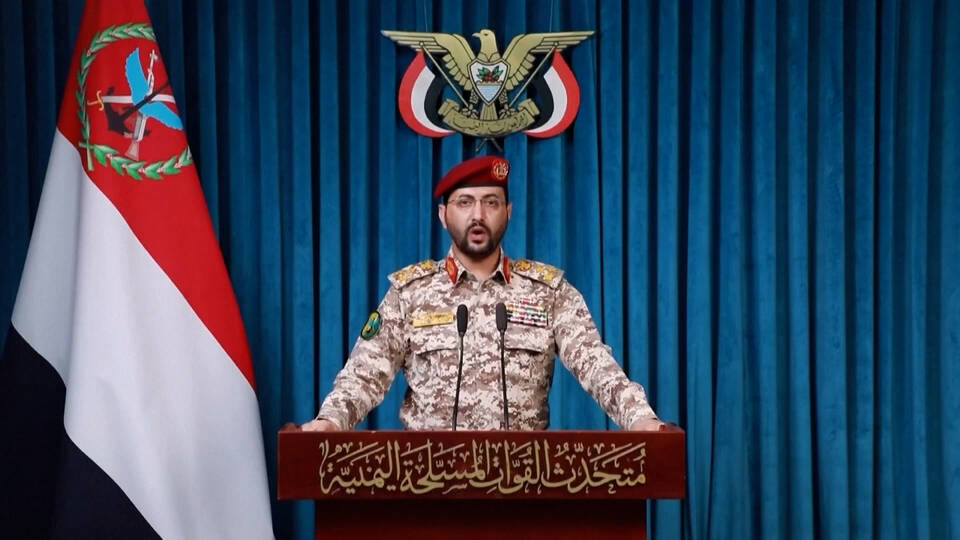 |
| Yemen’s Iran-backed Houthis attacked a Saudi Aramco refinery on Sunday, two days after Saudi Arabia forged a defense pact with Turkey and Pakistan. The alliance pledges mutual defense, which means an armed attack on any one member counts as an attack on all. But after Sunday’s attack, it was not immediately clear whether Turkey or Pakistan would respond. Democracy Now |
Not to be outdone by Pakistan, Turkey's Recep Tayyip Erdogan always has an opinion about Israel, with his opinions anything but friendly in the least, despite his sanctimonious statements in support of peace and stability in the region. Obviously peace and stability does not include Israel's presence. The champion of Hamas who celebrates the terrorist group's role in 'resistance', claims that Turkey feels threatened by Israel's attacks on Syria and Lebanon. In the former event, protecting the Syrian Druze community against deadly aggression, and in the latter, fighting back against Hezbollah terrorists sending rockets into Israeli communities in the Golan.
But for Erdogan it is Israel that is at fault for "aggression" that poses a threat to the world, and must be stopped. "If the Israeli thuggery is not stopped, the consequences will be
borne by the entire region and all of humanity", Erdogan thundered in Turkey's parliament. "Israel must be stopped; this is the duty of humanity and the
humanitarian front. History must not be allowed to repeat itself", he righteously spouted.
And as though modelled on NATO, the foreign ministry of Pakistan explained the pact would recognize that an attack on any member would be regarded as an attack on all; a rule that was "intended to strengthen collective deterrence". One, however, "not aimed at any particular country".
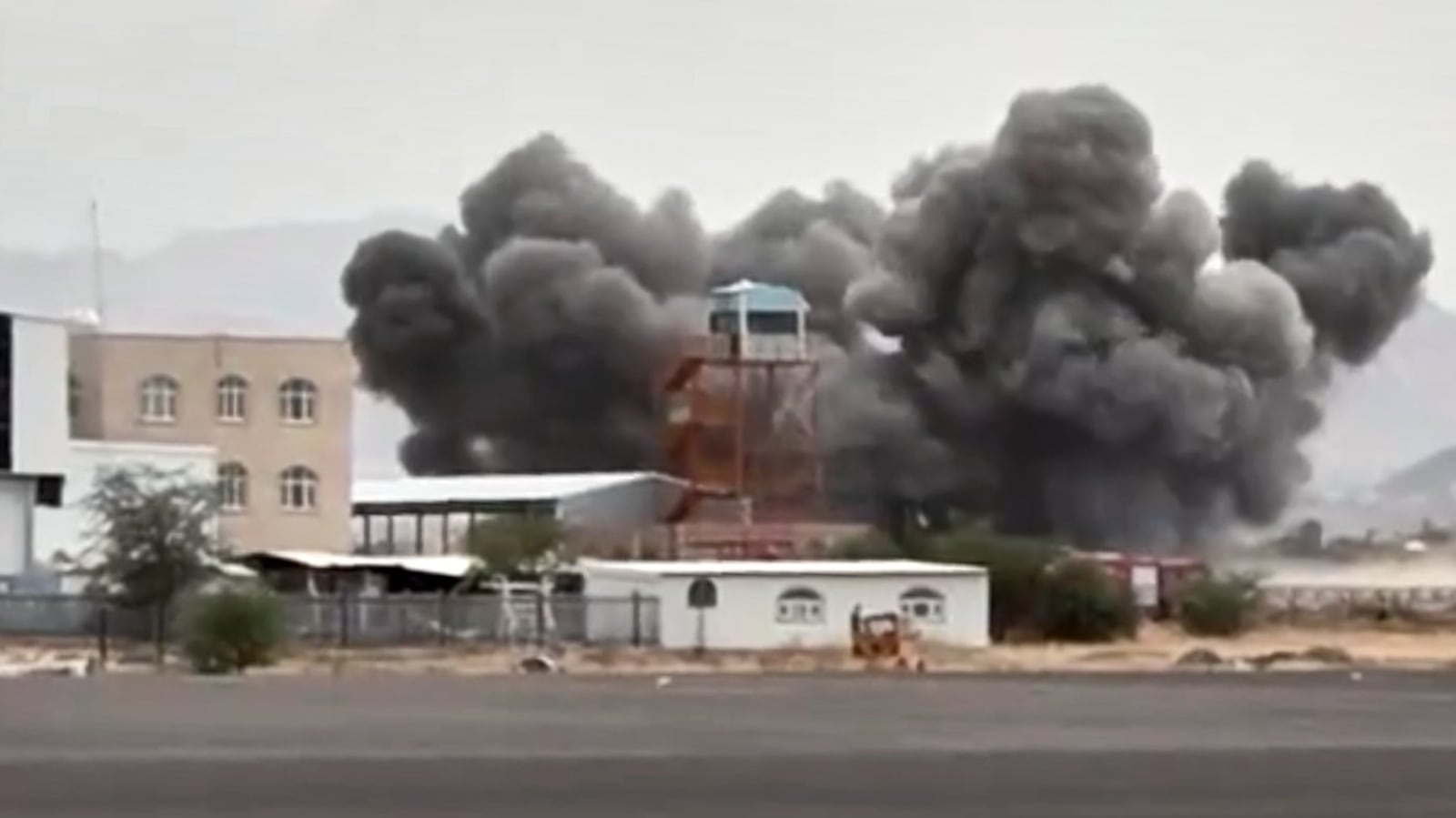 |
| This image taken from video broadcast by Al-Masirah TV, a Houthi-controlled news channel, shows an explosion at the Sanaa International Airport compound during what the Iranian-backed Houthi rebels in Yemen said were several Saudi airstrikes in Sanaa, Yemen, July 13, 2026. (Al-Masirah TV via AP) |
Saudi Arabia is being attacked anew by the Houthis in Yemen. That terrorist group is yet another Iranian proxy, doing the work for the Islamic Republic, the head of the snake that calls itself the Axis of Resistance. Yet that attack has gone unaddressed by this new coalition. Saudi Arabia has responded to the Houthi attacks by counterattacking them, and not the source of their orders, which is Iran. Iran is the sole source responsible for the agitation, fear and absolute instability wracking the region.
Yet the regional powers that have been targeted by the Islamic Republican Guard Corps that really run the country now, while seeking to protect themselves and their geographic installations from the destructive Iranian missiles and drones sent their way, fail repeatedly to go on the offensive and counter-attack, putting an end to decades of insecurity wrought by Shi'ite Iran in its deliberate goal to entirely destabilize the region and ensconce itself as the Persian uber-nation in control of the Arab Sunni Middle East.
"Saudi Arabia, Turkey and Pakistan are not trying to replace the United States. They are building the capacity to protect their interests when Washington cannot or will not do so.""[Riyadh, in particular], wants several layers of security rather than one American umbrella [following the shock of the Iran war]."Andreas Krieg, King's College London
 |
| Turkish President Tayyip Erdogan, Saudi Crown Prince Mohammed bin Salman, and Pakistan's Prime Minister Shehbaz Sharif, accompanied by their ministers of Foreign Affairs and Defence, pose after signing a joint defence agreement in Mecca, Saudi Arabia, August 7, 2026. Saudi Press Agency/Handout via REUTERS |
Labels: Defence Pact, Hamas, Hezbollah, Houthis, Islamic Republic of Iran, Israel, Pakistan Turkey Saudi Arabia, Recep Tayyip Erdogan, Regional War
posted by Pieface | 9:23 PM
|
0 comments

