Politic?

This is a blog dedicated to a personal interpretation of political news of the day. I attempt to be as knowledgeable as possible before commenting and committing my thoughts to a day's communication.

Saturday, April 15, 2023

Making An Espionage Impression


"It is fairly commonplace for individuals of his age to have access to classified information,"
"Often people at his level are supporting senior leaders, and he might have a 'need to know' if he was prepping senior leaders or putting together briefing books," 
"It does raise questions about how we are training individuals on how to handle classified information. It's exposing gaps in the system that will be looked at … but there's also a level of trust that you place in these individuals, that they are there for the right reasons."
Alexandria Seymour, associate fellow, Technology and National Security Program, Center for a New American Security think tank

"It's part of this drive to get as much information as possible for analysts to use."
"And that drive means that you are potentially opening up access to information that could be leaked."
"To have greater restrictions on information means more of a move towards a traditional type of strict need-to-know principles."
Dan Lomas, senior lecturer in intelligence and security studies, Brunel University
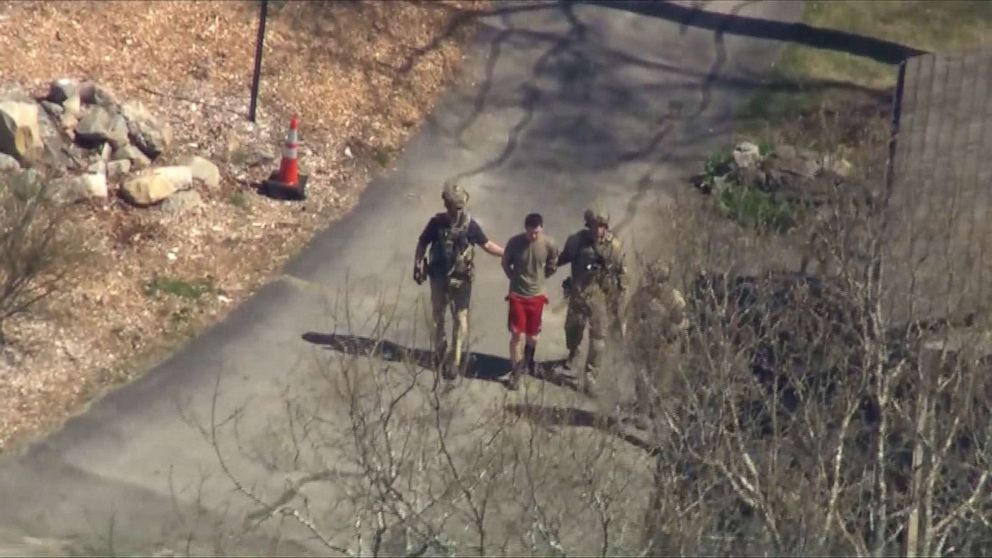
PHOTO: Suspected classified document leaker and U.S National Guardsman, Jack Teixeira, is taken into custody by FBI agents in North Dighton, Mass., April 13, 2023.
Suspected classified document leaker and U.S National Guardsman, Jack Teixeira, is taken into custody by FBI agents in North Dighton, Mass., April 13, 2023.  WCVB
"[I commend] the rapid action taken by law enforcement to investigate and respond to the recent dissemination of classified U.S. government documents."
"While we are still determining the validity of those documents, I have directed our military and intelligence community to take steps to further secure and limit distribution of sensitive information, and our national security team is closely coordinating with our partners and allies." 
U.S. President Joe Biden
This is the fourth time in recent decades that American high-security secret files have been accessed by trusted personnel with security credentials to have accessed files and documents not to be seen outside the confines of American intelligence, but which have been released to the scrutiny of the public at large at home and internationally. In most of these revelatory leaks those releasing secret files did so as a matter of personal principle in the belief that the public should be aware of what was happening behind the scenes. In this latest case, the release appears to have been effected by an emotionally immature man who sought attention and admiration from his peers.

The suspect in this latest release of secret American intelligence files, 21-year-old Jack Teixeira, comes from a military family, himself a member of the Massachusetts Air National Guards, now accused of having released to the public highly classified military documents. He was arrested and a day later appeared before a court to face charges under the Espionage Act, of having, though unauthorized, removed and retained classified and national defence information. Seemingly motivated by the irresistible urge to prove he had access to such documents.

The thoughtless act of a narcissist. Someone who wanted to be the centre of attention. And now he is up front and centre of attention. Perhaps not quite in the way he would have wished to be. He appeared to have begun his posting of document images, annoyed that other users of the clandestine social gamers' group he was part of failed to take his actions seriously in that they did not recognize the enormity of his transgression of the trust placed in him by his upgraded security assessment that enabled him access to the highly sensitive documents.

He had initially taken to typing out the documents he would post, but ended up with the feeling they weren't having the deeply admiring impression he meant them to. Which was when he reverted to photographing the documents themselves and posting those. And this went on for months; highly sensitive, secret military documents available for anyone to scrutinize in the international community. The Pentagon unaware of the situation until an investigation was undertaken and published by The New York Times.
 
Which sparked a weeklong criminal investigation into the public disclosure of government records, a breach exposing sensitive information on many issues, most notably, the war in Ukraine to the world at large. A capricious emotional pique upturning the nation's security and the trust of its international security partners. U.S. Magistrate Judge David Hennesy ordered Teixeira  to be held until a following hearing, when he appeared in court Friday for a brief proceeding. He is innocent until proven guilty, and is as yet only a 'suspect', but his future does not look bright.

A Defence Department official advised that as an information technology specialist responsible for military communications networks, the Guardsman now in prison would have held a high level of security clearance. The Pentagon is set to conduct a review of its "intelligence access, accountability and control procedures" with a view to preventing a similar such leak from re-occurring. It is believed by investigators that Teixeira led a private online chat group on the Discord channel platform. 

This is a social media platform people who play online games tend to gravitate to. The FBI took possession of billing records from Discord which helped investigators to identify Teixeira as a suspect. An FBI affidavit disclosed that an indioidual familiar with Teixerra's online posts informed investigators of a username linked to Teixeira posting classified information beginning in December. Teixera took home with him documents to photograph and post once he "had become concerned that he may be discovered making the transcriptions of text in the workplace".

His actions remained undetected until April 6, when the Pentagon was alerted by the first published story of the documents breach. In their investigation it was discovered that Teixeira had searched online for the word "leak" in an effort to find what his leaked documents were leading to. Which gave the FBI another clue regarding his involvement. The group of gamers linked to Teixeira held certain issues in common regard: gaming enthusiasts, devout Christians, gun-lovers, racism and antisemitism.
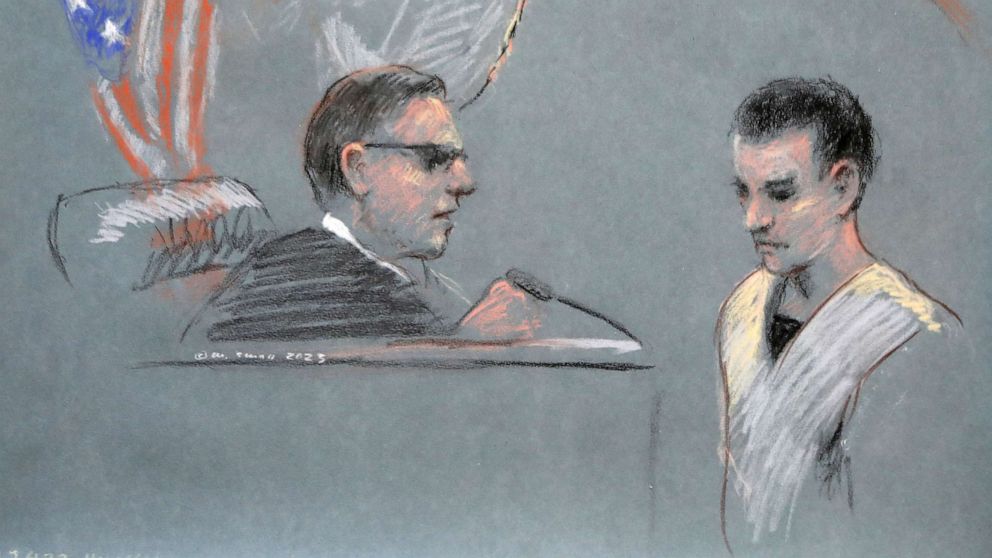
PHOTO: Jack Douglas Teixeira, a U.S. Air Force National Guard airman accused of leaking highly classified military intelligence records online, makes his initial appearance before a federal judge in Boston, on April 14, 2023, in a courtroom sketch.
Jack Douglas Teixeira, a U.S. Air Force National Guard airman accused of leaking highly classified military intelligence records online, makes his initial appearance before a federal judge in Boston, on April 14, 2023, in a courtroom sketch.
Margaret Small/Reuters


Labels: , , , , ,

Saturday, August 13, 2022

A Heroine for Our Times

"[Russian President Vladimir] Putin is a killer his soldiers are fascists, 352 children have been killed [in Ukraine]."
"How many more children should die for you to stop?"
"May the murdered kids haunt your dreams tonight." 
"I do not plan to stop, I am not afraid despite the constant intimidation from the authorities."
"The next 10 generations won't be able to clean themselves from the shame of this fratricidal war."
"I'm ashamed that I allowed myself to tell lies from the television screen. Ashamed that I allowed Russians to be turned into zombies.We just silently watched this inhumane regime." 
"The [Mach] interrogation lasted for more than 14 hours, I wasn't allowed to get in touch with my family or friends, I was denied access to a lawyer."
"It was my anti-war decision. I made this decision by myself because I don't like Russia starting this invasion. It was really terrible." 
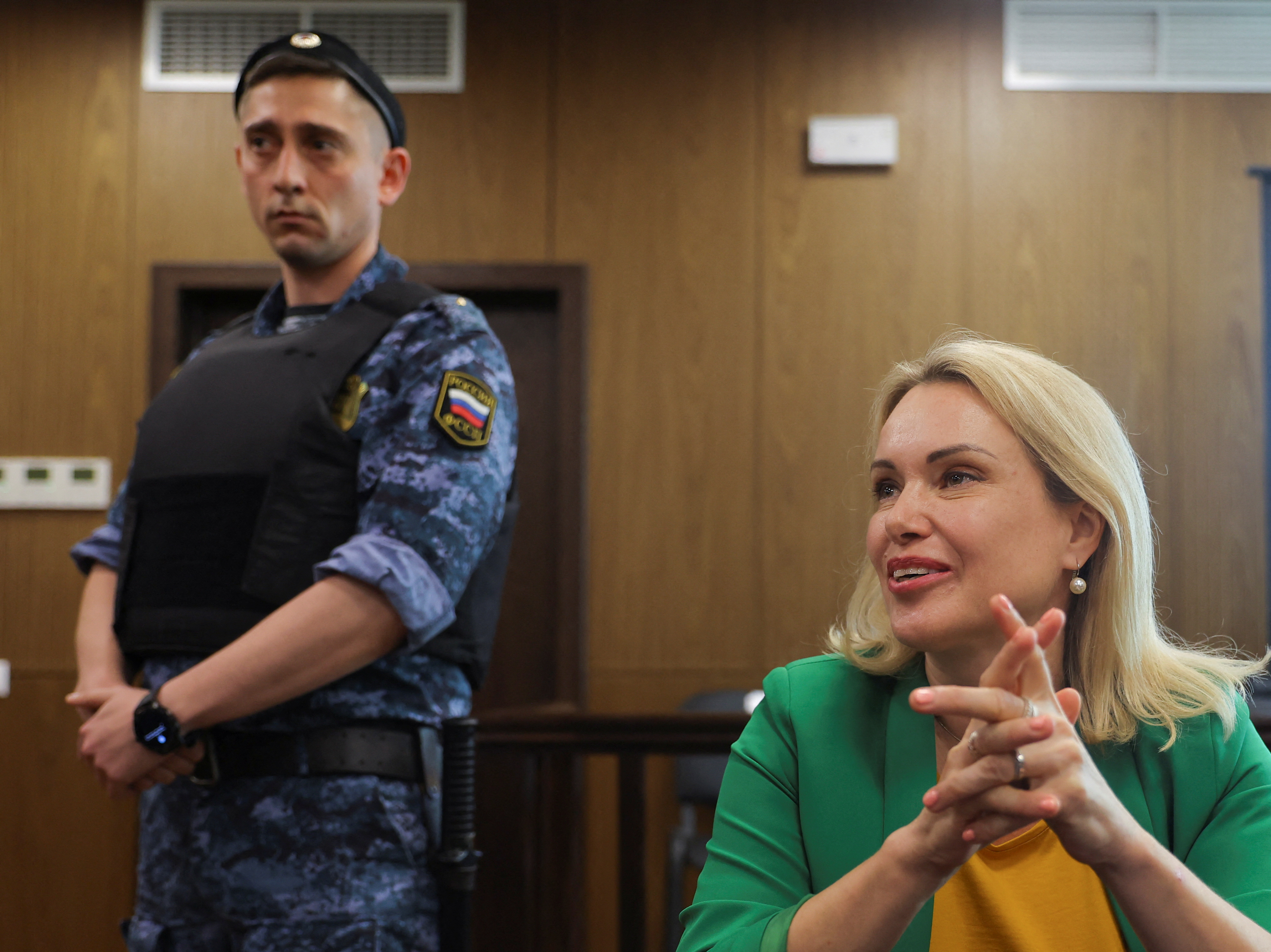
Marina Ovsyannikova, former state Russian TV journalist
Marina Ovsyannikova
Marina Ovsyannikova in a Moscow court room. AP Photo/Alexander Zemlianichenko
She is defiant and courageous.  She will not be intimidated, she speaks what she believes and feels. She is a Russian hero, a formerly admired state journalist whose presence on television was familiar to all Russians. When the Russian 'special military operation' was still in its infancy, not yet a month after the February 24 invasion, she staged an on-air protest against the war campaign that Moscow forced on Ukraine. Following her first March protest she was briefly placed under arrest and fined. 
 
 
She then left Russia given a short contract with the German newspaper Die Welt. When she returned to Russia it was with full knowledge that she could be re-arrested. Her return was occasioned in early July, drawn to fight for access to her two children following her ex-husband having filed a lawsuit for sole custody. And nor was she determined to keep a low profile even at that. This Russian daughter of a Ukrainian father continued to stage public protests against Russia's conflict in Ukraine.

On August 10 police raided her home to arrest her. A day later, she was charged with spreading fake news about the military, an offense that carries up to ten years in prison under a special Russian law enacted in the wake of the invasion. Any criticism, even referencing the 'special military operation' as a conflict, or the use of the word 'war' could have a protester arrested and face years of incarceration. Even while Ms.Ovsyannikova sat in the glassed-in courtroom cage, she lifted a hand-lettered sign reading: "May the murdered kids haunt your dreams tonight."
 
A woman stands in a pile of rubble. The roof of a house lies at an angle above her.
A resident stands next to a house destroyed by a Russian military strike in Marhanets, a town in Ukraine's Dnipropetrovsk region on Aug. 10. (Press service of the National Police of Ukraine/Reuters)

She was ordered by the court to be placed under house arrest. To await a trial on charges of spreading false information about the Russian armed forces. Involved last month in a street protest where she held up a banner condemning Vladimir Putin as a killer, if convicted she could be penalized by ten years in prison. That being the case, the woman who is prepared to fight for the right to have access to her children may not see them again. In the mid-July protest there were two dolls lying at her feet, covered in red ink to simulate blood.

Her trial is set for October 9. A wide crackdown on anti-war protests across Russia to stamp out dissent has victimized many loyal Russians who just happen not to be loyal to Vladimir Putin. His violent incursion in Ukraine has appalled his critics, detractors and opponents. OVD-info, an independent Russian human rights watchdog, estimates that over 15,000 detentions have taken place since March, with up to 178 people facing court trials who could end up with lengthy prison sentences.
 
Former Russian state TV employee Marina Ovsyannikova attends a court hearing in Moscow
Former Russian state TV employee Marina Ovsyannikova  Reuters


Labels: , , , ,

Wednesday, January 27, 2021

And Over To You, Comrade Capitalist Putin ...

"The Kremlin's mistake was to underestimate Navalny's level of support," 
:[When people saw Navalny's arrest on live TV on his return to Russia on Jan. 17, as well as the online release last week of a documentary about President Putin's alleged corruption], it provided a strong emotional impulse to take to the street."
Russian political observer Andrei Kolesnikov, fellow, Moscow's Carnegie Center  
A still image taken from video footage shows law enforcement officers speaking with Russian opposition politician Alexei Navalny before leading him away at Sheremetyevo airport in Moscow on Jan. 17. (Reuters)
"I am sick of this government of thieves."
"This is a police state that gives nothing to the people. [Putin] builds palaces for himself."
"What is this?" 
68-year-old pensioner Galina Zolina, Moscow
 
"[The protests are] not a knockout blow to the state. We shouldn't start moving into hyperbole, that this is the beginning of the end of Putinism."
"[It's a] coalition of the fed-up. People have all kinds of reasons to feel unhappy with the way things are going and [Navalny] kind of becomes the catalyst."
"It's hard to maintain the momentum [of the protests] week after week."
"One way or another, the state wants to slowly de-legitimize the protests and make them less appealing, and by outlasting them, make opposition look increasingly pointless." 
Mark Galeotti, London-based Russia analyst, host, podcast In Moscow's Shadows
Russian President Vladimir Putin does a video conference call with university students at a state residence in Zavidovo, Russia, on Monday. (Sputnik/Mikhail Klimentyev/Kremlin via Reuters)
"Hypocrites continue to inflate the fake Navalny case to interfere into internal affairs of our country."
"This is a professionally prepared provocation, encouraged by embassies of Western countries."
Russian embassy, U.K., Twitter
 
"That's what terrorists do. They put women and children in front of themselves [accusing demonstrators of placing children at the fore of the protests]." 
"Nothing that is listed there [Black Sea palatial palace] as my property belongs to me or my close relatives, and never did."
Russian President Vladimir Putin 
Law enforcement officers stand in front of participants during a rally in support of Navalny in St. Petersburg on Saturday. (REUTERS)

According to Russian President Vladimir Putin speaking to university students through a video conference addressing the unrest of unprecedented numbers of protesters in Russian cities, the mass anti-Kremlin protest organizers are "terrorists", and there is no need to investigate -- as Alexei Navalny, returned from Germany to Russia demands -- the president's personal wealth. An issue that is the stuff of urban legends, a conspiracy theory launched by those opposed to Mr. Putin's continued rule, the best president that Russia has ever had and as far as Mr. Putin is concerned, to be the longest-governing.

The issue of a Black Sea palace supposedly owned by Vladimir Putin is nothing but slander, according to the man himself, one that first emerged years ago, and now reborn to slur his reputation. Reputed to have cost a billion dollars and described as "Putin's Palace", the deed to the immense mansion may or may not be in Mr. Putin's strong-box possession, but state funds were apparently diverted in a scheme by his loyal allies to invest him with a palace worthy of his stature, held in trust perhaps for his eventual public ownership.

In 2010, Kolesnikov claimed that a luxurious estate near the Black Sea was for Putin. A Russian website published pictures, including the one above, which it said were of the mansion. The Kremlin denied Putin had anything to do with the building. Reuters is unable to independently verify the authenticity, content, location, source or date of this photograph.
 
Tens of thousands of Russian demonstrators took to the streets on Saturday protesting against the arrest of Alexei Navalny who was determined to return to Russia after  his convalescence in Berlin, recovering from an attempted assassination with the use of the Russian military chemical nerve-agent, Novichok which failed to fatally poison its target. The second time the poison was used for a similar purpose; the first occasion in London targeting another Russian dissident who also recovered as did his daughter, poisoned by default.

For the most part, state-ordered assassinations -- of journalist-critics, political critics, oligarch critics, and any high-profile pests who feel it their right to criticize the Kremlin and Russia's president can be certain that one way or another an attempt will be made on silencing them -- are proven to be successful, whether by drive-by shootings, sharpshooters, poisoning or mysterious disappearances. This was the ultimate challenge by Navalny, to return to Russia and dare the Kremlin/Putin to take additional action.

GRAND DESIGNS: One of the pictures described by a Russian website as showing the mansion dubbed “Putin’s palace.” The Kremlin has denied Putin has anything to do with the building. Reuters
 
Which they speedily did, and Putin's current most-prominent and popular figure of opposition complicating his life now faces trumped-up charges that in a Russian court, may earn him ten years in prison from his current pretrial detention. New mass demonstrations in protest of Mr. Navalny's arrest are scheduled for the coming weekend, similar to Saturday's protest where over 3,000 people were detained. There were relatively restrained clashes by protesters against baton-wielding police with no serious injuries reported.
 
Mr. Putin had in his address to the students on Monday, referred to authorities' claims the opposition had persuaded minors to become part of the rallies, remarking that young people had no place in such situations, nor should they be manipulated for the opposition's political ends. As a master manipulator speaking to young people, the president obviously knows whereof he speaks. An investigation into the claims failed to turn up evidence of the presence of young people in the chanting, determined protest crowd.
 
Mr. Navalny and his political group opposing ongoing rule by Mr. Putin, brought even wider global and internal focus to the situation when they released a video just hours after Mr. Navalny's arrest, pointedly accusing the president of amassing wealth for himself, draining the country's treasury. The immense, sprawling Black Sea mansion was highlighted as an opulent manifestation of the grandiloquent role Mr. Putin sees for himself as a modern-day Czar of the Russian Federation.  
 
European Union foreign policy chief Josep Borrell is set to visit Moscow in the coming month to impress on the Kremlin that by arresting and imprisoning the opposition leader, Russia resembles nothing less than a dictatorship, and to urge the Russian authorities to reconsider this action in light of the harm they do themselves on the international stage. An EU meeting of European foreign ministers had reached the conclusion that a friendly visit and friendly advice to Russia might turn the situation around.
"The council considered it completely unacceptable and condemned mass detentions and police brutality over the weekend."
"We call on Russia for the release of Mr. Navalny."
Joseph Borrell, EU Foreign Policy Chief 
Riot police drag away a protester in Moscow on Saturday. More than 1,400 people were arrested in the capital alone, with 3,700 arrests reported nationwide. (Corinne Seminoff/CBC)
 

Labels: , , , ,

Tuesday, December 29, 2020

Falling Afoul of the Kingdom of Saudi Arabia

"The condition of her coming out [of prison] is something I'm worried about."
"It's completely hypocritical. [bin Salman's] rationale has always been that he wants to be seen as the giver of social reforms and he doesn't want other people to be able to take credit or steal the limelight."
"Canada is not a big player when it comes to the Saudi economic trade relationship. The experience of 2018 taught us that our allies didn't have our back."
Bessma Momani, senior fellow, Centre for International Governance Innovation, political scientist, University of Waterloo

"Ms. [Hathloul] has courageously and selflessly dedicated her life to advocating for human rights and campaigning to advance women's rights in her home country of Saudi Arabia."
"She is an exemplar of UBC's commitment to  free speech, equality, empowerment and education and global citizenship and an unwavering champion of advancing a just and equitable society."
Santa Ono, president, University of British Columbia

"We understand that early release is possible and advocate for it."
"True to our democratic values and principles, Canada will always stand with human rights activists and defenders around the world."
Spokesperson, Ministry of Foreign Affairs, Canada
 
"My sister is not a terrorist, she is an activist."
"To be sentenced for her activism for the very reforms that MbS [Saudi Crown Prince Mohammed bin Salman] and the Saudi Kingdom so proudly tout is the ultimate hypocrisy."
Lina Hathloul
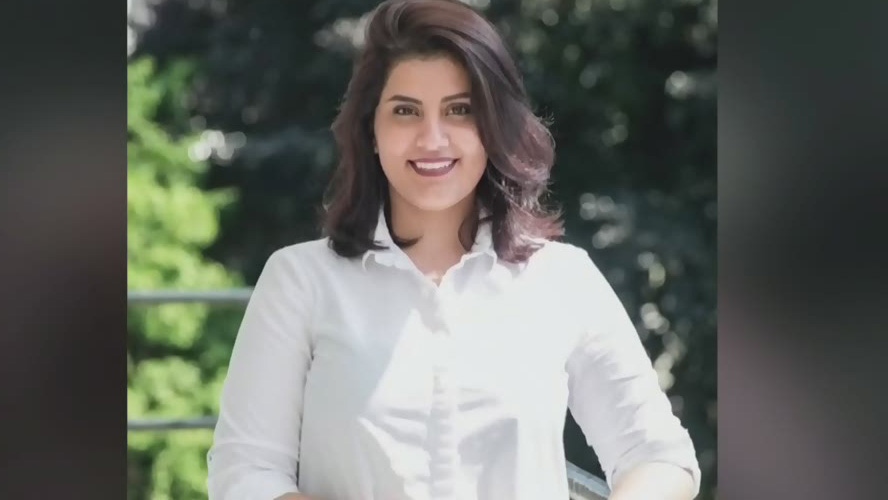
  • Loujain al-Hathloul
    Loujain al-Hathloul, a Saudi women's rights activist has been sentenced to prison.
 
"Loujain al-Hathloul has already spent 900 days in detention, during which she endured torture, sexual harassment and other forms of ill-treatment, was held in solitary confinement and denied access to her family."
Heba Morayef, regional director, Middle East and North Africa, Amnesty International
When eventually 31-year-old Iranian social and equality-rights activist is released from the Saudi jail where she was imprisoned in 2018, accused and charged with "conspiring against the kingdom", and spying, she will tell all, whether, as charged, she was subjected to waterboarding, flogging and sexual assault, as Amnesty International claims. Not that there is much doubt that this hasn't happened to the young woman, a graduate of the University of British Columbia. She was arrested along with several other women activists on charges of conspiracy and spying.

When that news reached Canada, the then-minister of foreign affairs took to Twitter relaying a message of Canada's disapproval, demanding that the women be released forthwith. A crude gambit at the very least, an off-the-cuff comment of outrage, completely at variance with normal avenues of government-to-government diplomacy and discreet, non-public overtures from one government to another. A method by which matters can be settled and outcomes satisfactorily obtained.

Predictably Saudi Arabia lashed back at this sloppy criticism of an internal matter, irrespective of how outrageous the issue was and in the end, because Canada officially erred, relations between it and Saudi Arabia declined immediately, leaving Canada with no leverage at all to make diplomatic overtures on behalf of Ms.al-Hathloul's release. She has now been sentenced to six years in prison, the very place where she has suffered intolerable abuse of her human rights and dignity as a woman.

The Kingdom's Specialized Criminal Court sentenced the young woman to five years and eight months' incarceration. With credit for time served and a suspension of the final two years on appeal plus 10 months of the sentence it is possible she might be given a conditional release in March of 2021. At the time that Canada's minister of foreign affairs Chrystia Freeland tweeted her personal opinion of arresting women activists and human rights supporters, the kingdom reacted by expelling Canada's ambassador, suspending trade and investment and threatening to withdraw all Saudi nationals studying in Canada. 
 
And nothing whatever was accomplished to gain Ms. al-Hathloul's freedom. What's more, in recognition of Canada's bungling lapse in diplomacy none of its allies saw fit to express their support at the fix Canada found itself in, being punished for its very public interference in another country's affairs. Allies from the United States to France and Britain and Germany said nothing in Canada's defence. 
 
Canada had strayed so far out of the confines of diplomatic relations there was no defence that could be offered; it had effectively defused its potential effectiveness in discreetly discussing the matter, government-to-government, disqualifying itself by default from influencing the outcome of the young woman's untenable situation.

Loujain al-Hathloul graduated in 2014 from UBC with a Bachelor of Arts degree, rising to prominence when she publicly began campaigning for the right of women in Saudi Arabia to be autonomous-acting human beings, including the right to drive a car. When the sentence was announced, according to Ms.Hathloul's sister Lina, she broke down crying and intends to appeal. Both rights groups and her family speak of abuse including electric shocks, waterboarding flogging and sexual assault, all of which Saudi authorities deny.

Saudi newspapers reported that according to the judge Ms.Hathloul confessed to the crimes with no coercion taking place. On the other hand, last year Ms.Hathloul had refused to rescind her allegations of torture in exchange for an early release, according to her family, an allegation that a Saudi judge dismissed last week.
  • Loujain al-Hathloul
    This Nov. 30, 2014 image made from video released by Loujain al-Hathloul, shows her driving towards the United Arab Emirates - Saudi Arabia border before her arrest on Dec. 1, 2014, in Saudi Arabia. (AP Photo/Loujain al-Hathloul, File)

Labels: , , , , ,

Saturday, September 19, 2020

Rwanda's Canadian Connection : Arrest of Paul Rusesabagina

"Trudeau's very close to the guy. He's been cozying up to [Rwandan President Paul] Kagame for a while. They are friends."
"The weight of Canada on the international scene, really, it's not much, but Trudeau could at least speak up. I think it's important to try to maintain some normal legal world order and not allow international abductions like this."
"Without that [the intervention of the Office of the High Commissioner for Human Rights in Geneva, spurred by an appeal of an intermediate country like Canada], his chances [Paul Rusesabagina] of a fair trial are nil."
Philippe Larochelle, human rights lawyer, Montreal
Paul Rusesabagina. President Bush, 2005. LAWRENCE JACKSON/AP/SIPA
"So there's a slew of charges, but most significant is the Rwandan government's assertion that he is trying to topple President Kagame. And in general, any opposition to President Kagame has almost been like a death sentence for most politicians or opposition candidates. Many of them have ended up dead, in prison, sometimes beheaded."
"Mr. Rusesabagina is not the first opposition activist to Kagame to be arrested and brought to trial in Rwanda. You had Victoire Ingabire in 2010. And even before her trial began, the local press smeared her for all sorts of misogynistic accusations. She was described as an enemy of the state, much as Mr. Rusesabagina is facing now."
"The fact that Mr. Rusesabagina is an ethnic Hutu means that he's very likely politically popular in Rwanda. The fact that he saved many Tutsi lives during the genocide means that he is also favored by many Tutsis. And the fact that he has international support as the heroic figure in the movie "Hotel Rwanda" means that he is a credible threat to Mr. Kagame. And so that's partly why Mr. Kagame sees it as so important to arrest him and to eliminate - to neutralize the political threat."
Journalist Anjan Sundaram
Paul Rusesabagina, portrayed as a hero in a Hollywood film about Rwanda’s 1994 genocide, is paraded in front of the media in handcuffs at the Rwanda Investigation Bureau in the capital Kigali © Clement Uwiringiyimana/Reuters

A Hutu -- at a time when the Hutu-led government in Rwanda planned a mass atrocity under the very noses of the United Nations peacekeeping mission, calling upon the Hutu population to wreak bloodshed upon Rwanda's Tutsis -- Paul Rusesabagina has been credited with saving a thousand Tutsis from genocidal extermination, shielding them and giving them haven in his Hotel des Millies Collines in Kigali. And nor was he the only Hutu who attempted to save their Tutsi neighbours, while the bulk of the Hutsi population engaged in mass butchery. In the event, those Hutus who exposed themselves also became victims of the mass murder spree.
 
The 2004 Hollywood film Hotel Rwanda celebrated Mr. Rusesabagina's inspired humanity in April 1994 when in a frenzy of demented brutality 800,000 people lost their lives. He has citizenship status in Belgium and is also a legal resident of the United States, while becoming an influential figure in the Mouvement Rwandais pour le Changement Democratique, an opposition coalition operating for the most part in exile. The National Liberation Front, one of the constituents of the coalition has involved itself and its members in armed violence that often impacts on Rwandan civilians. But this is not the kind of action supported by Mr. Rusesabagina. 

The dictatorship government of Paul Kagame is only too happy to portray this bothersome opposition figure who has great popularity both among the Hutu and the Tutsi population in Rwanda, as a violent terrorist. And since the government controls all the news sources, their versions of events is all that the reading public is exposed to. No effort was made by the government authorities to use legal means to persuade Mr. Rusesabagina to return to Rwanda in the face of charges levelled against him. He had flown from Chicago to Dubai at the end of August, with an early September return ticket.
 
Refugees who fled the ethnic bloodbath in neighboring Rwanda carry water containers back to their huts at the Benaco refugee camp in Tanzania, near the border with Rwanda on May 17, 1994. With a population surpassing 300,000, aid agencies are having difficulty feeding, treating and sheltering them. Karsten Thielker, AP
 
His return was planned for the U.S., not Rwanda, but mere hours after landing in Dubai he was in the hands of Rwandan agents, flying to Kigali aboard a Bombardier Challenger jet, two hours after  he had made contact with his family to assure them that he had arrived in Dubai. Paul Kagame rules with an iron hand and has done so for the past two decades manipulating election results, taking care to imprison any candidates with the misbegoten idea of opposing him in presidential elections. Dissidents are routinely kidnapped and assassinated, as are opposition leaders.

Yet, known as the liberator of Rwanda, the man who put a stop to the genocide, the former Ugandan army officer whose Patriotic Front took over the country, has a friendship with Canada's Liberal-progressive prime minister. Justin Trudeau is steeped in the green movement and Paul Kagame speaks with conviction about climate change, is a proponent of international trade and calls himself a 'feminist', all issues that Prime Minister Trudeau is deeply invested in. Theirs is a mutual friendship based on presumably shared commitments. And Mr. Trudeau's seeming infatuation with dictators.

In 2010 the feminist president of Rwanda charged a female candidate running against him for president with trumped up terrorism offences, had her barred from running for public office and she was sentenced eventually to a 15-year jail term. After eight years in a prison cell, Victoire Ingabire was finally released and of course Kagame won that year's election with 93 percent of the vote. Another female candidate, Diane Rwigara during the 2017 presidential election was arrested on charges of terrorism, incitement to insurrection, forgery and tax evasion, along with her mother and a number of family members.

Quite obviously, announcing oneself as a candidate opposing the current president's ongoing dedication to serving Rwandans in perpetuity, is a foolhardy decision with a guaranteed outcome. But such is some hardy souls' dedication to the concept of justice and democracy that they nonetheless aspire to attain both for a country they love. Prime Minister Trudeau welcomed his Rwandan counterpart to Canada, thanking him for "a very good discussion on fighting plastic pollution and a variety of issues affecting our two countries", at the very time that Ms.Rwigara was in prison, her family's business sold to profit the government.

Rusesabagina, Hotel Rwanda actor Don Cheadle. Michael Kappeler/DDP/AFP/Getty Images
But Paul Kagame won 99 percent of the vote when he was once again re-elected to the presidency in 2017. "Canada congratulates Paul Kagame on his inauguration today as President of Rwanda", Canada's High Commission in Kigali stated. During that same visit to Canada, General James Kabarebe was hosted by Canada's Defence Minister Harjit Sajjan. A UN Security Council investigation identified General Kabarebe as the leader of a Zairean terrorist group held responsible for mass atrocities, mass rapes and "systematic, methodical and premeditated" attacks on Hutu refugees in the jungles of the Democratic Republic of Congo where they had fled when the savage Rwandan massacre of Tutsis ended.
 

Labels: , , , ,

() Follow @rheytah Tweet