
Politic?

This is a blog dedicated to a personal interpretation of political news of the day. I attempt to be as knowledgeable as possible before commenting and committing my thoughts to a day's communication.

Friday, May 18, 2018

The Global Noble Cause of Climate Remediation

"Paris [the Paris climate agreement] is a climate fairy tale. It has always been more about money and politics than the environment. Last year, U.S. President Donald Trump wisely announced that America would withdraw. For developed nations who still believe Paris is a viable plan, the prospect of a massive transfer of wealth under the guise of carbon reductions must seem less attractive without the U.S. to help foot the bill. Still, other world leaders seem irrationally committed to pursuing the real objective of Paris: wealth redistribution, virtue signalling and globalist government."
"At the core of Paris, signed in 2015, and its 1992 umbrella document, the United Nations Framework Convention on Climate Change, is the principle of 'common but differentiated responsibilities and respective capabilities'. The term means that developed countries are expected to go first, do more, and pay more. "To each according to his needs, from each according to his abilities", as [Karl] Marx wrote in a similar vein."
Bruce Pardy, Professor of Law, Queen's University
One target for limiting global warming — "1.5 DEGREES" — is projected on the Eiffel Tower as part of the United Nations Climate Change Conference in Paris. Francois Mori/AP

The United Nations is a great leveller; in its hallowed halls where stride world-changers mediating between wealthy, advanced nations of the world and poverty-stricken, advancing nations of the world much discussion takes place. The former were the colonialist nations whose aggression and ambitions as advanced nations led them to vie with one another to wrack up the greatest number of dependent, backward countries whose natural resources they could plunder in the spirit of wealth-entitlement and the latter were helpless to defend themselves against those depredations.

Britain, France, Spain, Holland, Belgium and other seafaring nations sent their ships and navies off in quest of enlarging their spheres of influence and mercantile trade. Followed by the United States, along with other enterprising nations like Italy and Russia, reaching into Africa and Asia to advance their interests when they weren't busy at war with one another. The looting also came with a certain amount of schooling of the colonialized countries who learned from their masters how modern states governed themselves through administrative practices and infrastructure geared to that end.

In the great halls of the United Nations all nations are held to be of equal importance and influence, though obviously in reality inequality of resources and advancement in all areas of social, cultural, economic and political areas guarantee huge differentials. The advancing countries aspire to the security and economic confidence of the advanced, and there, at the UN, the once-colonialized nations complain that their advance toward prosperity and good governance was interrupted by the ravages inflicted upon them by the colonialists. Who should pay compensation. And in fact, they have.
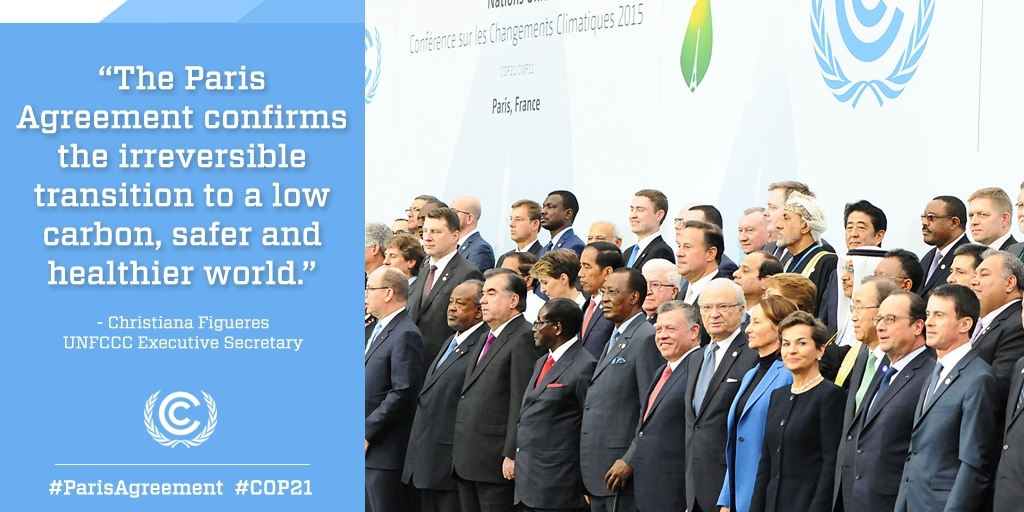
But never enough, thunder the aggrieved, the former victims. And the Paris agreement, though about climate, was to have restored some of the dignity lost to African countries by colonial imposition through the distribution of cold, hard cash (which in the past, and presumably into the future) was held 'in trust' for the citizens of each nation by their corrupt dictators. Wealthy nations had concurred that $100-billion would be made available to the emerging economies. And at the latest climate talks taking place in Bonn, developing nations demanded to be informed when they could expect those funds to be distributed as discussed.

European nations by and large, at least in the west, are invested in the ideology of guilt and progressivism, so the promise held great appeal as an honourable gesture, that it would amend, through the transfer of $100 billion yearly beginning in the year 2020, the imbalance of wealth which sees a quarter of the world's populations living extremely well, while the balance make do. Everyone wants to live well, understandably. And there would come a time when that promised $100 billion yearly transfer would have to be increased in fuller measure to compensate the have-not nations by the have-too-much nations.

To proceed with the agreement developed nations would have to decelerate their carbon emission production, while emerging economies such as population-giant countries like China and India would be permitted to have theirs grow. Since their economies are growing, and they have exponentially far greater populations than pertain in the once-named First World nations, they obviously produce more pollution. At the present time, that is; previously it was the wealthy nations responsible for industrial pollution fogging the environment. Now the reverse has been managed. Advanced economies have cut back substantially on their emissions while the emerging economies have accelerated theirs.

The framework of the Paris agreement was meant to advantage advancing economies to the detriment of the advanced nations, in a deliberate manipulation to achieve a more palatable balance in world income and benefits; for the wealthy to surrender some of theirs to enable the poor to enjoy the fruits of living well too long monopolized by advanced nations. Those in the West pledging their support for the Paris agreement acknowledged their responsibility to the global community, that solidarity in solving a problem required sacrifices to achieve a common good.

The imperative was to reduce inequality. Market forces favouring wealthy countries were to be reviewed and rebalanced. Climate change manipulation was viewed as a revolutionary catalyst to achieve this rebalancing, the need for which was created by capitalism. Once the difficult steps to advance toward reducing poverty in the 'Third World' (forbidden words now) while reducing wealth in the 'First World' was achieved in fact, advancing over theory, that vaunted new social order would emerge, where governments exercise their influence on economic behaviour by imposing carbon taxes and cap-and-trade systems.

Social justice values would prevail and community values would be honoured, people would be united in a common cause of surrendering their excess wealth to advantage those have-nots who would then enjoy a similar trove of benefits so taken for granted in the west -- as long as recipient leaders restrained themselves sufficiently to cease and desist in skimming the bulk of the treasury into their overseas bank accounts, while allowing a small proportion to trickle down in benefits to the governed.

In this April 3, 2014 file photo giant machines dig for brown coal at the open-cast mining Garzweiler in front of a power plant near the city of Grevenbroich in western Germany. Allianz says it will stop insuring coal-fired power plants and coal mines as part of its contribution to combating climate change. "If you don't have policies that underpin the number that's been put in Paris, you've got nothing to drive progress," said Elina Bardram, a European Commission official who's head of the EU delegation at the talks in Bonn.  Martin Meissner / ASSOCIATED PRESS

Labels: , , ,

Saturday, September 05, 2015

The Flaw In The IAEA/Iran Agreement

"Why not make this public so we can see whether is this a good agreement or not? Put the facts on the table and then we can have a better understanding of what takes place. I don’t see any reason for secrecy here."
"The key question is: will the IAEA be present during the sample-taking or not? It looks to me that they might be witnessing the sample-taking through some camera view, or from a distance. If that’s really the case I have a lot of reservations about the reasonability and credibility of the arrangements."
"You need to know what you sample, how you sample, and if the sample is representative of the object you sample. You need to be present and see physically the place. Therefore, for the IAEA to do a credible job they need to get to that chamber and take independently their samples."
"This is not only just to take swipe samples and then that thing gets resolved. This is [a] much more wider thing the IAEA wants to investigate. Therefore, again, the camera view is not [satisfactory] for that."
"I don’t think you can establish through the camera if that has been done. On the spot, you can see some places where [such alterations meant to hide nuclear activity] has been done in a imperfect way. These are the places you want to sample. You can’t see this from a camera. You have to look at things from various angles. Therefore it’s essential to be physically present."
Ollie Heinonen, one-time deputy director-general, International Atomic Energy Agency

Iranian nuclear negotiator Javad Vaeedi and then-deputy Director General of the International Atomic Energy Agency Olli Heinonen, after talks in Tehran, July 12, 2007. (photo credit: AP Photo/Vahid Salemi)

According to a leaked draft of the agreement on Iran's nuclear program, reached through lengthy negotiation between the permanent members of the UN Security Council, China, Russia, United States, France, Britain, plus Germany and with European Union input, there is no clarification over how inspections, particularly at the disputed-approach military site at Parchin, inspections will be conducted. 

Much hinges on how that data is received through inspections meant to provide definitive information on Iran's nuclear activity. Ollie Heinonen, in an interview, expressed grave doubts over the workability and trustworthiness of the possibility that Iran may insist on providing the IAEA with photographs, videos and environmental samples. In other words, that the IAEA and the P5+1 would agree to accepting that Iran, which has in the past used deception and is famously skilled in deceit, would provide its own data and samples, not an outside, neutral agency.
 
It’s difficult to assess changes that might have been done to such a questionable and hidden facility — such as the installation of false walls or efforts to hide or sanitize equipment — efforts to evade notice which the Islamic Republic of Iran is particularly skilled at, by merely looking at photographic or video material provided by them as proof of what they assert to be true.

Article five of the Safeguards Agreement between the IAEA and Iran addresses the requirement for confidentiality of proprietorial data, of commercially sensitive matters, and of safety and security-related issues, but should the AP report be correct and any Parchin investigation restricted to the provision of footage to IAEA inspectors by Iran: "There’s no need to keep secrecy around this approach. There’s no safety-related information that is compromised if this procedure is made public."
 
As someone integrally involved in IAEA inspections for close to three decades, and a man who headed the Department of Safeguards for the agency, Mr. Heinonen emphasized that the taking of samples at a site suspected of having hosted illicit nuclear activity is not simple. The IAEA's Parchin mission is not meant only to take environmental samples, but it is crucial to carefully examine the diagnostic equipment and technical arrangements on site. To do this, the IAEA must have a physical presence, right there, and right then.

Sketch of a large-explosives containment vessel believed to be situated inside Iran's Parchin military site, in which hydrodynamic experiments can be conducted (photo credit: AP)
Sketch of a large-explosives containment vessel believed to have been situated inside Iran’s Parchin military site, in which hydrodynamic experiments can be conducted. (photo credit: AP)
 

There are various ways in which the surfaces of equipment at Parchin could be surreptitiously altered: the Iranians could add layers of paint or lacquer, scrape them, or both, said Mr. Heinonen . "One must welcome this global innovation and outside-the-box thinking", Energy Minister Yuval Steinitz said sarcastically at the time. "One can only wonder if the Iranian inspectors will also have to wait 24 days before being able to visit the site and look for incriminating evidence?"

2004 satellite image of the military complex at Parchin, Iran (photo credit: AP/DigitalGlobe - Institute for Science and International Security)
2004 satellite image of the military complex at Parchin, Iran. (AP/DigitalGlobe-Institute for Science and International Security)

Any of the 35 states on the International Atomic Agency’s board of governors can demand of the  secretariat that it disclose the secret agreements should they feel it would aid their understanding of any particular verification process. Canada has done just that on a number of occasions. Israel,  a member of the IAEA since its founding in 1957, has been adamant in demanding all secret side agreements with Iran be released.

"In order for there to be a truly informed discussion of the deal with Iran it is crucial that all relevant documents be opened to scrutiny", insisted a senior Israeli official.The six world powers who negotiated the deal — the US, Britain, France, Russia, China and Germany — are currently on the IAEA board, along with Saudi Arabia, Qatar and the United Arab Emirates, known to be not so pleased with the agreement with Iran.

"It’s up to the member states. They are in the driving seat here. If they are happy with [the current arrangements], then fine. But one should exercise good judgment how to proceed with that", emphasized Mr. Heinonen in the interview. However, should the IAEA agree to the current arrangements and inspect Parchin at a remove via video cameras, reversal of the procedure would be difficult to obtain.

"It would be very difficult to make another mission there after you’ve already agreed on certain technical arrangements. This is the time to do a proper job", he stated unequivocally.

Labels: , , , , , ,

() Follow @rheytah Tweet