The Best Laid Plans of Iranian Succession : Confusion and Chaos
"The martyrdom of the Supreme Leader at the hands of Israel and the criminal America was a great disaster for our country.""With the power of God, we will continue the path of the Imam, the path of the dear leader, and the path of all those who seek justice in the world with power."Iranian President Masoud Pezeshkian"Irrespective of what the guidelines say and what the politics may have been, it was always going to be improvisational.""Under the circumstances of an existential conflict, the succession process is going to be very much dictated by the context of the moment."Suzanne Maloney, vice-president, Brookings Institution"The structure of the Islamic Revolution has been designed in such a way that after the martyrdom of any commander, at any rank or level, qualified and capable individuals immediately replace them."Fars News Agency"The succession process is not key in the short term because they're going to try and fight on.""Firing off missiles does not require a supreme leader."Alex Vatanka, Iran analyst, Middle East Institute
 |
| Plumes of smoke from two simultaneous strikes rise over Tehran on Monday. (Mohsen Ganji/The Associated Press) |
The first step in a process of succession in the aftermath of confirmation of the death of Supreme Leader Ayatollah Ali Khamenei resulting from an Israeli aerial attack on his compound containing the Ayatollah's offices, was announced. That a commission of three experts as called for in Iran's constitution, would meet to select the next supreme leader. Unfortunately, while the experts and others around them were in close consultation the building they were in was bombed to smithereens.
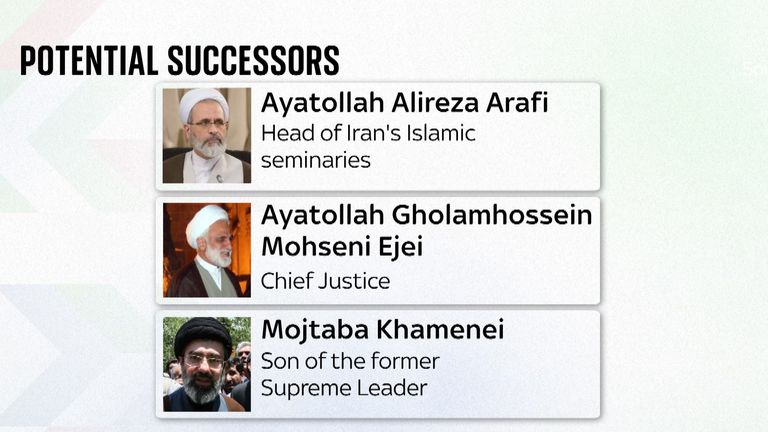
Evidently, before that happened, the decision was promulgated. Although Ayatollah Khamenei was said to have spurned the idea of succession, even though rumour had it that he was grooming his oldest son to succeed him, the panel of experts had decided on elevating that son to the now-empty position of Grand Ayatollah. That, despite that the son did not have the required scholarship credentials to obtain that role.
 |
| Iran International reports the Assembly of Experts has elected Ali Khamenei’s son, Mojtaba Khamenei, as his father’s successor. |
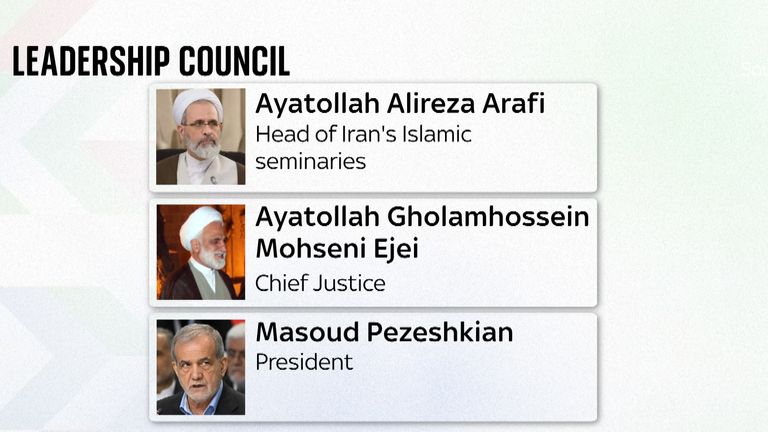
According to President Pezeshkian, an interim leadership council was struck to begin the process of overseeing the country locked in war with the attack of its government institutions by the combined military forces of the United States and Israel. Moreover, it was latterly reported that the building housing the deliberating council was bombed: "Following the decapitation of 88 Members of the Islamic Supreme Council, which was set to choose the Ayatollah regime's next "Supreme Leader"; Mossad announced: "It doesn't matter who is chosen today; his fate has been decreed. Only the Iranian nation will choose their future leader."
 |
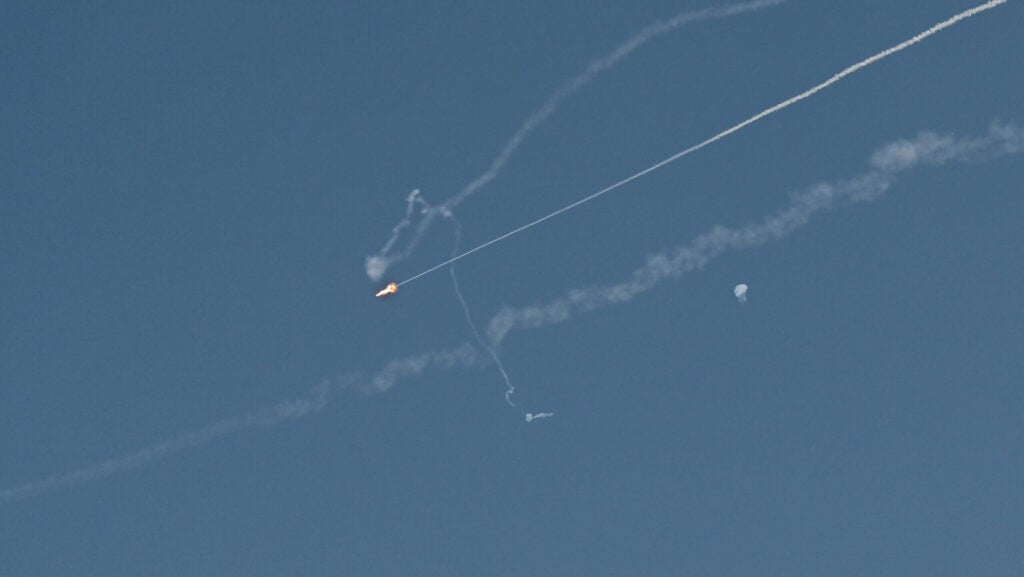
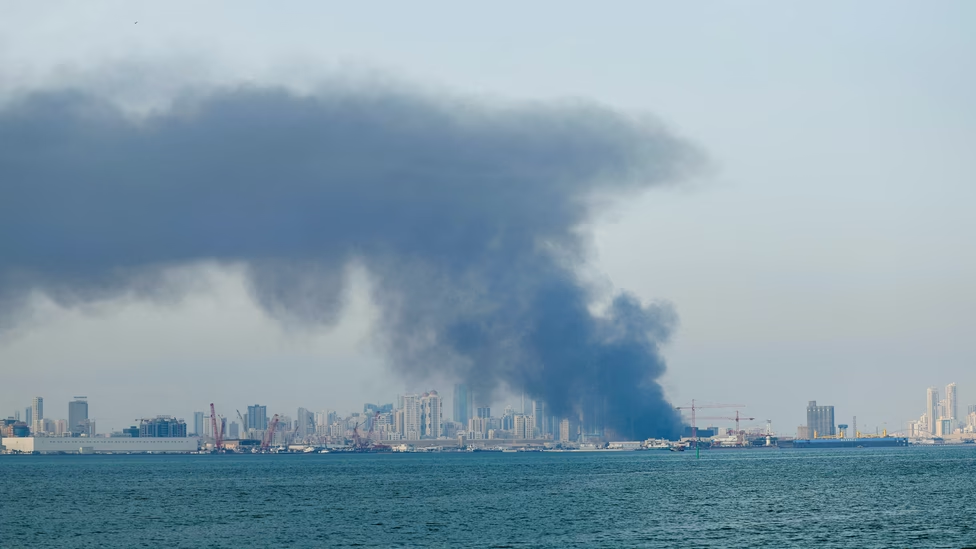
| Following the U.S.-Israeli attack that began on Saturday, Iran retaliated by firing waves of missiles and drones at Israel and targeted U.S. allies in the region. Here, boys watch as a tall smoke plume billows following an explosion in the Fujairah industrial zone in the U.A.E. (Fadel Senna/AFP/Getty Images) |
With the elimination of many contenders and in the current regime instability various rivals and factions are certain to emerge, each claiming their right to assume wartime power in the face of questionable support from the country'[s military establishment. The solution to which may be a decision to retain the temporary council, but then the fact is the temporary council is now rather unavailable, given that blast that destroyed the building they were meeting in.
Even though Mojtaba Khamenei was widely expected to be favoured as his father's successor, Grand Ayatollah Ali Khamenei resisted the transfer of the supreme position along hereditary lines. Such a move would smack too greatly of the ruling system of the Pahlavi dynasty, when the Shah was replaced by the Islamic Republic under Ayatollah Ruhollah Khomeini, the founder of the Islamic Republic.
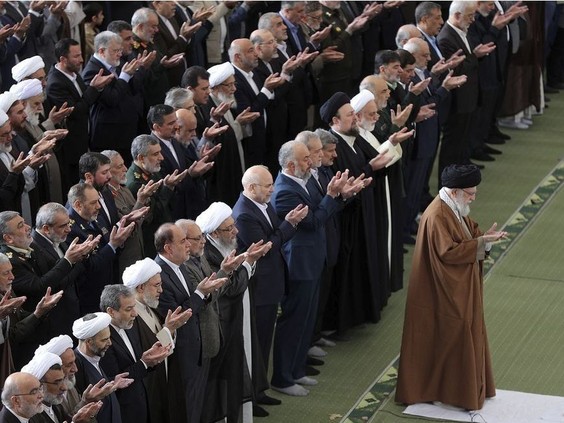
In Iran the supreme leader is a high-placed religious figure considered to be a representative of God, while also being the head of state. During the 37 years that Ali Khamenei served, he expanded his power and the scope of his rule over the civilian government which itself was elected under a quasi-democratic rule. As such the Grand Ayatollah had the power to wield final decision-making on all manner of regime initiatives, even as he also consulted.
What the Iranian Shiite regime -- or what is left of it -- has failed to take into account is its future presence in the Middle East where it has succeeded through its violently hostile actions toward its Sunni Arab neighbours by sending endless streams of missiles and deadly drones into their territory, attacking both oil extraction sites and civilian infrastructure and in so doing inciting deadly enmity from those same neighbours, is the future consequences. Saudi Arabia, the UAE and others will never now countenance a continuation of the Islamic Republic.
 |
| The U.S. and Israel launched a new wave of attacks on Iran on Tuesday, as the conflict entered its fourth day. Here, plumes of smoke rise following reported explosions in Tehran early Tuesday. (Atta Kenare/AFP/Getty Images) |
Labels: Governing Council, Iran's Future Government, Islamic Republic, U.S.-Israel Attack
posted by Pieface | 9:20 PM
|
0 comments