

The Protest Carnage in Iran
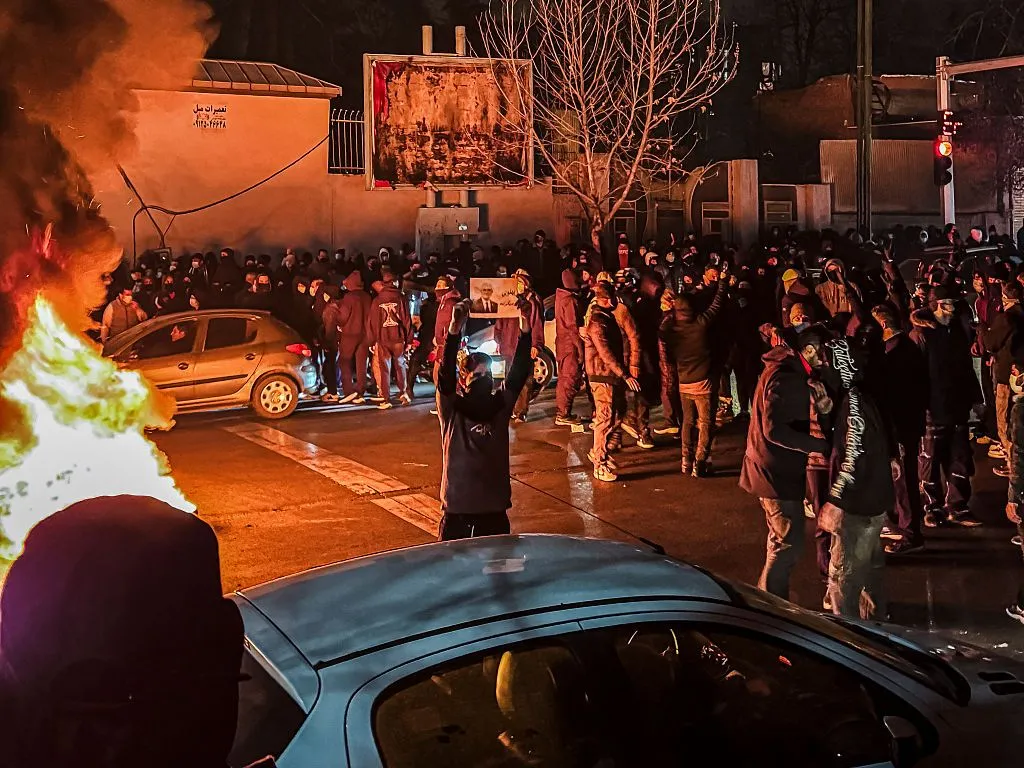 |
| Protesters on a street in Tehran on 9 January Getty Images |
"[We witnessed] young people whose brains were smashed with live bullets, and a mom who was shot in the neck,her two small children were crying in the car, a child whose bladder, hip and rectum was crushed with a bullet.""What I witnessed will forever haunt me. I feel guilty that I'm alive."Isfahan MD"Our statistics are based on the documentation standards of human rights organizations. They must either be confirmed by two independent sources, or our organization must have direct access to a very reliable source.""Some of these statistics [Iran Human Rights estimates that there have been more than 25,000 deaths] include direct reports from victims as well as information from the medical field and reliable sources known to us."Norway-based Iran Human Rights director Mahmood Amiry-Moghaddam"[Around 7,000 serious eye injuries had been recorded in a specialized eye hospital in Tehran alone by January 16].""There are medical protocols in Iranian hospitals, and medical staff generally refrain from reporting cases that could later be used for criminal prosecution.""We already observed this during the Mahsa movement. Fortunately, medical staff are siding with the protesters."Amir Mobarez Parasta, Iranian-German eye surgeon, head, Munich eye center
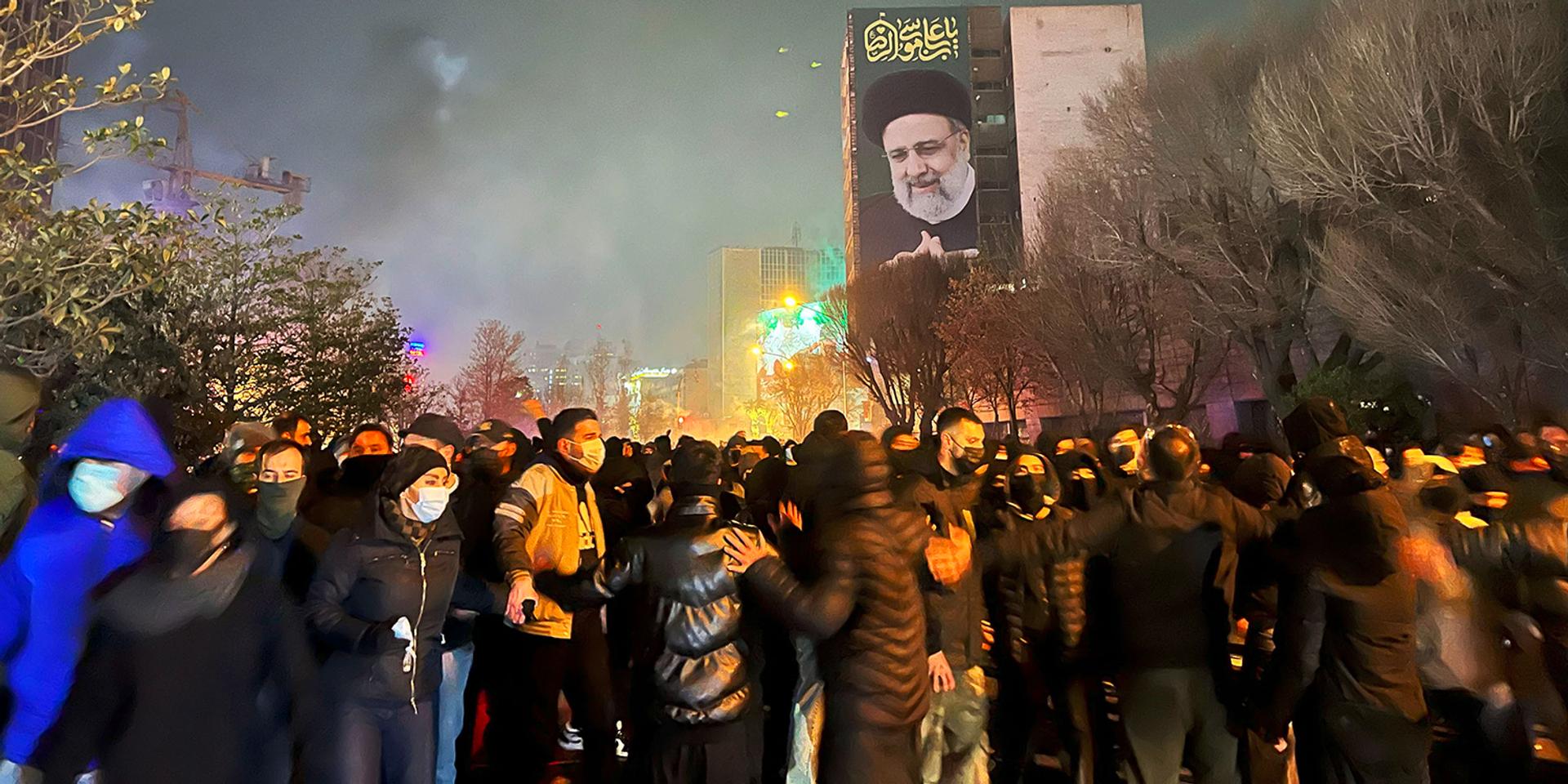 |
| Tehran protests Yalda Moaiery, Le Monde |
Security forces in Tehran were known to have opened fire from the roof of a police station at protesters, firing live rounds into a crowded protest march, one person shot in the head. The protests, small in number at first when they began in late December, by early January the revolt by ordinary Iranians had become bloated with people, and then security forces began their deadly force. Iran's supreme leader Ayatollah Ali Khamenei, by January 9 ordered the Supreme National Security Council to crush the protests using any means at their disposal.
Videos that were slipped out to Western news sources despite the regime shutting down the internet and phone service show security forces firing on protesters in cities across the country in early January. Photos went into circulation of hundreds of victims of the violence taken to hospitals or to morgues. The official death toll is in the low thousands. Iran Human Rights, a group based in Norway monitoring the situation in Iran confirmed 3,400 have been killed, while the Human Rights Activists News Agency out of Washington identifies the death toll at 5,200. Both these groups warn the number could eventually rise two or three times higher.
According to Iran's own National Security Council, 3,117 people have died, listing among them 427 of its security forces. Ayatollah Khamenei and other officials of his government place the blame on terrorist cells allied with Israel and the United States, both as vectors of the uprising and the violence that ensued. Gunmen and security forces are shown on videos riding in pairs on motorbikes, using firearms, batons and tear gas. This would be the feared and hated Basij, a volunteer militia linked to the Islamic Republican Guard Corps.

One video filmed in Tehran shows protesters sheltering from gunfire, and a voice is heard to say: "Put your phone down, they'll shoot your hand off. There's a sniper among them." One video filmed in Haft Howz Square, Tehran shows people running, and the sound of gunfire. Some of the protesters have leg wounds, leaving trails of blood as they flee, limping off. A video filming security forces firing from a rooftop in the Tehran Pars neighbourhood shows rifle muzzle blasts and the sound of hundreds of gunshots and automatic fire.
Hospitals across the country, swamped by thousands of injured people in Tehran, Mashhad, Isfahan and Zanjan, led doctors and nurses to share what they witnessed, describing chaos, medical staff attempting frantically to save lives while their hospital whites became drenched in blood. Patients on benches and chairs and bare floors in the emergency rooms. Hospitals short of blood, searching for trauma and vascular surgeons. Their hospitals resembling a war zone. At the sprawling government medical facility of Shohada Tajrish Hospital, medical staff saw about 70 gunshot-wounded protesters every hour on January 9 and 10, the two days of peak violence.
In scenes he described as 'terrifying' one doctor in Mashhad spoke of security forces appearing, and demanding access to patients so they could arrest them. Doctors resorted to setting up an ad hoc triage unit outside of the city for patients fearful of going to a hospital with their wounds. Most victims were shot in the upper torso, head and neck, and hundreds arrived dead or so terribly injured they succumbed to their wounds.
Morgues were overwhelmed with bodies in black plastic bags. Corpses stacked in refrigerators, placed on floors with scattered row-on-row of bodies in parking lots and courtyards where family members searching for their loved ones would unzip bags hoping to recognize the familiar features of a son, a father, a daughter known to have been killed, so they could be buried with honour. "It's a line. A line of people, so they can pick up their deceased. The young people. Their apple of their eyes", one man said.
By January 12 the protests dwindled, people stayed in their homes as security forces prowled the streets.
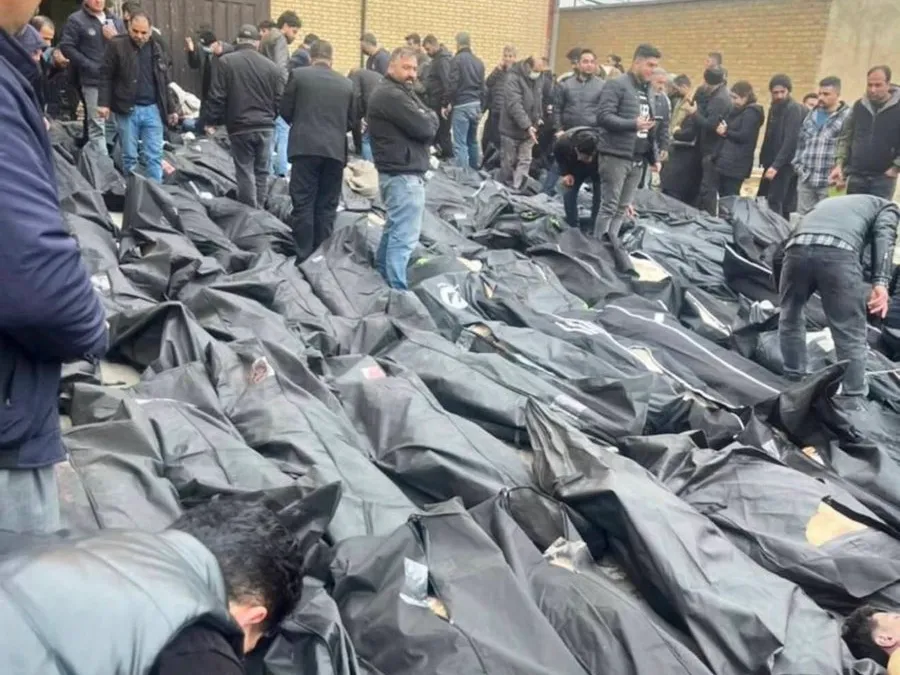 |
| The killings that swept Iran last month revived memories of 1988, when the Islamic Republic erased thousands of political prisoners in silence Lawdan Bazargan, Iran Insight |
Labels: Crowded Morgues, Government Crackdown, Grieving Families, Islamic Republic of Iran, Mass Protests, Thousands Killed
posted by Pieface | 9:18 PM


0 Comments:
Post a Comment
<< Home