
Politic?

This is a blog dedicated to a personal interpretation of political news of the day. I attempt to be as knowledgeable as possible before commenting and committing my thoughts to a day's communication.

Saturday, April 29, 2023

Found Guilty -- Claiming Innocence -- Hassan Diab

"After 43 years of judicial wandering, justice is finally served for this deadly antisemitic attack."
"Everything must now be done to enforce the international arrest warrant. "
"CRIF [Representative Council of French Jewish Institutions] calls on Canada to cooperate with French justice."
Yonathan Arfi, president of CRIF
 
"It would be inappropriate to speculate on any potential requests for extradition for Dr. Diab to France."
"Extradition requests are confidential state-to-state communications, so we cannot comment on the existence of any request until it is made public by the courts."
Canadian Justice Minister David Lametti spokesperson
 
"[The case against his client is] replete with seemingly disconnected information."
"[The case against Diab contains] a great deal of argument, hypothesis, conjecture and references to information received, without describing the source of that information or the circumstances upon which it was received."
"The evidence shows he's innocent and yet they've convicted him. It's a political result. It's a wrongful conviction."
Diab's Canadian lawyer Donald Bayne
Firemen standing by the wreckage of a car and motorcycle after a bomb attack at a Paris synagogue on October 3, 1980 that killed four people. A Canadian court ruled on June 6, 2011 to extradite accused bomber Hassan Diab to France to face prosecution, but warned the government's case was "weak" and unlikely to result in a conviction.
Firemen standing by the wreckage of a car and motorcycle after a bomb attack at a Paris synagogue on October 3, 1980 that killed four people. (AFP/Getty Images)

The search for justice can be extraordinarily complicated, as it has been in the case of the bombing in France that took place forty-three years ago when the Rue Copernic Synagogue was the site of a terrorist attack that killed four people and wounded dozens more. Hassan Diab, accused by French authorities of having been the man responsible for the bombing, was living in Canada when he was arrested in 2008 by the RCMP acting on a request for extradition from France. A long-drawn-out process ensued when what evidence that existed was studied by a Canadian court and though judged inconclusive, Mr. Diab was returned to France in 2014. 

He was imprisoned and spent over three years in incarceration. Eventually a French High Court ordered him freed on the basis of insufficient evidence. And Mr. Diab, a dual Lebanese/Canadian citizen, was permitted to return to Canada where he has been domiciled since then with his wife and their children. He has occasional work assignments as a casual university lecturer in sociology. Subsequent to his release and return to Canada the federal government authorized an investigation into the way his case was handled in Canada, culminating in his release from a French prison.

The report exonerated all those involved in the investigation, that led to Mr. Diab's extradition; that under the circumstances they comported themselves under the law properly, and no fault was to be found on the part of the prosecutors and the justice that examined the evidence concluding that the extradition process could proceed. Mr. Diab and his lawyer question the conclusion of the report, finding it biased and unreliable, giving the government and its agencies a clearance that in their opinion is undeserved.

Subsequent to which, Mr. Diab and his family decided to sue the federal government over the role Canada played in his extradition to France including the years of imprisonment in a French jail — the results of the terrorism probe that ultimately stalled in reflection of insecure and inadequate evidence. Mr. Diab's lawyers and his supporters cling to his contention that he had been in Lebanon at the time of the bombing, not in France. In a notice of action filed with the Ontario Superior Court, Diab, his wife Rania Tfaily and their two young children seek $90 million in damages.

However, a new trial was struck in France and Mr. Diab reacted to this trial as he had formerly, refusing to attend, declaring himself innocent of all charges. The trial proceeded with new evidence introduced, sufficient to convince French prosecutors and the court to reach a verdict of guilt. Found guilty in absentia of the bombing, Hassan Diab was sentenced to life in prison, and a warrant was issued for his arrest.
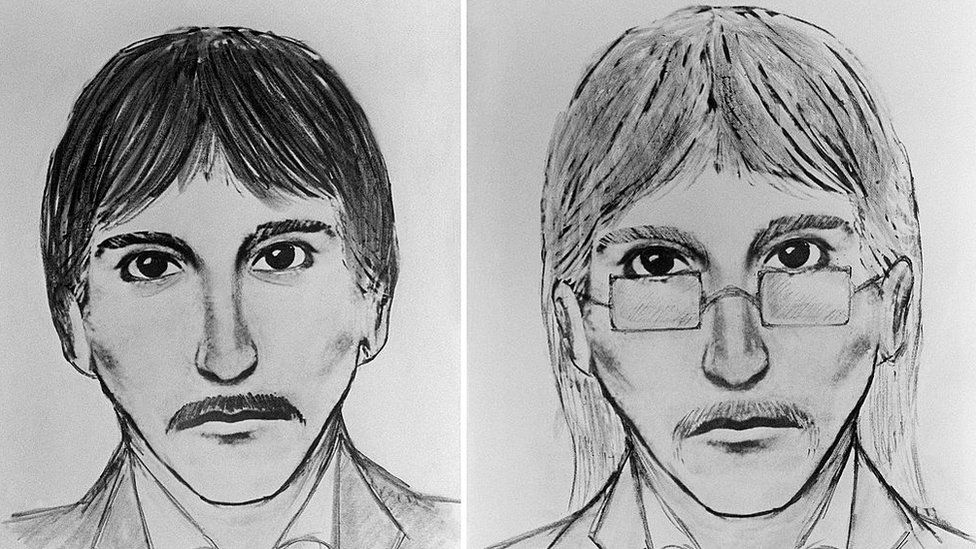
Police sketches released in 1980 show the suspected perpetrator of a bomb blast on a Paris synagogue that killed four people
Police released an artist's impression of the bomber in 1980  AFP

The Paris Appeals court had disagreed with the decision to drop charges in recognition of a lack of evidence and Diab's return to Canada, ordering a trial, which took place in early April when Mr. Diab declined to attend, leaving the trial to proceed in his absence. Yet again the issue of extradition has arisen, with the government of Canada awaiting a formal request; if it has been received, it has not been made public. This man's declaration of innocence of the charges has wide support in Canada.

Those who should know better suggest that a fair trial was not possible in France.  Impugning the French justice system as a result of this singular case is peculiar, given relations as two democracies with much in common between Canada and France. The news media in France, on the other hand, has confidence that the trial's outcome is just and deserving. France 24 wrote of the attack being orchestrated by the Popular Front for the Liberation of Palestine. One of their commanders was in possession of Diab's passport which Diab claims had been stolen.

Witnesses to the bombing, however, in describing the suspect to police, led to a sketch bearing a striking resemblance to Diab in his younger years. In declaring his innocence since 2008 and beyond, Mr. Diab saw no profit in attending hearings and his trial in France to clear his name. He saw no need to defend himself in a French court of law. He can present no solid evidence that he was not present in France on that fateful day, acting in concert with the Palestinian terrorist group -- as a Palestinian born in Lebanon himself -- whose plan he may have carried out.

A man with glasses stands in front of a sign which says "Say no to extradition."
Hassan Diab in Ottawa on Friday April 21. A French court found Diab guilty on Friday in relation to a 1980 bombing of a Paris Synagogue. (Michel Aspirot/CBC)


Labels: , , , , ,

Thursday, May 03, 2018

Wrongfully Charged? With Malice Aforethought?

"The entire case was a grave miscarriage of justice, with an innocent Canadian citizen languishing in a foreign jail for 38 months."
"And now it appears that the [Canadian] justice department had evidence that he was innocent and did not disclose it."
Father Raymond De Souza, An astonishing injustice no one will care about, National Post

"[The defence findings] would jeopardize the reliability of one of the only elements of direct evidence [linking Diab to the bombing. If it were thrown out] a significant element of the overall evidence required for a court decision to allow extradition would be lost."
"[An adjournment would be advisable to allow France to consider] whether and what evidence they might wish to submit [in response to the defence's rebuttal of their handwriting analysis]. I can't be more precise than that." 
"It's somewhat useless to guess at whether it will be evidence and whether it will be evidence that we might want to lead. So I'm afraid we're at a loss."  
Claude LeFrançois, senior counsel with the IAG (International Assistance Group, federal Department of Justice)

"My first reaction is to question, is that Canada's role? Should the Department of Justice be doing this? This is France's case. Canada has no case against Dr. Diab, never did. Canada is not the investigators for France."
"The RCMP did the [fingerprint] comparison and had the results on Jan. 11, 2010. And it was conclusive, every identifiable fingerprint … excluded Dr. Diab. It was not him. It was conclusive. That was never told to the court." 
"If it's limited to an internal review [by Canada's Department of Justice] they are asking the wrong people. This has to be a broad-based inquiry. Canada failed him." 
Donald Bayne, lawyer for Hassan Diab


France has appealed Diab's release. Prosecutors are determined to try him for the 1980 attack, even if they have to do it in absentia. A decision is set for July 6 in Paris. (Lisa Laventure/CBC)


In 1980 a Paris Synagogue was bombed. A motorcycle at the scene had saddlebags packed with explosives. Four people died in the bombing, and 41 others were wounded. French police were urged to find the perpetrators, and under duress to solve this heinous crime they set out to find  the culprit responsible for this blatant terrorist act of violent anti-Semitism. They eventually settled on a 60-year-old Palestinian-Canadian academic, Hassan Diab. A request, decades after the fact, was sent to Canada for this man to be extradited to France to stand trial.

French police investigate the wreckage after a bomb attack on a Paris synagogue that killed four people, October 3, 1980.


French police investigate the wreckage after a bomb attack on a Paris synagogue that killed four people, October 3, 1980. AP

Canada has an extradition treaty with France, a country that does not extradite its own citizens. France, needless to say is an ally of Canada, a trusted democracy, with a rule of law and a justice system second to none, or so we thought. We think that Canada's justice system falls into that same category. And we could be wrong. In the event, though on the information circulated about the case, it seemed as though charges to be brought by France against this man were legitimate, long after the fact of his extradition and return to Canada, it seems that evidence was concocted and exculpatory evidence concealed.

Handwriting samples purportedly linking Diab to the bombing appeared to be hugely suspect. And then, it appears that a senior counsel with the International Assistance Group in the Department of Justice, Claude LeFrancois, took it upon himself to coach the French on how they could improve the chances of convincing Canadian authorities that Diab be extradited forthwith. Among recommendations were that they forward fingerprint evidence for the RCMP labs to interpret, but when they were compared to Mr. Diab's there was no match. That vital information was never shared with Mr. Diab's lawyer.

In Mr. Diab's defence handwriting experts were agreed that a French expert was "biased, unqualified, and based her conclusions on flawed methodology." They reached the conclusion that the results in the "smoking gun" report were "patently unreliable," "wholly unreliable" and "fatally flawed." Ontario Superior Court Justice Robert Maranger who presided over the trial characterized the French report as "convoluted, very confusing with conclusions that are suspect." France, he wrote presented "a weak case; the prospects of conviction in the context of a fair trial, seem unlikely."

However, as unbalanced as it seems, given the lack of reciprocity in the Canada-France extradition treaty, under Canada's extradition laws, any evidence France submitted to the court had to be considered "presumptively reliable." And this is what sealed Mr. Diab's immediate fate, and led to his extradition after years of delays and against Justice Maranger's better judgement. Having heard the case, absent the federal Justice Department's own "smoking gun" clearing Diab through fingerprint analysis, there was little option but to order the extradition to proceed.


Once in France, Diab spent 38 months in almost constant solitary confinement in France's largest prison without ever being charged. French courts, repeatedly citing a lack of evidence linking him to the bombing, ordered his release. Eventually he was released and approval given for his return to Canada. The French government is still convinced he is their suspect and remains dedicated to returning him, to put him on trial. Even though they were presented with university records proving that on the day of the bombing in Paris, Diab was writing exams in Beirut, Lebanon.

Miscarriage of justice? Seems like it. Is Diab a bitter man? Who wouldn't be? Is he intent on suing the Department of Justice for their furtive part in furthering France's intentions to hold a man whom evidence clears of involvement in a terrorist act guilty of having carried out that attack? Seems not. It isn't revenge he seeks, it appears, but rather regret that when he avowed he hated no one, and would never descend to harming anyone, he was never believed. Why would he be, when two government agencies appeared so certain he was guilty?

Are we missing something here? As to why it is that France is so convinced, despite a lack of evidence -- indeed a presence of evidence conversely indicating their suspicions have fallen on the wrong man, that Diab, as originally believed -- was responsible for a terrorist attack linked to the Popular Front for the Liberation of Palestine? Whose mandate, like all such terrorist groups is indeed to slaughter Jews and destroy the State of Israel.

Diab and his wife, Carleton University professor Rania Tfaily, at home with daughter Jena and son Jad. (Lisa Laventure/CBC)

Labels: , , , , ,

() Follow @rheytah Tweet