Politic?

This is a blog dedicated to a personal interpretation of political news of the day. I attempt to be as knowledgeable as possible before commenting and committing my thoughts to a day's communication.

Thursday, April 18, 2024

Sending That Critical Message To Iran

"This is an opportunity to create a new American-led regional security alignment against Iran if we can take advantage of it."
"Who would ever have thought that we would be part of a coalition that included the United Kingdom and France and Jordan and maybe other Arab countries?"
Chuck Freilich, former deputy head, Israel National Security Council
 
"Our allies do not want us to go for an over-the-top response and we want to work with our allies, especially after the success we enjoyed with them."
"We don't have to have cause casualties, but it's important that we do respond, because it sends a message to all those who want to harm us."
Israeli official
 
"On different levels of intensity, Israel has been fighting Iran for years. It will not stop tomorrow or the next day. And it will not stop if Israel reacts right now."
"We cannot be confused here. Iran has escalated the war. But Israel needs to act smartly in order to strengthen the regional and global front against them."
Yair Golan, former deputy IDF chief of staff
https://img.etimg.com/thumb/msid-109360497,width-300,height-225,imgsize-38710,resizemode-75/israel-pm-netanyahu-convenes-war-cabinet-meeting-in-tel-aviv.jpg
Israel PM Netanyahu convenes war cabinet meeting in Tel Aviv

Israel's war cabinet has been deliberating to find a solution somewhere between its need to respond to Iran's blatant, potentially destructive act of war, and the urging to exercise restraint in its response, by its collegial supporters both in the West and in the Middle East. How to respond to the psychologically devastating aerial assault by the Islamic Republic and yet prevent distancing its international allies, thus squandering an opportunity for a much-needed strategic international alliance against Iran is the puzzler for wise minds to prevail.
 
The Israel Defense Forces has been tasked by Prime Minister Benjamin Netanyahu to provide a schematic of target options in line with the government searching out options that would "send a message", yet not be the cause of mass casualties. Options such as a strike on a facility in Tehran, even a cyberattack of destructive importance. "Everyone agrees that Israel must respond. How to respond, when to respond, is the question", articulated an unnamed Israeli official, unauthorized to speak.

Limited material damage resulted from the five-hour aerial onslaught, repelled by an international alliance including the U.S., France and Britain, assisted by Jordan, Saudi Arabia and the UAE; a model of coordination pitted against Iran, that analysts describe as an unprecedented strategic opportunity for Israel to be embraced by the international fold following frictions over its invasion of Gaza in its war against Hamas.
 
Israel's hugely successful air defences along with the allied response repelled the attack, enabling Israel to respond from a position of confidence while European leaders reiterated concerns relating to t he potential for a spiral in the regional security situation. "We are urging them as friends to think with head as well as heart, to be smart as well as tough, and to recognize that Iran suffered this defeat, because the attack was a failure", said British Foreign Secretary David Cameron. "The right thing to do is not to escalate."
 
Israel faces a multi-pronged challenge in that even if it struck Iran hard, it still must face Tehran's regional proxies, even aside from the looming reality of Iran's nuclear program. Israelis have experienced a shattering of their sense of security in the wake of the Hamas-led assault on October 7. The Israeli public breathed a sigh of relief after the intensity of Saturday/Sunday's extreme events, somewhat restored in their nation's success repelling the attack.  
"I think we did avoid something terrible Saturday night."
"It was like the world remembered that we are the ones under attack for a minute. I hope it changes something, I hope it ends the war."
"But I don't think anything can change until our hostages are back with their families."
Yosef Levy, student, Jerusalem

Labels: , , ,

Tuesday, April 16, 2024

To Strike Back : When and Where

"We are looking ahead."
"We are considering our steps, and this launch of so many missiles, cruise missiles and UAVs into the territory of the State of Israel will be met with a response." 
Israel Defense Forces Chief of Staff Lt. Gen. Herzi Halevi
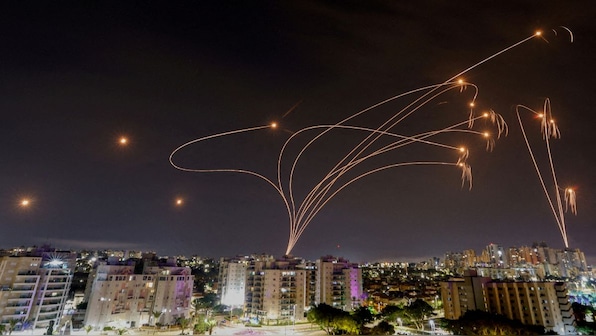
https://images.firstpost.com/uploads/2024/04/Israel-Iron-Dome-Reuters-2024-04-b703a81e7bbfee1485ad9e31eb993a20.jpg?im=FitAndFill=(596,336)
Israel's Iron Dome anti-missile system is seen intercepting rockets launched from the Gaza Strip | Source: Reuters
 
"Iran is a nation that endorses terrorism, and the world should have curtailed it much earlier."
"[Saudi air defences automatically intercept] any suspicious entity [that enters its airspace, which could refer to attacks from Yemeni Houthis, another of Iran's terror proxies]."
"We confront every suspicious object that enters Saudi airspace. This is a matter of sovereignty."
"Two days before the attack, Iranian officials briefed counterparts from Saudi Arabia and other Gulf countries on the outlines and timing of their plan for the large-scale strikes on Israel so that those countries could safeguard airspace. Information that was passed along to the U.S. allowing Washington and Israel crucial advance warning."
Anonymous Saudi royal family source
Monday Israel's war cabinet discussed a few potential military responses to the Islamic Republic's Saturday/Sunday attack on Israel's airspace with over 300 drones and missiles, some 99% of which were reportedly shot down by the U.S., Israel, France, the U.K., Jordan and Saudi Arabia before they could enter Israel's airspace. Each of the possible responses under discussion were designed to inflict a meaningful response to the Iranian regime, while carefully avoiding expansion leading to a regional war.

The war cabinet was mindful of the pressure exerted by U.S. President Joe Biden and the diplomatic necessity of selecting an option that would not induce the Biden administration to block its performance. Prime Minister Netanyahu had been informed by President Biden on Saturday not to expect Washington to support a retaliatory attack by Israel. "You got a win. Take the win", said Biden. 

Yoav Gallant, a war cabinet member and Defence Minister, informed his American counterpart the following evening that there was no choice for the Jewish state but to respond to the unprecedented drone and missile strikes on Israel in response to an alleged airstrike by Israel that hit Damascus, killing an elite Quds Force commander. Gallant emphasized to U.S. Secretary of Defence Lloyd Austin that the reality of ballistic missiles fired at Israel without repercussions was not acceptable.
 
Israel - Iran attack
Gilad Erdan, Israel's UN ambassador, showed a video of drones heading toward Israel to the United Nations Security Council on Sunday. CHARLY TRIBALLEAU via Getty Images
 
In the final analysis the war cabinet had no option but to endorse a strike back, remaining divided on the scope and timing of their response. Minister-without-Portfolio Benny Gantz vowed to "exact the price from Iran in the fashion and timing that is right for us". Comprised of Netanyahu, Gallant and Gantz, as well as three observers, the war cabinet meant to reconvene Tuesday.

Following the call with Biden, it was reported that Prime Minister Netanyahu set aside the option of a swift strike on Iranian territory; a decision that resulted in the Iranian attacks having "caused relatively minor damage", which seems highly unlikely, since an aggressive act of war of this dimension could not and would not be set aside as immaterial by any other nation on Earth. 

Saudi Arabia accused Iran of responsibility for the Gaza conflict with the intention of undermining progress in a normalization agreement between Riyadh and Jerusalem. A royal family source revealed that Tehran's promotion of terrorism led Riyadh to play a role in thwarting the drone and missile attack that occurred on Saturday night. The Saudis shared intelligence with the United States and Israel that helped to counter the Iranian attack. 

Intelligence was also shared by the Emiratis who had forged diplomatic ties with Jerusalem as part of the Abraham Accords in 2020. Initially cautious around sharing information, Arab governments feared direct involvement in the conflict that would leave them vulnerable to Iranian reprisal. Despite which Riyadh and Abu Dhabi moved forward following discussions with the U.S.

As well, Amman agreed to permit the U.S. and other countries to fly warplanes through its airspace, intercepting Iranian missiles and drones, while the Jordanians themselves assisted in shooting them down.

https://i.insider.com/661d114e16bde8d4ead8d946?width=800&format=jpeg&auto=webp
Parts of a missile launched from a missile are landed in Marj Al-Hamam area, during Iran's airstrikes against Israel, in Amman, Jordan on April 14, 2024. Anadolu via Getty Images

Labels: , , , , , , ,

() Follow @rheytah Tweet