


Shipping Malfeasance
"The ITF [International Transport Workers' Federation] has been receiving emails from hundreds of seafarers daily, expressing their concern about contracts being extended under duress." Stephen Cotton, general secretary, ITF
"The company collecting fees for the right to fly a certain flag is also responsible for policing its customers, ensuring they abide by safety, labour and environmental rules, and conducting investigations when things go wrong." "But in practice, flags of convenience create a perverse incentive for ship operators to shop around for the most lax registries with the lowest prices and fewest regulations." Ian Urbina, director, Outlaw Ocean Project, Washington
 |
| Abandoned ships means abandoned crews ITF |
In Beirut, there is no question that local corruption and government ineptitude within Lebanon played a role in the catastrophic explosion last Tuesday of tons of a highly flammable material being stored recklessly in a port warehouse. As happenstance would have it the disabled vessel that brought the ammonium nitrate to the Beirut dock had been abandoned by its owner, Igor Grechushkin, a Russian who abandoned his crew owing them $100,000 in back wages and port fees.
Rather than pay up what he owed he decided to declare bankruptcy and 'disappeared' leaving the dilapidated ship and its deadly cargo a headache for Lebanese dock authority to figure out. Orders were given, despite the continued warning by the stranded crew that the ammonium nitrate represented a clear and present danger, to take it off the ship and store it in a dock warehouse. Adjacent another warehouse holding fireworks. And nearby was a giant silo containing Lebanon's imported almost complete wheat supply for the nation.
It isn't as though Port authorities viewed this new addition to their facilities as harmless. They did what they could to keep reminding government officials of the danger the presence of the chemical represented. And they kept reminding an oblivious, uncaring government for the next six years. Until the inevitable occurred, destroying a huge segment of Beirut, bringing outraged Beirutis to the streets demanding the ouster of the entire government. And the government promised that those responsible would be face justice. Then they promptly arrested the very port authorities who begged for removal of the volatile material.
That Russian-owned ship, the Rhosus, had been flagged to Moldova when in 2013 it transported tons of the crystalline substance for delivery in Africa. Living in Cyprus, the owner, Igor Grechushkin, eluded fines his shipping company Teto Shipping Ltd had levied against it since it was registered on the Marshall Islands. The crew that this ship owner abandoned penniless was forced to wait a full year until with assistance from the ITF, the largest global seafarers union, they were able to return home. There is nothing unique about their plight.
 |
| A Spanish-flagged LPG tanker is anchored in Manilla Bay, the Philippines
without a rudder and a crew of 15 seafarers running low on supplies,
electricity, and wi-fi, the International Transport Workers’ Federation
(ITF) informed. Shipping News |
Hundreds of ships, thousands of seafarers suffer the very same fate. When ships are abandoned cargo often reaches its destination by one means or another, but abandoned crews are simply left to their own devices far from home and without means of survival. A database put together by the ITF and the international labour section of the United Nations compiled a list of close to 5,000 seafarers abandoned on their vessels in 400 disparate incidents between 2004 and 2018.
A supertanker, the Zoya 1, was trapped off the coat of the United Arab Emirates with its 16-member crew in April 2018 for over a year, the men owed over four months of their salary. The ship was overrun with vermin and the crew became physically and mentally ill while the shipowner put off settling a legal dispute. Several of the crew members, unable to swim, and trapped on the ship, attempted suicide by leaping overboard. Crew members held up signs: "We are helpless. We did not commit any crime".
During the time of COVID-19, some 400,000 mariners have been stranded at sea and in ports. An oil tanker, the Captain Nagdaliyev, was abandoned with 13 men on board, stuck for close to a year, without wages, water or food, in the Port of Beirut. Fortunately they escaped with their lives when sections of their ship blew apart as a result of the giant explosion in the port last week.
A crew of 15 has been left on the Spanish Tanker MV Celanova\, loaded with liquid petroleum gas since February 2, in Manila Bay off the coast of the Philippines.. There is insufficient fuel aboard the tanker to ensure the cargo is kept refrigerated, the result of which has port officials warning of the imminent risk of fire. Strict rules mandating ammonium nitrate not be stored close to fuels or sources of heat are internationally recognized.
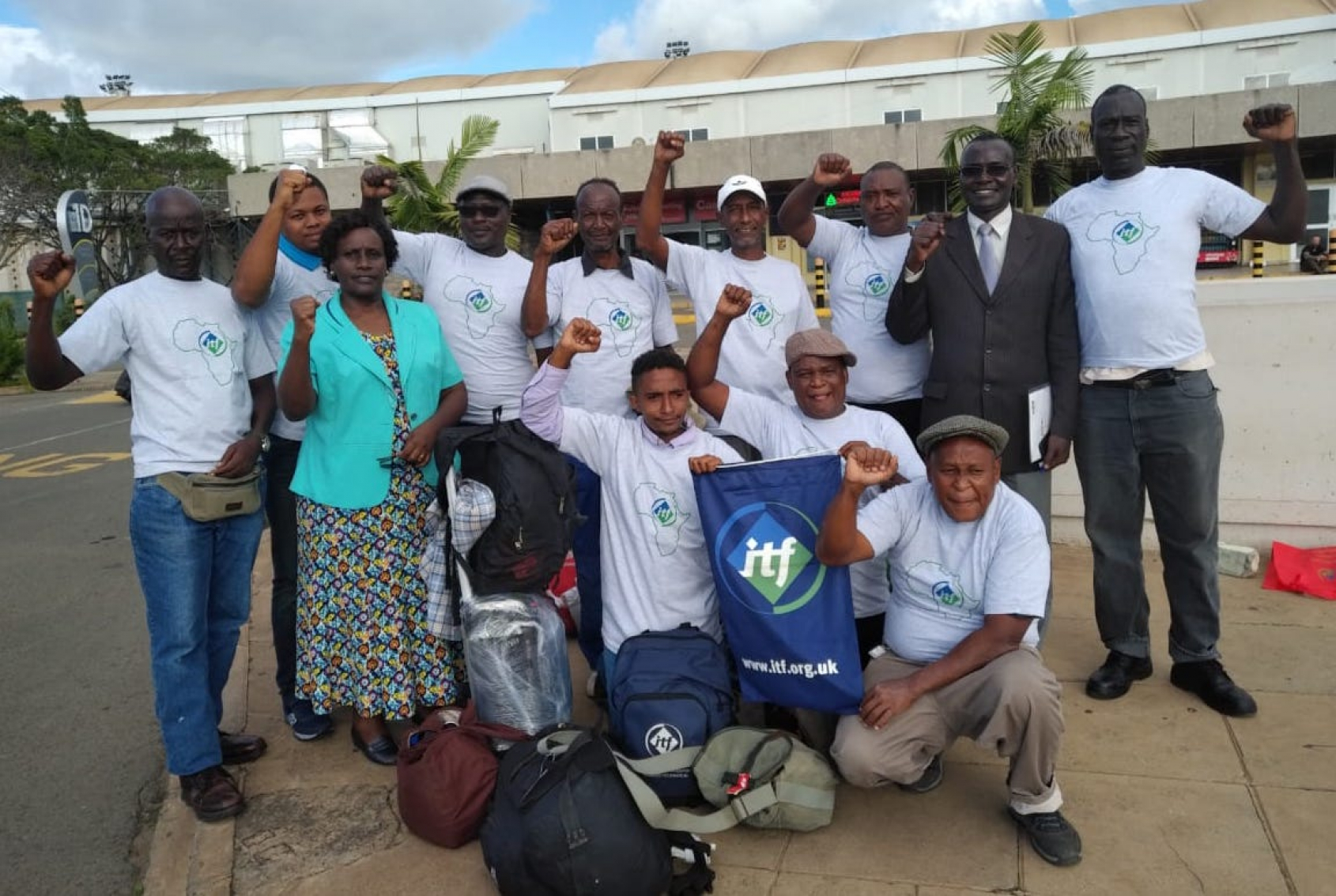 |
ITF: 10 Abandoned Kenyan Seafarers Return Home Offshore Energy |
Merchant fleets around the world for centuries flew the flag of their home port nation. Responsibility for ensuring proper treatment of crew and safety of vessel was laid at the feet of that country's regulators. Until the early 20th century when "open registries" emerged, also called "flags of convenience", and country of origin responsibility just evaporated. The shipping industry in 2017 motivated by bad press and pressure from unions, made an effort to confront the tendency to abandon seafarers.
A new rule was imposed on the industry, which required ship owners to carry insurance covering costs of sailors marooned in port. Most smaller and older vessels most likely to strand mariners are exempted by the new rule, with no requirement to obtain such insurance.
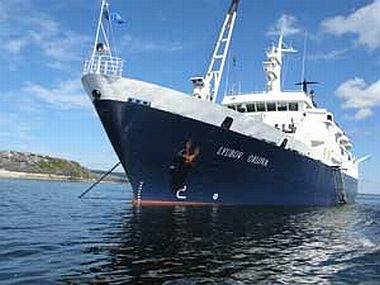 |
The ITF expresses deep concern over plight of crew of abandoned cruise ship 'Lyubov Orlova' marooned off St Johns, Newfoundland, Canada Eight crew remain on board after the ship was arrested in October by the ITF, with an outstanding wage claim of more than $300,000 (now $375,000). |
posted by Pieface | 8:01 PM
|
0 comments


