Politic?

This is a blog dedicated to a personal interpretation of political news of the day. I attempt to be as knowledgeable as possible before commenting and committing my thoughts to a day's communication.

Sunday, February 03, 2019

Perverting Psychology

"We all will come into close contact with mental illness during our lives. The diagnosis, treatment, and prevention of mental illness must reflect the very best science possible. Good intentions are not enough. History is replete with well-intentioned practitioners offering treatments of no proven scientific value, that were enthusiastically embraced by patients and their families but ultimately did absolutely no good and kept people from seeking truly effective treatments."
"The vast majority of clinical psychologists are now trained in programs in which science plays only a minor role. In the epistemology embraced by many of these programs, the primacy of scientific evidence is rejected, and students are trained to use methods of diagnosis, treatment, and prevention that have little or no scientific support."
Robert W. Levenson, former president, Association for Psychological Science

"The document produced by the American Psychological Association [APA] purporting to provide guidelines for the psychological treatment of boys and men is disingenuous, scientifically fraudulent and ethically reprehensible. I believe that the people who wrote it are ill-informed, ideologically possessed, morally weak, and malevolent in their unacknowledged and overweening resentment. I am embarrassed and ashamed to have them speak on behalf of my profession, and would like to apologize to the public for not having been sufficiently awake and outraged earlier to have done more to stop something like this from happening."
Jordan B. Peterson, professor of psychology, University of Toronto


Jordan Peterson is beside himself with anger. Indignation at stupidity and political correctness sits well on Jordan Peterson. He is a thorough professional, a man steeped in his profession and it irritates him to distraction to witness how degraded his own profession has become in its knee-jerk prostration toward the casual abandoning of scientifically-proven standards by which psychology made a respected name for itself, to clasping a more 'progressive' equivalency view of feminist theory in place of science.

His critique of the newly-released Guidelines for Psychological Practice with Boys and Men is one sizzling with indignation and fury. Dr. Peterson addresses the replacement of science by ideology in the complete and utter upheaval to compromise the science he practises. The language utilized in and of itself is more than sufficient to warn that The American Psychological Association has chosen to demean the profession by catering to the 'progressive' view of psychology through the lens of the LGBTQ2 community.

Words and phrases that set out the APA position in the document strain credulity, but they are there, large and opinionated: Gender, Cisgender, Gender Bias, Gender Role Strain, Masculinity Ideology, Gender Role Conflict, Oppression, Privilege, Psychological Practice, Gender Sensitive. Surely more than satisfactory to gain the sniffing approval of the aforesaid community and its legion of supporters. Just as well that Professor Peterson has his own legion of supporters who feel themselves oppressed and demeaned and sidelined.

According to the authors of the document, men socializing boys traditionally succeed in destroying their mental health. It is obviously, in their estimation, unhealthy to be masculine, to feel the emotions of a male, to consider oneself masculine in any way, shape or form. "Research suggests that socialization practices that teach boys from an early age to be self-reliant and strong, to minimize and manage their problems on their own yield adult men who are less willing to seek health treatment." If men encounter problems in their personal emotions they must perforce, immediately seek the guidance of a psychologist.

Who will steer them toward the feminine in their natures, persuading them that masculinity in any form is suicidal. Best of all, goes on the document: "Men are over-represented in prisons, are more likely than women to commit violent crimes, and are at greatest risk of being a victim of violent crime (homicide, aggravated assault)." That's their contention, and it's entirely skewed from reality. Aggression is inherent, not learned, and the recognition of that fact is that fathers and mothers teach boys inclined toward aggression to control it, as part of their socialization.

What is true, however, is that boys without fathers to pattern themselves on, and who will take their sons in hand and show by their own behaviour how to restrain impulses like aggression, are devoid of the opportunity to learn. Fatherless boys are more inclined to social deviance and that is fact. Boys without fathers to guide them become over-represented as alcoholics, drug addicts, gang members, prisoners, rapists, murderers. Dr. Peterson points out that the writers of the APA document he so deplores have a tendency to quote their own work as verification of what they state.

He also points out that the ideologues responsible for generating propagandist discourse point to Western culture as an oppressive patriarchy, male dominated, violent, racist, sexist, homo-, Islamo- and trans-phobic beyond redemption. From all of this it can be logically inferred that the progressives in social thought rejecting science in support of their profession have managed to pervert a once pre-eminent professional and scientific organization of U.S. psychologists.

The AMA's Boys and Men document is propagandistic to a degree that is almost incomprehensible.  Postmedia photo illustration

Labels: , , , ,

Thursday, June 29, 2017

The Human Reliability Issue in Self-Driving Cars

"Do you really want last-minute handoffs?"
"There is a really good debate going on over whether it will be possible to solve the handoff problem."
Stefan Heck, head, Nauto, Palo Alto, California

"Imagine if the autopilopt disengages once in 10,000 miles."
"You will be very tempted to over-trust the system. Then when it does mess up, you will be unprepared."
Gill Pratt, roboticist, Toyota

"Level three autonomous driving is unsolvable."
"The notion that a human can be a reliable backup is a fallacy."
John Leonard, professor, Massachusetts Institute of Technology

"They gave the message when I was close to getting a high score [playing a game]."
"I just realized it's not so easy to put the game away."
"Humans are inattentive, easily distracted, and slow to respond.] That problem's just too difficult."
Erik Coelingh, head of safety and driver assist technologies, Volvo
Volvo, self-driving vehicle simulator
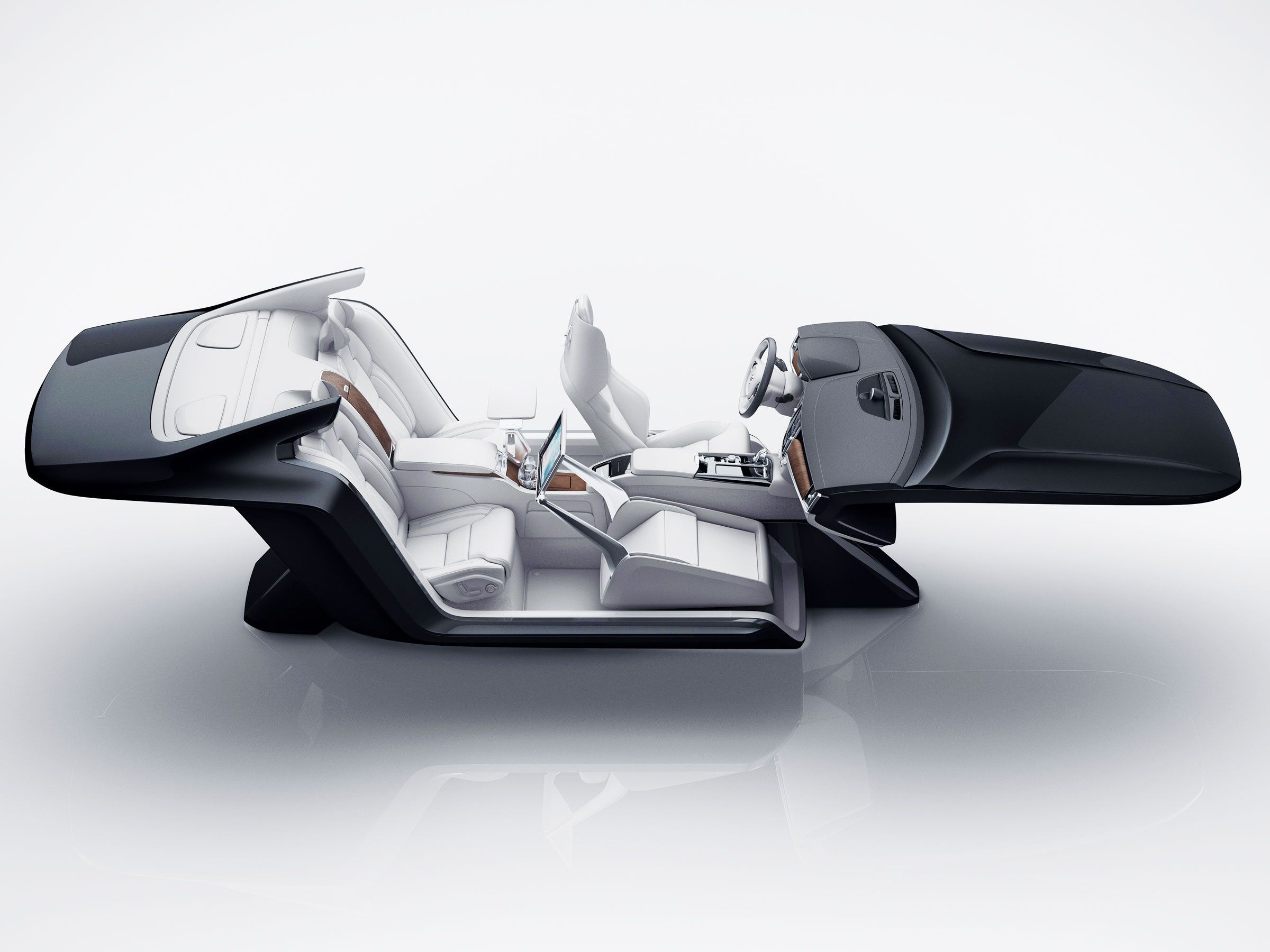
The manufacturers of self-driving cars have a terrific product. Who doesn't want to be driven around without having to be constantly alert and in charge of a vehicle? Computerized directions tell your vehicle where you want to go and the technology takes charge. Relax, do something else, that self-driving car will get you to your destination; safe and sound and no sweat on your part. Oh sure, there will be times when the computer suddenly signals that it is unable to interpret what is happening on the road, and nudges you, the 'driver' to use your human intelligence to decipher the situation and respond.

Immediately.

Except that you'd immersed yourself in a fascinating game on your smartphone and weren't paying attention. Why should you, the car was being computer-guided, and you were completely out of synch with what was happening. And then when the signal came 'over-to-you', you didn't know what was happening any more than the computer did. Google discovered to its great chagrin that even their own employees who should have an idea of what's happening and what their responsibilities are in that kind of situation, failed the test.
Google’s self-driving cars are going longer and longer before deciding to disengage and hand control back to humans.
After deciding to reward their employees by giving them their own self-driving cars to be used for their commutes to work and home, they checked back on the automatic recording of how swimmingly things went in the process. And what they saw gave those executives splitting headaches. Employees were recorded by cameras to be clambering into the back of the vehicle, climbing out an open car window, smooching, and other undriverly escapades, according to two (former) Google engineers. "We saw stuff that made us a little nervous", admitted roboticist Chris Urmson at the time in charge of the project.

We all like to believe in the 'intelligence' of robotic cars. They've been programmed, after all, to interpret and rationalize to a degree. There are set patterns they recognize and respond to. Kind of like the human brain. But not quite, not quite yet. Optimistically, engineers feel another decade of experimental research and tinkering should do the trick. For the present, autonomous driving will not be completely independent of a driver's attention when hand-offs are an instant situation requiring immediate recourse to action.

Computers may be capable at this juncture of winning chess games and sending chess masters of global renown into the sulks, but they are not yet at that stage when they are able to judge situations on the road and instantly react as a human should and would. And the human sitting in the car who has to be prepared for that moment when the computer tells him that it's his turn, and quickly, to avoid disaster, may not be prepared for that moment though he/she should be. We're dealing with human nature here, not a mechanical device.

There are five levels of human-to-machine controls that the automotive industry has established to date. Level 0 represents manual driving, and Level 6 is complete autonomy, while Level 3 represents that point when the artificial intelligence manoeuvering the car turns to the human to address an emergency. Except that though the human relies on the artificial intelligence to do its thing, the artificial intelligence, though it may not be aware of it, cannot entirely depend on the human to spell it during that emergency situation.

According to Nauto, a startup that developed a system capable of simultaneously observing both driver and outside environment to provide, as required, alerts, a "driver distraction event" occurs every six kilometers, on average. At Stanford University scientists showed research results illustrating that most drivers need over five seconds to successfully regain control of a car. Google saw what is called "overtrust" on the part of automotive engineers when it matched employees with its prototype self-driving cars.

Audi's commercial vehicle with Level 3 autonomy expected out next month will be geared to give drivers eight to ten seconds to intervene in an emergency situation, while the car moves at 60 kilometers an hour in stop-and-go traffic. The concern, needless to say, is human operators who may be engrossed in email or deep in a game they're trying to master. Perhaps the template in solving the situation can be the study of challenges faced by the airlines industry in ensuring that airplane pilots remain vigilant while the planes are on automatic pilot.

edge3technologies.com

Labels: , , ,

() Follow @rheytah Tweet