Politic?

This is a blog dedicated to a personal interpretation of political news of the day. I attempt to be as knowledgeable as possible before commenting and committing my thoughts to a day's communication.

Sunday, April 19, 2026

Sudan : An Abandoned Crisis
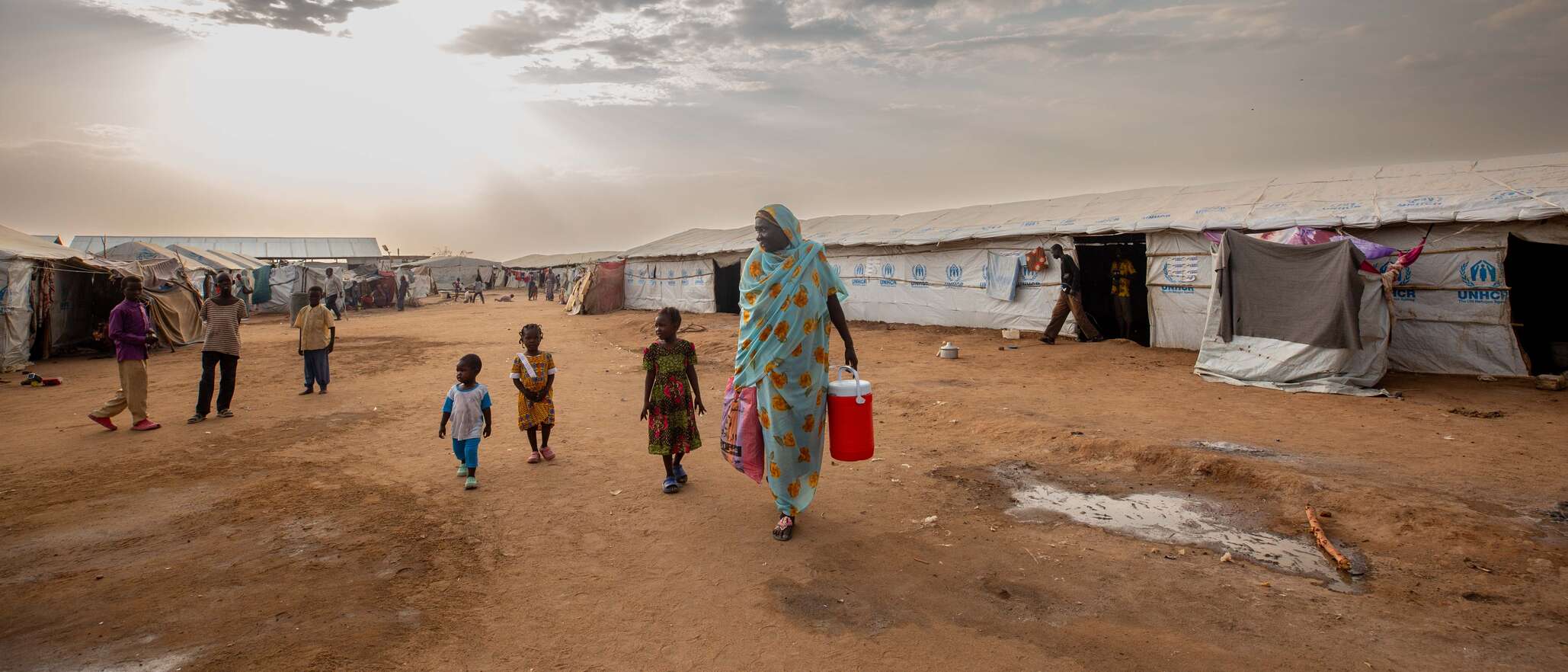
https://www.rescue.org/sites/default/files/styles/super_widescreen_21x9_2058px_wide/public/2024-07/8S3A8129%E2%80%9321x9%20%281%29.jpg?itok=-uAQ5tC-
International Rescue Committee
 
"Even before the war in Sudan erupted in April 2023, the country was already experiencing a severe humanitarian crisis that left 15.8 million people in need of aid. Now, three years of war have drastically worsened these conditions, displacing approximately 14 million people and leaving 33.7 million people—two-thirds of the population—in need of humanitarian support."
"The country’s food system has been pushed to the brink, with millions of families now surviving on just one meal a day, or less."
"Sudan is the largest humanitarian crisis in the world in terms of number of people who need humanitarian aid. It is also the largest and fastest displacement crisis."
International Rescue Committee
 
 
  • As Sudan marks three years of war, MSF teams continue to treat people whose lives have been devastated by the conflict between the Sudanese Armed Forces (SAF) and the Rapid Support Forces (RSF).
  • A lack of basic services and constrained humanitarian access are compounding people's suffering.
  • The warring parties must protect civilians and be held accountable for their violations, and the international community must use diplomatic pressure to prevent further crimes. 
  • Medicins Sans Frontieres  
    APTOPIX Sudan War
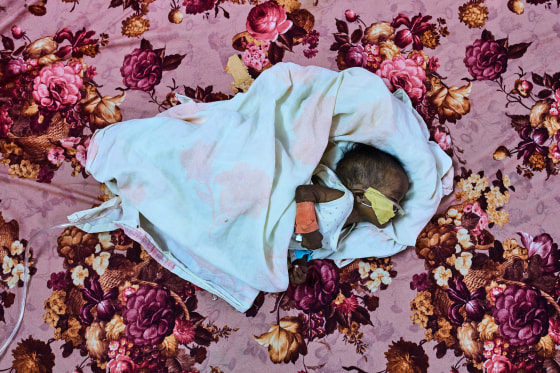
    Patient Saidal Altaher, 2 months old, being treated for malnutrition at the pediatric hospital stabilization center in Port Sudan on Wednesday.  Bernat Armangue / AP
     
    Described as the world's largest humanitarian challenge in terms of displacement and hunger, Sudan is suffering a crisis of abandonment with the world's attention turning to the Middle East and the standoff in Iran, and its blockade of the Hormuz Strait. In Sudan, 13 million people have been forced by the threat and violence of a bloody conflict to flee their homes, becoming internally displaced. Food and medicines are scarce and diseases like cholera are running rampant. 
     
    The number of  dead from the conflict stands at 59,000 with 6,000 having perished over three days alone, as the RSF (paramilitary Rapid Support Forces) bulled their way through the Darfur outpost of el-Fasher in October, an offensive that the UN considers alike "the defining characteristics of genocide". Black Darfurians once again in the rifle sights of the horsed Arab Janjaweed as they were in the early 2000s.
     
    Severe acute malnutrition is set to afflict 800,000 people in parts of Sudan, according to the Integrated Food Security Phase Classification. Two of every three Sudanese require assistance, according to the United Nations. Health facilities have been impacted to the point where only 63 percent remain fully or partially functional to deal with the conflict's wounded and emerging disease outbreaks. 
     
    Denise Brown, the UN's top official in Sudan, criticizing the international community for its failure to press for the end to the conflict, stating: "A plea from me: Please don't call this the forgotten crisis. I'm referring to this as an abandoned crisis", she corrected. 
     
    https://ichef.bbci.co.uk/news/1024/cpsprodpb/3cf9/live/b8148000-373d-11f1-8606-05fe34b06e1b.jpg.webp
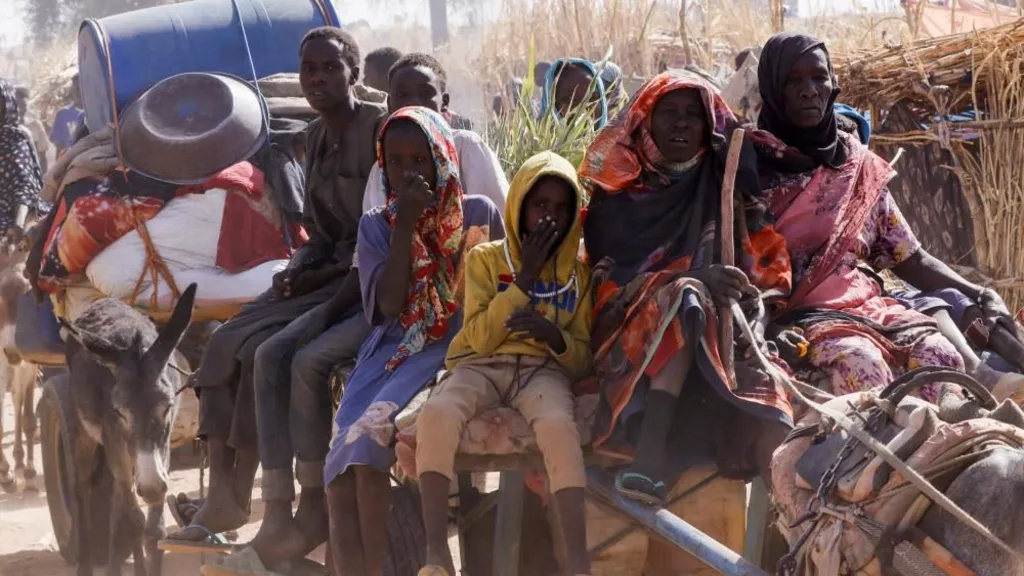
    People fleeing conflict in Sudan's Darfur risked being hit by drone strikes   Reuters
     
    Following the deposed dictator Omar al-Bashir in 2019, a power struggle emerged between the Sudanese military under General Abdel-Fattah Burhan, and RSF commander General Mohamed Hamdan Dagalo, who was initially Burhan's deputy at the ruling sovereign council of Sudan. Sudanese "have become powerless and are subjected to foreign dictates", claimed a Sudanese journalist and researcher.
     
    Germany undertook to host a  conference in Berlin, welcoming governments, UN agencies and aid groups to take part, with a goal to rally donors to assist in funding strained humanitarian responses and to "promote an immediate ceasefire", according to the German Development Ministry. For its troubles, the Khartoum government condemned the conference as an 'unacceptable' interference on Sudan's internal affairs. 
     
    The Sudanese military has control over the country's north, east and central regions, its oil refineries and pipelines, and Red Sea ports. The RSF and its allies control Darfur and the region at the border with South Sudan. Regions that both include oilfields and gold mines. Egypt supports the Sudan military, and the United Arab Emirates has been accused by the UN of providing arms to the RSF, which it emphatically denies. 
     
    In the three years of conflict, widespread atrocities are known to have occurred;  rampant sexual violence in gang rapes and mass killings, among them. According to the WHO, hospitals, ambulances and medical workers have been attacked, claiming over 2,000 have been killed.  Most atrocities have been placed at the feet of the RSF and the Janjaweed, notorious for atrocities committed in the early 2000s against Black Sudanese farming communities. 
     
    TOPSHOT-SUDAN-CONFLICT
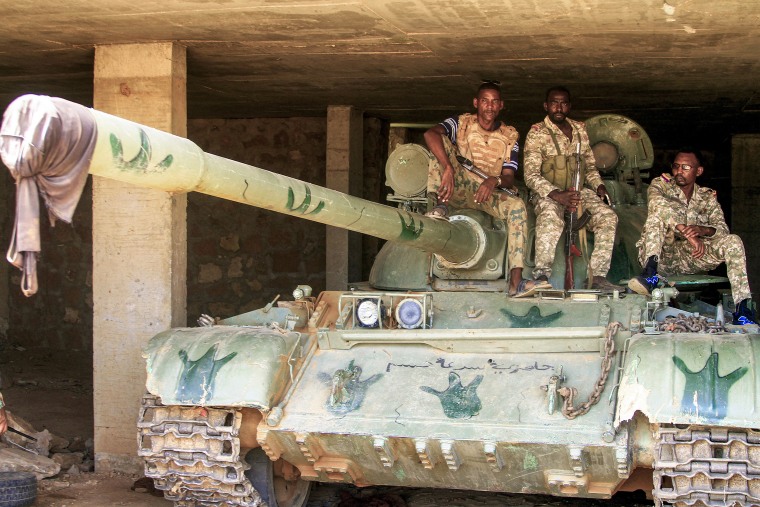
    Sudanese army soldiers sitting atop a parked tank after their capture of a base used by the RSF, after the rival paramilitary group evacuated from the Salha area of Omdurman, the twin city of Sudan's capital, in May 2025.  Ebrahim Hamid / AFP via Getty Images


    Labels: , , , , , , ,

    Sunday, December 19, 2021

    The Desperate Plight of Afghanistan's Indigent Poor

    "We need to separate the politics from the humanitarian imperative."
    "The millions of women, of children, of men in the current crisis in Afghanistan are innocent people who are being condemned to a winter of absolute desperation and potentially, death."
    Mary-Ellen McGroarty, director for Afghanistan, World Food Program
     
    ?The humanitarian crisis is escalating daily in Afghanistan. Hunger in the country has reached truly unprecedented levels."
    "Nearly 23 million people—that is 55 percent of the population—are facing extreme levels of hunger, and nearly nine million of them are at risk of famine."
    "One single mother that I met, she has a six-month-old baby, a 12-year-old son, a 10-year-old daughter, and two parents to look after because the husband died in the fighting. So, she has to take care of the full family…Her children go hungry. So, the two kids, the 12-year-old and the 10-year-old—they have to work."
    UNHCR spokesman Babar Baloch
     
    "People are impoverished here. Yesterday I saw a woman who was going through the rubbish bins at the local hotel, collecting the leftover food."
    "I asked her why she was doing so and she said she didn't have any other solution, she was trying to find food for her children."
    Resident of Kandahar
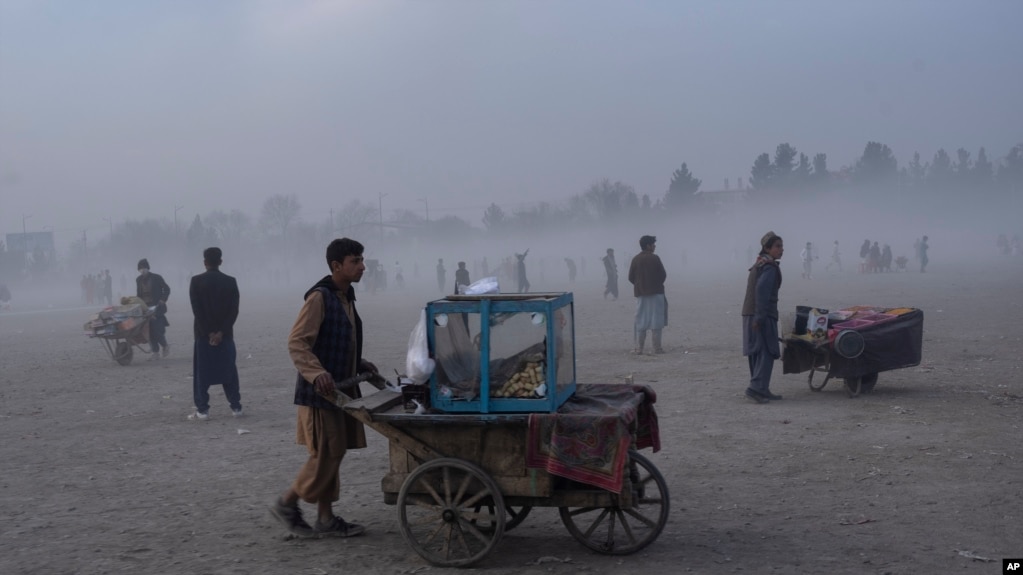
    Street vendors push their carts in Chaman-e-Hozori park, Kabul, Afghanistan, Dec. 3 , 2021.

    Women in towns and villages in southern Afghanistan bring their famished children folded into their burqas to clinics, walking long distances through a parched landscape in the process, hoping to be given medication and food for the children. Most families have been reduced to once-daily meals and even the ingredients for that sparse diet have become scarce thanks to failed harvests, dry wells and shopkeepers refusing further credit for flour.

    On the brink of mass starvation aid groups fear threatens to take the lives of a million children this winter, the future for people in the country looks bleak. The dire societal problem of malnutrition has haunted the country for decades, but the current hunger crisis is dramatically worse, leaving an estimated 22 million people representing over half the population, susceptible to starvation. Life-threatening levels of food insecurity looms on the near horizon.

    According to an analysis by the United Nations World Food Program and Food and Agriculture Organization, 8.7 million Afghans are facing famine, representing the most extreme stage of a food crisis. It is precisely this widespread hunger that reflects the most devastating symptom of the country's economic failure that has overtaken Afghanistan since its violent takeover by the Taliban.

    Virtually overnight billions of dollars in foreign aid that had supported the previous government disappeared, while U.S. sanctions on the Taliban isolated the country from the global financial system, freezing Afghan banks and impeding reief work by humanitatian organizations. Millions of Afghans; day labourers to doctors and teachers have been months without incomes as food prices and other goods have soared.
     
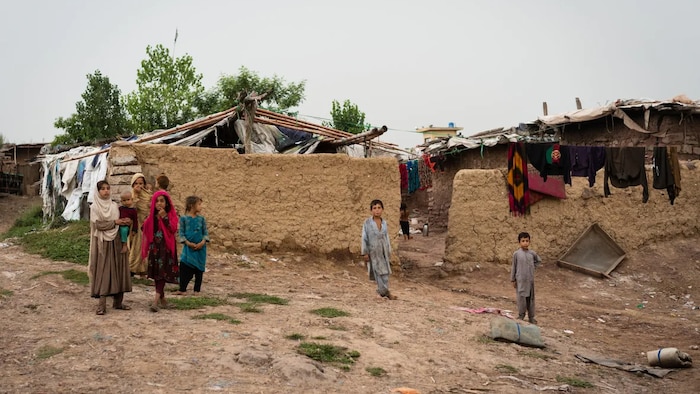
    People in the Afghan Village refugee camp in Islamabad live in shacks with no running water or electricity.

    People in the Afghan Village refugee camp in Islamabad live in shacks with no running water or electricity. Photo: (Jared Thomas/CBC)

    Malnutrition wards of overcrowded  hospitals  have taken in emaciated children and their anaemic mothers. The hospitals themselves are ill equipped, with a shortage of medical supplies once provided by donor aid. At the same time, the country is in the grip of one of the worst droughts in decades. Humanitarian groups warn that as the lives of a million children are imperilled, the United States faces mounting international pressure to ease economic restrictions on the country.

    The hunger that threatens Afghanistan is reflected elsewhere, as similar situations arise around the world, driven by the pandemic, by conflict, and by climate-related events. Crisis-level food shortages face 30 percent more Afghans compared with the same period last year. "It was never this bad", head doctor Sifatullah Sifat at the Shamsui Haq clinic on Kandahar city's outskirts stated, as malnutrition cases doubled in recent months. "Donors are shipping in medicine, but it's still not enough."

    "They are crying to have food", said 20-year-old Zarmina, her 18-month-old son in her arms, her 3-year-old daughter standing behind her; a family that has survived mostly on bread and tea since her husband's day labourer work dried up. "I wish I could bring them something, but we have nothing."

    The international community grapples with the dilemma of what action to take to avert a human disaster in the country while bypassing the new regime in fears of giving it legitimacy through the removal of sanctions or placing funds directly into the hands of the Taliban.

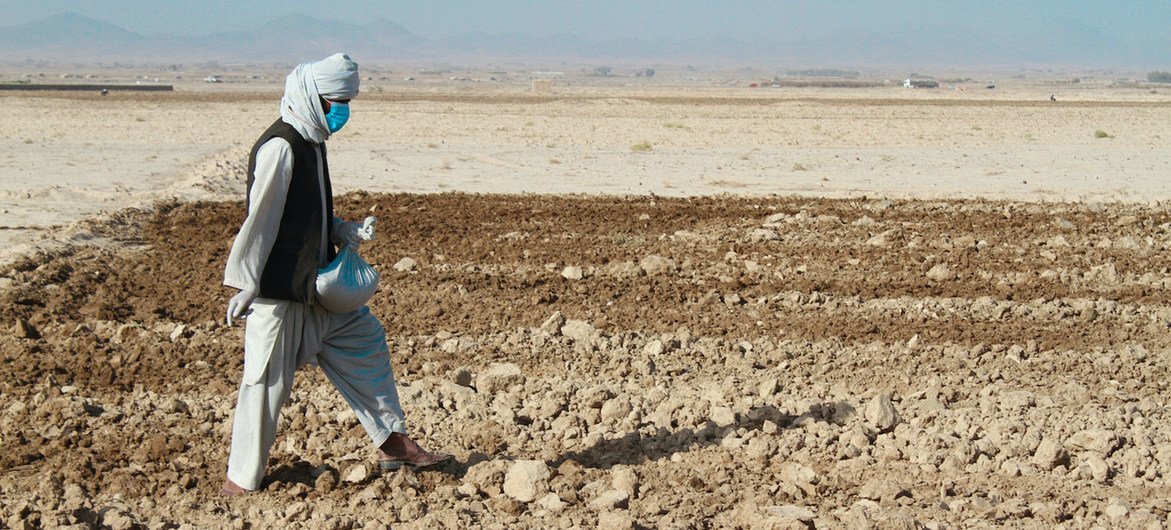
    A farmer sows seeds he received from FAO wheat seed distribution in Kandahar in Afghanistan.
    FAO/Hashim Azizi
    A farmer sows seeds he received from FAO wheat seed distribution in Kandahar in Afghanistan.

    Labels: , , , , , ,

    Wednesday, December 04, 2019

    Championing Venezuela on the Human Rights Council

    "The Venezuelan economy was a drunk floundering in a choppy ocean, struggling to stay afloat, begging for a life buoy."
    "The Trump administration threw it a hammer instead. A hammer is no help at all. It's heavy. It might make the drunk sink a bit faster. But you can't put the hammer at the center of a narrative about why the drunk is drowning."
    Francisco Toro, Venezuelan journalist

    "It's a dilemma, for Venezuela and the world."
    "We need to use every pressure tool [including sanctions] we can get."
    Juan Guaido, Venezuelan opposition leader

    "When Chavez died, I cried."
    "But I would poison Maduro myself."
    Resident of San Isidro shantytown

    "I'm afraid she [her five year old daughter weighing 12 kilograms] will die [of severe malnutrition]."
    "Because I now know that I can't take her to a hospital. They have nothing."
    Elsys Silgado, 21, Caracas, Venezuela
    Another 21-year-old Venezuelan, living in the country's capital, Daniela Serrano's 8-month-old infant girl, both living in the impoverished slum of La Dotorita, was  taken to hospital, suffering from malnutrition. The young mother was turned away from three hospitals where she frantically sought medical help to save her baby. There were no beds available, there were no doctors to treat the baby and there were no supplies. At one emergency room the mother was told to bring a blank sheet of paper to record medical notes, when someone agreed they would examine the tiny girl.

    The mother needed no official note from a hospital that couldn't even supply a piece of paper; she knew her child was starving. And then the baby was discharged, sent back home with her mother. "I realized she was cold and wasn't breathing", said the mother of her baby, Daisha who died that very night. "I screamed." A neighbour responded and called for emergency assistance. "First responders" showed up eleven hours later, to take Daisha's tiny corpse away with them.

    Empty shelves in a Caracas supermarket
    Empty shelves in a Caracas supermarket © Reuters

    Elsys Silgado has two  small children both nearing death, a five-year-old and a three-year-old, both afflicted with severe malnutrition, the younger with a severe infection and a persistent fever as well, wracking her tiny body. This mother and her children were also turned away, from four hospitals. No beds were available. The mother described the emergency rooms as filthy, lacking electricity or running water. Her children recovered but their mother knows they remain in danger of death from persistent malnutrition.

    No aid trickles down to the people of Venezuela from their government. Its incompetence is not surprising since thugs comprise the ruling party. Once prosperous as an oil-producing nation, when it became a socialist-ruling country with close ties to Russia and Cuba through its 'Bolivarian' revolution that Hugo Chavez famously championed, then groomed a bus driver to ascend to the presidency before he died of cancer, the country was set for complete ruin.

    BARQUISIMETO, VENEZUELA - MAY 13: Men stand in line outside Doris Ortegano's house waiting for what may be their only meal for the day on May 13, 2019 in Barquisimeto, Venezuela. One year ago, Doris Ortegano started cooking an giving away food for people in need in Barquisimeto, Lara. According to her words, she asked God how to help the others and felt this was the way to do that. She cooks from Monday to Friday and starts working at 8 in the morning. She affords part of the food and also receive donations. Nowadays, she is helped by two men who used to visit her asking for food. They deliver 250 meals a day, which consist of soup, bread or rice, arepas (traditional patty made with white cornmeal, water and salt) and sometimes salads and fried plantains. (Photo by Edilzon Gamez/Getty Images)
    Men stand in line outside a soup kitchen for what may be their only meal for the day. © Getty

    President Nicolas Maduro is indifferent to the plight of his nation. Why should he not be? Socialists everywhere support his rule, claiming that the West, the wealthy democratic countries that find fault with socialism are responsible for the failed economy by imposing sanctions on the already-frail economy, with its high unemployment, debt, sky-high inflation, shortage of food and medicine and oil, steadily increasing crime and violence, and people so desperate they flooded neighbouring countries as refugees looking for haven in their millions.

    And now, why is it so predictable that Venezuela would be elected to the United Nations Human Rights Council last month, with 105 votes and a round of applause? Responsible for the promotion and protection of human rights, the Human Rights Council, created in 2006 by the General Assembly busies itself condemning one sole country for ostensible human rights abuses: Israel, while electing a vicious kleptocracy like Venezuela to sit on it.

    https://www.ft.com/__origami/service/image/v2/images/raw/http%3A%2F%2Fcom.ft.imagepublish.upp-prod-us.s3.amazonaws.com%2F7799d632-b9e1-11e9-8a88-aa6628ac896c?fit=scale-down&source=next&width=700
    Children scavenge for food at the back of garbage pick-up trucks in Caracas. Reuters
    Over a month ago, the council agreed it would set up an international fact-finding mission and if violations of human rights were discovered, they would be documented. They would check the allegations of torture and summary executions, in their thousands. A July report authored by Michelle Bachelet, the human rights chief, reported that Venezuelan security forces were responsible for death squads sent to kill young men opposed to the regime, staging the executions to appear as though the victims had resisted arrest....

    A graphic with no description

    Labels: , , , ,

    () Follow @rheytah Tweet