Politic?

This is a blog dedicated to a personal interpretation of political news of the day. I attempt to be as knowledgeable as possible before commenting and committing my thoughts to a day's communication.

Tuesday, February 10, 2026

A Guatemalan Tragedy of Unspeakable Proportions

"All of the villagers in the well were ultimately killed ... I find those killings were done under the watch and orders of Mr. Sosa."
"When the well was being covered up, screams and cries of victims could still be heard. They were left to die a horrible death."
"Members of the patrol unit laughed, as if nothing had happened."
"Mr. Sosa denies that he was present at Las Dos Erres when the massacre took place; however, I place no credence in anything he says."
"Indeed, I consider Mr. Sosa to be a consummate liar."
Federal Court Justice Roger Lafreniere  
https://nsarchive2.gwu.edu/NSAEBB/NSAEBB316/photo1_400.jpg
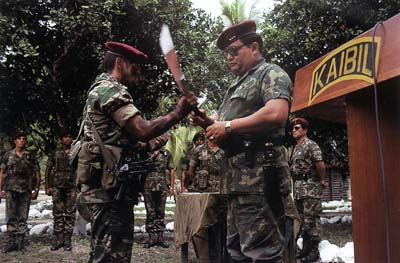
Graduation ceremony at the Kaibil, counterinsurgency unit 
"On January 18, 2011, Jorge Vinicio Sosa Orantes was arrested in Alberta, Canada on charges of naturalization fraud in the United States."
"Sosa Orantes, 52, is a former commanding officer of the Guatemalan Special Forces, or Kaibil unit, which brutally murdered more than 250 men, women and children during the 1982 massacre."
"The massacre was part of the Guatemalan military's "scorched earth campaign" and was carried out by the Kaibiles ranger unit. The Kaibiles were specially trained soldiers who became notorious for their use of torture and brutal killing tactics. "
"According to witness testimony, and corroborated through U.S. declassified archives, the Kaibiles entered the town of Dos Erres on the morning of December 6, 1982, and separated the men from women and children. They started torturing the men and raping the women and by the afternoon they had killed almost the entire community, including the children."
"Nearly the entire town was murdered, their bodies thrown into a well and left in nearby fields. The U.S. documents reveal that American officials deliberated over theories of how an entire town could just "disappear," and concluded that the Army was the only force capable of such an organized atrocity. More than 250 people are believed to have died in the massacre."
U.S. National Security Archive 
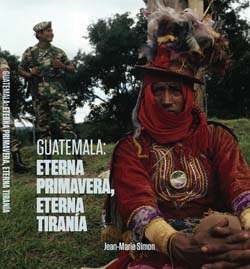
Harrowing testimony of 'extreme cruelty' perpetrated by unit commanders like Sosa, who ordered the entire village be slaughtered detailed the horror of that fateful day in extinguishing an entire village. The government military force called the Kaibiles had entered the village of Las Dos Erres, in 1982, home to 200 people, searching for weapons said to have been stolen by guerilla forces from the military, and hidden at the village, during the decades-long Guatemalan civil war. No weapons were found, but the order to butcher the entire population of the village commenced over an agonizing period of hours.
 
https://nsarchive2.gwu.edu/NSAEBB/NSAEBB316/photo3_250.jpg

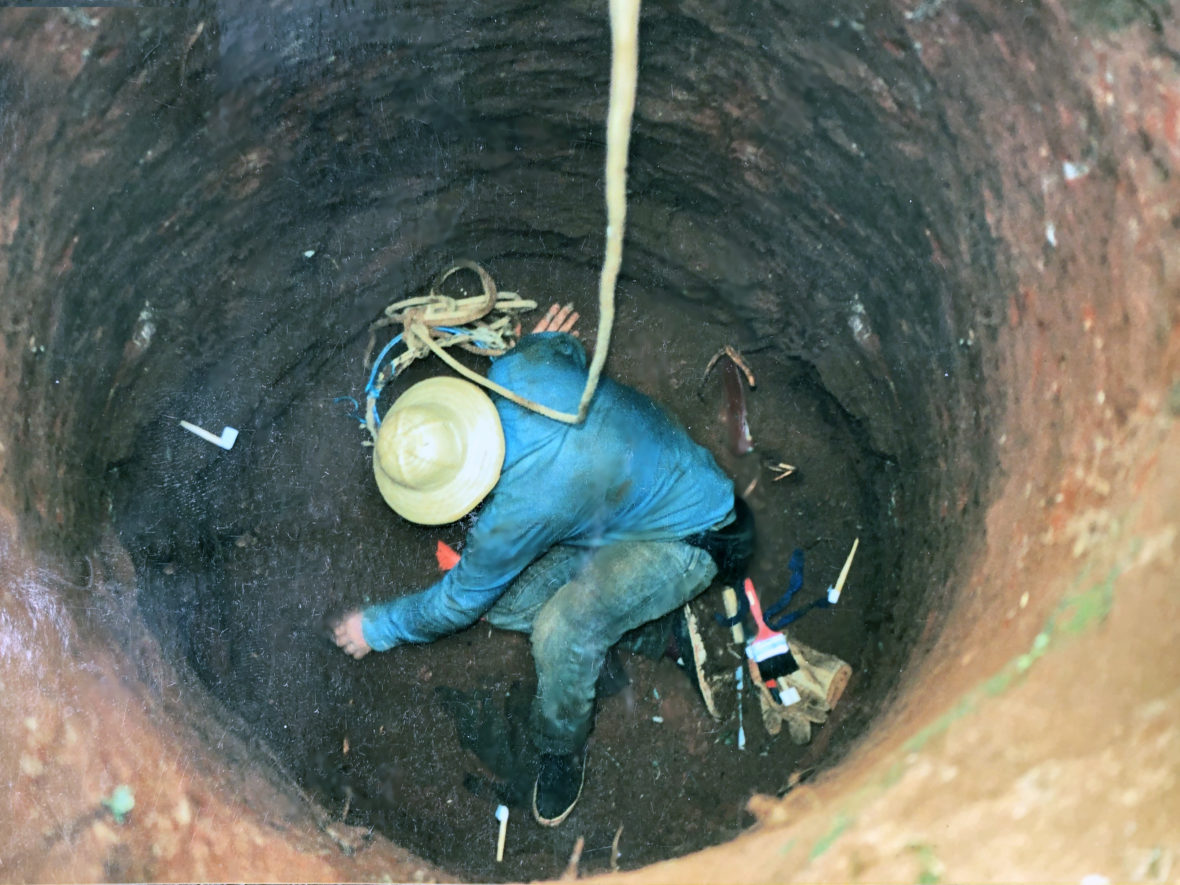
A baby was thrown into a well to drown, children were smashed against trees, and countless other members of the community were flung into that well, some alive, many dead, their skulls crushed or shot. Women were raped and murdered in front of their children. Sosa, in charge, shot a man and threw a grenade into the well to still the wailing cries of people in their death throes. Ten years after the atrocity investigators exhuming the remains found 'a minimum' of 162 had died in the well; the first victims lying at the bottom were children under age 12, and women.
 
Jorge Vinicio Sosa Orantes was fourth in command of the unit at the time, known to have personally committed murder at the time, and who had also ordered the slaughter of civilians. Testimony from one of Sosa's former military colleagues spoke of his having taught his special military unit techniques of torture on live victims at a zone set aside for practise; the "zombie area".
 
He has been living in Canada for 34 years. Guatemalan authorities, after a prolonged investigation, had issued an arrest warrant against the man in 2000, long after he had left the country. Sosa had moved to the United States where he applied for asylum, in 1985. His claim was denied and he turned to Canada in 1987, applying for asylum at the San Francisco-based Canadian consulate. He withheld the vital information from immigration officials that he had served in the Guatemalan military. Granted refugee status, he achieved citizenship in Canada in 1992.
 
Sosa married an American citizen, then applied and received U.S. citizenship in 1997. U.S. officials became aware of his subterfuge of withholding critical background information in his refugee claims --leading to his extradition from Canada to the U.S. where he was sentenced to ten years in an American prison for immigration fraud, in 2014. Canadian immigration officials three years later initiated a legal process asking a court to revoke Sosa's citizenship, declaring him inadmissible to Canada. 
 
https://newsinteractives.cbc.ca/craft-assets/images/_large/School-children-of-Dos-Erres-group-photo-courtesy-Sara-Romero.jpg
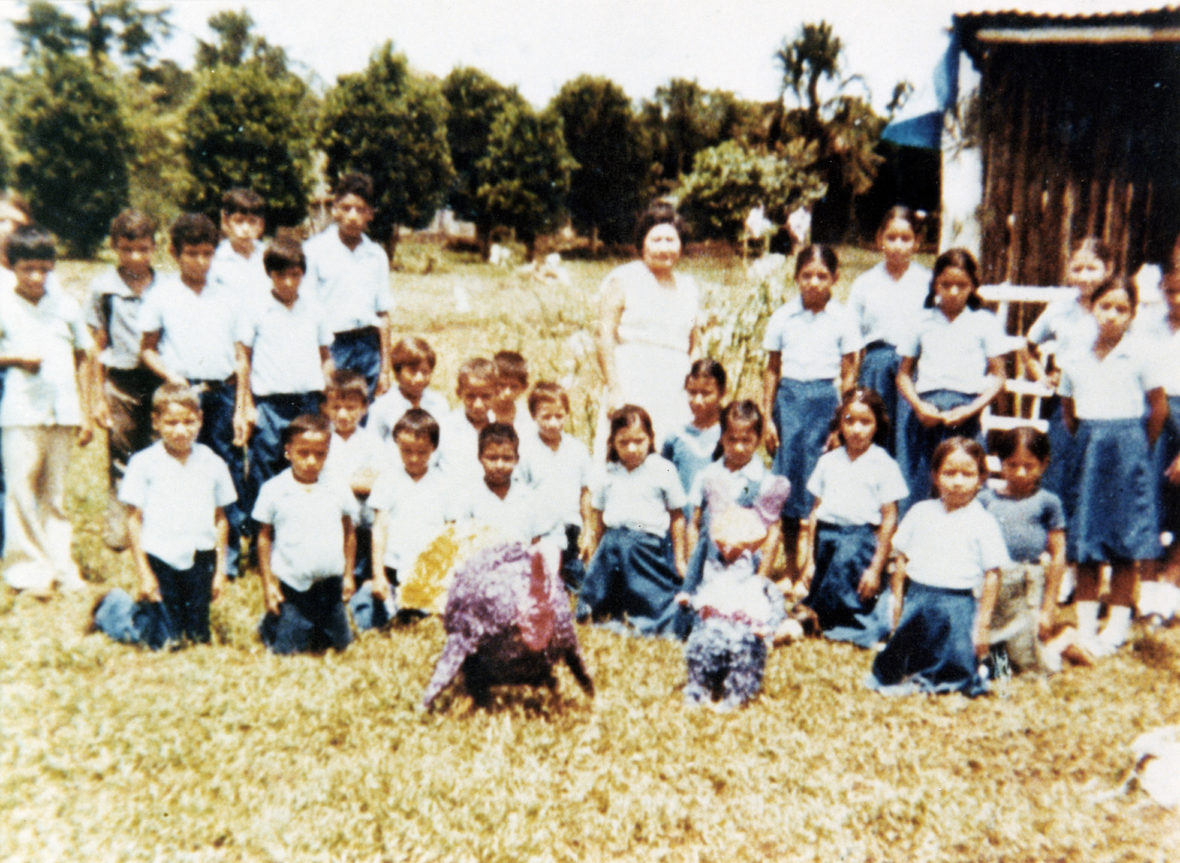
Schoolchildren gather in Dos Erres for an Independence Day celebration on Sept. 15, 1982. (Submitted by Sara Romero)
 
Finally, Canadian citizenship was revoked on the basis of Jorge Vinicio Sosa Orantes having committed unspeakable crimes in Guatemala forty years ago. Federal Court Justice Roger Lafreniere revoked that 34-year-old citizenship, declaring the man inadmissible to the country. Sosa was ordered to pay close to $250,000 to cover costs for the trial expended by the federal government. Costs related to arranging testimony of one of two massacre survivors, of two of Sosa's former military colleagues present at the bloodbath, and eight expert witnesses including Canadian immigration officials.
 
https://newsinteractives.cbc.ca/craft-assets/images/_large/IMG_0159-well-inside-courtesy-FAMDEGUA.jpg
The well in Dos Erres was examined during a dig by forensic anthropologists that was organized by Aura Elana Farfan. (Submitted by FAMDEGUA)
 

Labels: , , , , ,

Wednesday, January 02, 2019

Child Endangerment and Neglect

"I am living with a deep sadness since I learned of my daughter's death."
"But there are no jobs, and this caused the decision to leave [Guatemala for the United States]."
Claudia Maquin, 27, San Antonio Secortez, Raxruha, Guatemala

"Somebody came and tricked people and told them, 'I will get you political asylum -- and take a child with you."
Cesar Castro, mayor, San Antonio, Secortez, Raxruha
Friends and family carry a coffin with the remains of Jakelin Caal, a 7-year-old girl who handed herself in to US border agents earlier this month and died in the custody of US Customs and Border Protection.

Claudia Maquin's 29-year-old husband, Nery Caal, decided to leave their small village to find his future and a hoped-for change-of-fortune by claiming himself to be a refugee and entering the United States where opportunities presumably abound. With little formal education, the small family lived on a parcel of land that they felt was too small to provide for their needs. He aspired to better things and had no trust that their lot would be improved by remaining where he was.

He and his wife had four children aged from 9, to 7, 5 years of age, and an infant of six months. Mr. Caal decided to take a long and perilous journey and that his seven-year-old daughter Jakelin would accompany him. For, he was informed, anyone seeking to be welcomed by the United States would induce sympathy with the presence of a child. Either the smuggler he paid to get them to the border between Mexico and the U.S. or others who had made the same trip persuaded him his chances of remaining would be immeasurably improved with the presence of a child.

According to the town's mayor, Mr. Castro, Mr. Caal's venture was not unusual. On average, ten, twenty or thirty people abandon the village monthly to strike out on a journey for which they pay smugglers handsomely. The same smugglers that tell convincing stories of great success, of welcome committees at the border, of the opportunities to live well that will open to them in the United States; they have just to pay and to leave; preferably in the company of a child, which evokes empathy.

In the community of San Antonio Secortez, where the Caal family lives, corn and beans are grown by families who also raise goats, chickens and pigs. The Caal family's patriarch said the fields are no longer as fertile as they once were but he is uncertain whether it is a decline in soil quality or changing weather patterns, or some other undefined reason that is responsible for the decline in agricultural output.

There are fewer wild deer and boar to hunt and the river fish that once teemed allowing large catches have dwindled, resulting from the forest to the north of the town being cleared by oil palm plantations. Evidently, in relation to the size of the Guatemala economy the government collects a smaller share of tax revenues than any other country in the world, according to the World Bank.

Guatemala is not poor according to the World Bank which classifies it as an upper-middle income nation. One, however, with notable inequalities stemming from centuries of racism and powerful groups controlling the economy, resisting efforts to address discrimination, so Guatemalans have always thought of migration as an escape from these divisions.

Despite that it is well known that apprehensions are taking place at the border between Mexico and the United States, nothing appears to convince Guatemalans that they will not, in actual fact, be welcomed into the country they aspire to travel toward and enter to become entitled to benefits their own country fails to provide for them.
Elvira Choc, grandmother of Jakelin Caal, during the funeral service.

Mr. Caal is now at a migrant shelter in Texas. His seven-year-old daughter Jakelin, although deemed by U.S. border agents to be in sound health, died without seeming cause once they crossed the border and were in the care of the system that evaluates refugee claims. The little girl's mother, grieving the death of one of her four children, insists her husband must remain in the U.S., not rejoin her in Guatemala.

Border Patrol agents in whose custody the child had died, stated the girl hadn't eaten or been hydrated for days during her trip with her father across the border. The implication that the parents failed to care properly for their daughter infuriates Jakelin's mother. Entering the U.S. is their route out of poverty, made all the more acute by the estimated $5,000 to $10,000 they paid to the smuggler, according to the town's mayor.

Jakelin died in a hospital in El Paso, Texas, on Dec. 8, two nights after her father, Nery Caal, turned himself and his daughter in to the custody of U.S. Border Patrol. Cause of death was dehydration and shock after running a high fever. Clearly, the child's most basic human needs were neglected by those most responsible for her well-being; her parents in search of a higher-order of priorities.

Local residents attend the funeral of Jakelin Caal at her home village of San Antonio Secortez, in Guatemala.

Labels: , , ,

() Follow @rheytah Tweet