Politic?

This is a blog dedicated to a personal interpretation of political news of the day. I attempt to be as knowledgeable as possible before commenting and committing my thoughts to a day's communication.

Thursday, December 16, 2021

Eliminaing Russian Nuisances

"State organs of the government of the Russian Federation took the decision to liquidate Tornike Khangoshvili in Berlin."
"Khangashvili had given up the fight against the Russian Federation years before. He had not held a weapon in his hands since 2008."
"This was not an act of self-defence by Russia. This was and is nothing other than state terrorism."
Judge Olaf Arnoldi, Berlin court 

"This murder, ordered by a state, is a serious violation of German law and Germany's sovereignty."
"Acts like the murder in [Berlin's] Tiergarten park seriously burden relations between our countries."
German Foreign Minister Annalena Baerbock
Russian President Putin | German Chancellor Olaf Scholz Photograph:( AFP )
 
Germany summoned the Russian ambassador to Germany, to inform him that two of the embassy's 101 diplomatic staff were to be expelled, following the trial and ruling by Justice Arnoldi when he sentenced Vadim Krasikov for the "especially serious" crime of murder of a former Chechen militant. The Russian agent dispatched to do the work of assassinating a man that President Vladimir Putin spoke of as a "bloody terrorist" was sentenced to life imprisonment for the 2019 act of "state terrorism".

The verdict, in the opinion of the Russian Embassy was "not objective and politically motivated". In 2019, Russian President Putin accused the murdered man of involvement in crimes that included the 2004 bombing if the Moscow metro, when ten people were killed. Georgian citizen Tornike Khangoshvili died of three shots from a Block pistol in August of 2019 in evident retaliation for his role fighting for Chechen separatists against Moscow in the 2000s.

Russia had supplied their hit man with false papers to use when travelling toward his destined target. His assignment began when Krasikov flew to Paris equipped with a false passport and from there journeyed on to Berlin In  his possession was thousands of euros in cash to enable his swift departure once his assignment had been completed.

As Khangoshvili cycled through the famed Berlin park on a beautiful sunny August day, Krasikov lethally shot his target, then hid behind shrubbery where he removed his clothing and his cap, replaced them with an innocuous tourist-type outfit, trimmed his beard, and prepared to saunter out and make good his escape from the scene. Unfortunately for his well-laid plans, there were witnesses.
 
The murderer's plan of escape was rent asunder when armed police within minutes surrounded him and others retrieved the discarded clothing, the murder weapon and brought Khangoshvili's bicycle out of the river. The arrested man now claims he is not Krasikov, but a construction engineer from St.Petersburg with the name of Vadim Sokolov. The lawyer for the arrested, tried and sentenced man claims the case against his client was built on conjecture, not proof. 

Russian assassins have a long history of murder by grotesque means of one kind or another to rid the nation's powerful and popular leader of irritating critics, of embarrassing turncoats, of those possessing state-incriminating evidence of more than nuisance value. From the use of military-grade chemical weapons to radioactive poisons, they leave their trademark, clumsy clues used to identify the perpetrators, linking them directly to the state apparatus assigned to eliminate state opponents.
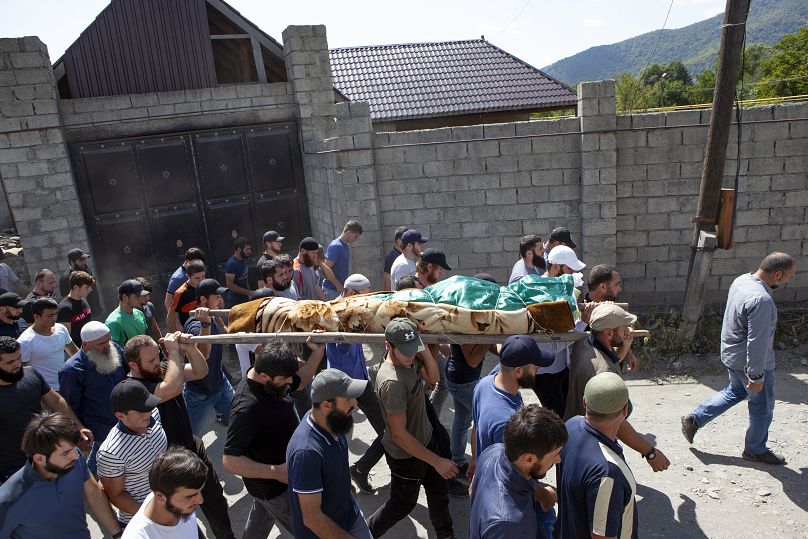
FILE - AP Photo/Zurab Tsertsvadze - August 2019
Zelimkhan Khangoshvili's body was carried during his funeral in Duisi village in the Pankisi Gorge valley. - AP Photo/Zurab Tsertsvadze - August 2019

Labels: , , , , , ,

Tuesday, July 02, 2019

Eluding Rwandan Justice

"Mr. Teganya was convicted and sentenced for the most serious form of immigration fraud: lying about his status as a war criminal to win asylum in the United States,"
"Based on the evidence admitted at trial, the defendant committed horrendous crimes during the Rwandan genocide and then sought to deceive U.S. immigration authorities about his past."
"Especially in the context of genocide, American asylum laws exist to protect the persecuted – not the persecutors."
United States Attorney Andrew E. Lelling

"The defendant committed unimaginable acts of violence and brutality."
"Today’s sentencing clearly demonstrates that this nation will never be a safe haven for human rights violators and war criminals."
"Homeland Security Investigations will continue to work closely with our federal and international partners to relentlessly pursue such criminals and protect our nation’s legal immigration systems."
Special Agent in Charge Peter C. Fitzhugh, Homeland Security Investigations, Boston

"Do I sentence him as a liar or do I sentence him as a murderer, or a rapist, or genocide participant?"
Judge F Dennis Saylor IV
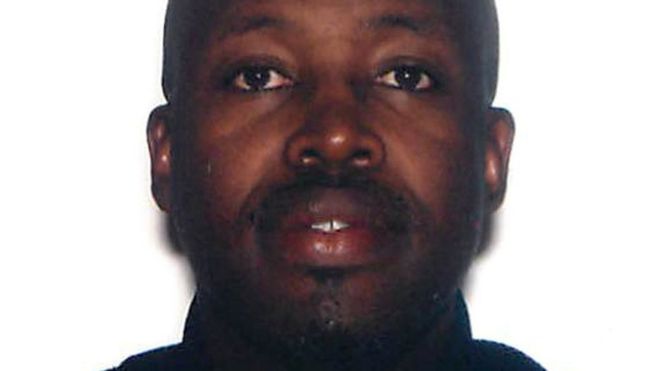
Jean Leonard Teganya is seen in this undated photo provided by the US Attorney's Office for the District of Massachusetts.
Prosecutors in Jean Leonard Teganya's case said they would have sought a life term if sentencing had been for murder and rape   Reuters
A United Nations peacekeeping mission in Rwanda headed by Canadian General Romeo Dallaire whose inadequate and ill-equipped peacekeeping troops were unable to respond when mass violence broke out in the country teetering on civil conflict in 1994, leading to massive violent brutality later identified as a genocide when the governing Hutu population was incited to turn on their neighbours, destroying the lives of an estimated 800,000 ethnic Tutsis and moderate Hutus, horrified the world with the speed in which the carnage took place and the helplessness of the peacekeepers to restrain the bloodshed.

That same year a now-48-year-old Jean Leonard Tegana left Rwanda, travelling through Congo, Kenya and India, arriving eventually in 1999 to Canada where he settled in Quebec. He applied for asylum in Canada in 2011. An investigation into his background informed authorities that this was a man who had in fact, participated in atrocities against Rwandan Tutsis, and his asylum request was refused. He appealed the decision and years of litigation followed, despite which his removal from Canada was ultimately upheld.

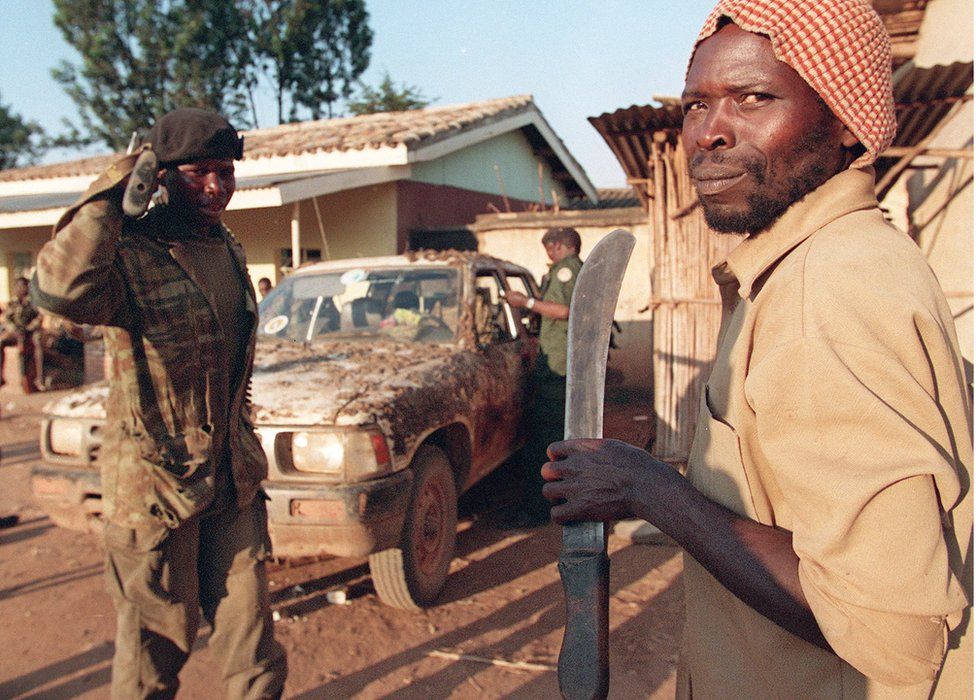
Hutu militiamen in 1994
Neighbours killed neighbours and some husbands even killed their Tutsi wives, saying they would be killed if they refused. AFP

He had been a medical student at a hospital in Rwanda when the massacre broke out in the southern city of Butare. Previous to which he had been active in the political party that was involved in the perpetration of the genocide, a party that his father was involved with and who himself was known to have committed dreadful crimes during the violence. As for Jean Leonard Tegana, he was helpful to the Hutu marauders going through the hospital corridors, identifying for them which patients were Tutsi.
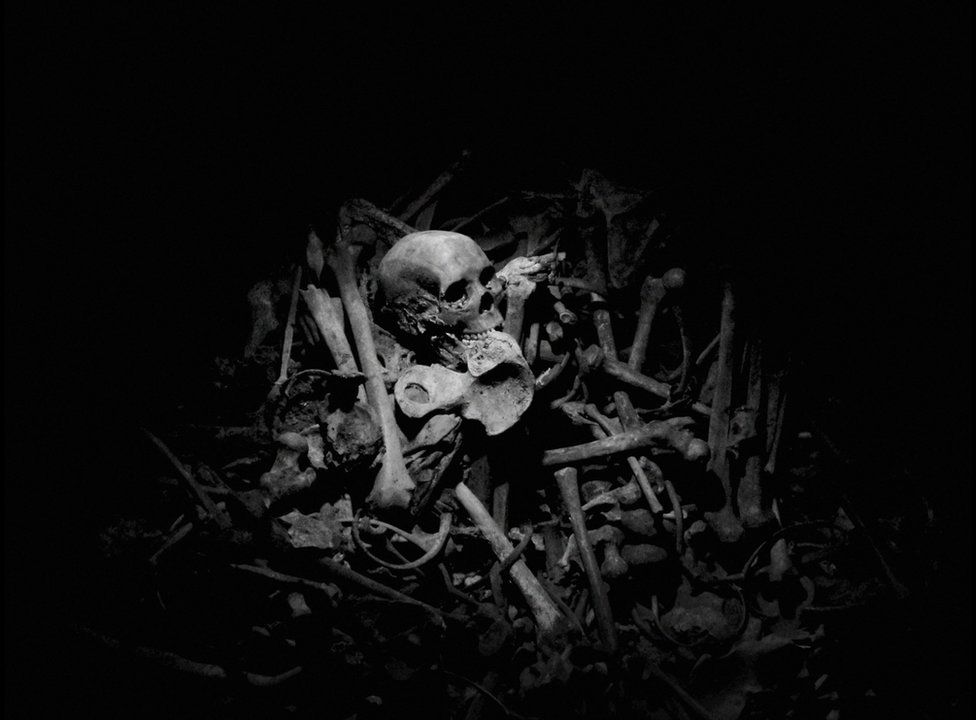
A genocide memorial in Murambi, Rwanda, seen in 2006.
Alex Majoli / Magnum Photos

During the ensuing mass murder, witnesses place him with the Hutu soldiers who went on their killing spree. Mr. Tegana was identified as a participant in the murder of seven Tutsi victims, as well as in five rapes. He denied any such involvement. Insisting that he was being confused with his father's actions, not his own. He stated that if returned to Rwanda he would be in danger of his life, detained without charge. On his final deportation order, he went underground, leading to a Canada-wide arrest warrant being issued.

In 2014, he was spotted by a resident in Maine in the town of Houlton, illegally crossing the border from Richmond Corner, New Brunswick. Consequently, U.S. Customs and Border Control officers moved in to arrest him. In both Canada and the United States, he sought to conceal his past involvement in the Rwandan genocide. He hoped to gain asylum in the United States, having been refused in Canada, but his past just kept catching up with him.

Federal prosecutors in Boston felt that if he could be sentenced for murder and rape, a life sentence would be applicable. But since these were crimes not committed in the United States, U.S. District Judge F. Dennis Saylor while considering the genocide "horrifying", felt unable to press those charges, and instead focused on immigration fraud. "The punishment should fit the offence", he stated, and handed down an eight-year prison sentence.

He will appeal through his lawyers who claim their client fled Rwanda because as a Hutu following the genocide anyone of his ethnic origin could be implicated. It is unlikely that any follow-up appeal would meet with success. Once his sentence has been completed in the United States, he will be returned to his country of origin, and there it is likely that the consequences of his crimes during the genocide will be revisited.
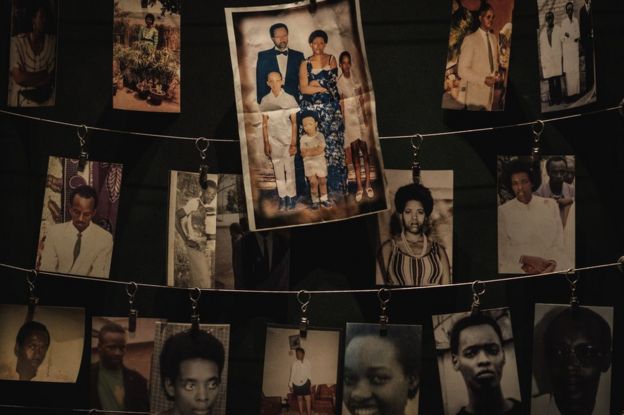
Photographs of victims in the Kigali genocide memorial
Image copyright AFP
Image caption About 800,000 people were killed in the 1994 genocide


Labels: , , , , ,

() Follow @rheytah Tweet