Politic?

This is a blog dedicated to a personal interpretation of political news of the day. I attempt to be as knowledgeable as possible before commenting and committing my thoughts to a day's communication.

Thursday, August 08, 2019

Placing Our Morals Where Our Trade Is (If its not Gender-Based Violence, it's A-OK)

"No update with respect to the progress of the review [of the $15-billion contract to sell light-armoured vehicles to Saudi Arabia] has been offered, bringing the sincerity of the effort into question."
"Canadians are entitled to know the outcome of the government review, and a clear answer with respect to your government's position on the export of LAVs from Canada to Saudi Arabia."
Letter to Prime Minister Justin Trudeau
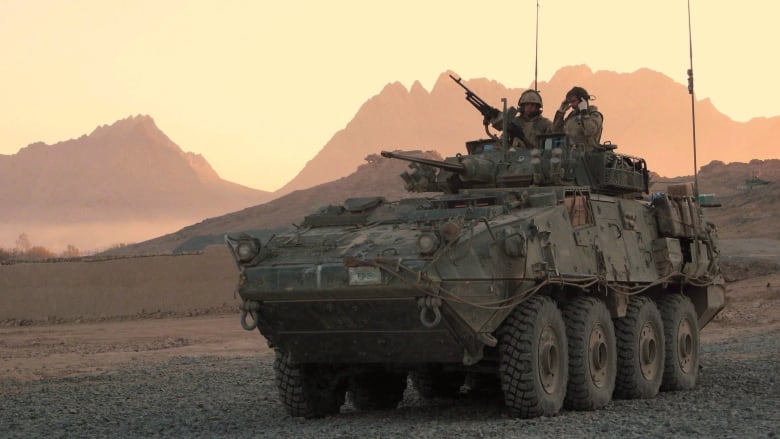
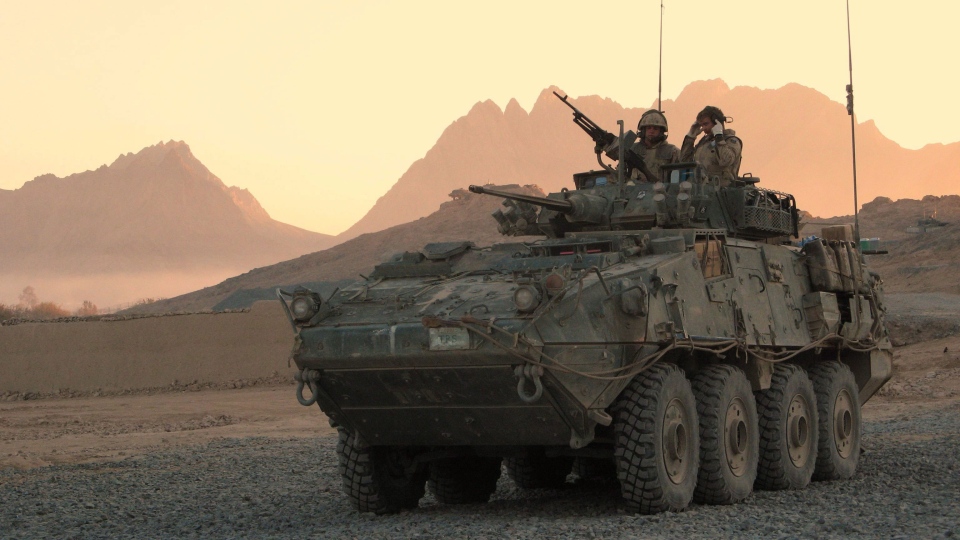
LAVs being turned into Afghan war monuments
A Canadian LAV (light armoured vehicle) arrives to escort a convoy at a forward operating base near Panjwaii, Afghanistan at sunrise in this Nov. 26, 2006 file photo. (Bill Graveland / THE CANADIAN PRESS)


"As we have said before, we are reviewing export permits to Saudi Arabia and no final decision has been made. While this review is ongoing, no new permits have been issued [for arms sales to the Saudis]."
"Bill C-47 [new legislation] creates a new legal requirement that the Canadian government must deny export permits if there is a substantial risk that the export would result in a serious violation of human rights, including serious acts of gender-based violence."
Adam Austen, spokesman, Global Affairs

"We think that that's something that Canadians would want to know about [obligations under the UN Arms Trade Treaty]."
"They would want to know and understand that, OK, Canada has a relationship with Saudi Arabia where we're exporting these vehicles -- but would be very concerned about the notion of Canadian-made weapons being used in a conflict [as in Yemen] where we know these types of crimes have been taking place."
Justin Mohammed, human rights law and policy campaigner, Amnesty International Canada
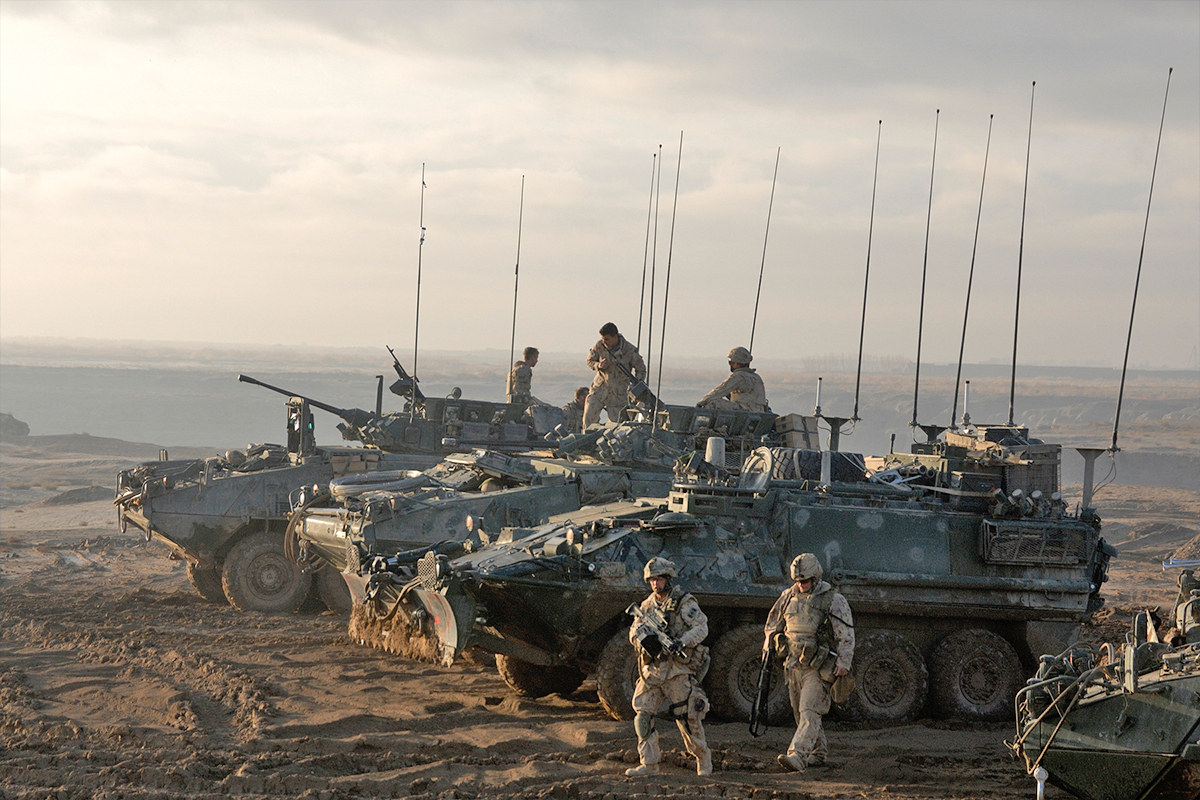
Canadian Forces LAV 25 Coyote and LAV III Vehicles seen at Patrol Base Marianne in Kandahar, Afghanistan. Photo courtesy of Canadian Forces Combat Camera

When Canada's Minister of Foreign Affairs last year posted a Twitter comment on the arrest of human rights activist Raif Badawi's sister along with several other Saudi women activists, urging that they be released, that tweet unleashed a storm of consequences the like of which had Canada's head spinning. From Saudi Arabia divesting itself of all investments in Canada, recalling all its medical students attending Canadian universities and practising for their medical licenses in Canadian hospitals, to stopping trade with Canada, as a sign of its imperial displeasure.

For a country's foreign minister to register her disapproval of another nation's internal policies while enjoying trade and exchange relations with that nation was highly unusual; usually such contacts take place through diplomatic means, kept out of the public eye. This was a signal indiscretion whose consequences should have been foreseen, but like the arrest of Huawei's chief financial officer on a warrant for extradition to the United States, hadn't been, resulting in the kind of punishment that Bejing exerts in a demonstration of power, effectively kidnapping two Canadians as 'spies'.

Canada and its serial governments have been gripped with the need to diversify trade options. Its long-time reliance on its powerful southern neighbour for trade opportunities always came with a good dose of insecurity, none more so than at the present time with an irascible, impulsive president in the White House whose sense of fair play in trade is heavily weighted in sole favour of American profitability, a non-negotiable priority with the current U.S. government.

Which made Canada vulnerable to doing business with any country that is wealthy enough to hint at promoting the Canadian agenda for seeking other avenues of enriching Canada's outreach to other trading partners in view of the growing unreliability of U.S. fair play and interest in neighbourly trade. The reality is that Canada can sign trade agreements with any single or group of nations globally and the United States will always represent Canada's largest trading partner, regardless; proximity augurs that outcome.

But the  Canadian Export Development Corporation also helps Canadian industry to develop markets abroad, and the sales of military equipment and weapons and vehicles is extremely remunerative. In essence, Canada will, like most weapons-producing countries, sell to almost any other country eager to part with its treasury dollars to acquire updated technologically advanced weapons. In this instance, armoured vehicles to Saudi Arabia. Armoured vehicles, furthermore, that have also been weaponized.

Saudi Arabia's activities in the past few years, as a Sunni majority nation with clout in the Middle East as its powerhouse and steward of the two holiest sites in Islam, and its power-competitive relationship with aggressively Shiite-majority Iran attempting to co-opt regional influence from the Saudis has resulted in both countries backing opposite sectarian forces in conflict in Yemen, the region's most impoverished state. The Saudi-led military coalition has been bombing civilian targets in Yemen in its attempts to rout the Shia Houthis aligned with Iran which ousted a Sunni leadership.
Canada_and_Saudi_Arabia_Story.JPG
Saudi Crown Prince bin Salman, Getty Images

That, and the gruesomely amateurish murder of an irksome Saudi journalist with links to the Muslim Brotherhood who had been hugely critical of the Saudi Crown Prince, publishing embarrassing pieces of revelatory issues, turned world opinion in disgust against the crude crime. Condemnation from Western sources came fast and furious. And Canada was faced with the awkward situation of honouring a contract valued at $15-billion to provide light-armoured vehicles to Saudi Arabia. Vehicles which Prime Minister Trudeau initially shrugged off, as merely 'trucks', military trucks.

Under pressure from human rights groups to tear up the contract with the Saudis and pay the hefty penalty, the Canadian government suspended new export permits to the kingdom, sanctioned 17 Saudi nationals in the wake of the Khashoggi murder, and undertook a review of arms sales to the country, Data indicate nonetheless, that Canada sold $1.2 billion worth of military vehicles in the first six months of 2019 to the Saudis, providing a fleet of 127 vehicles last year alone.

Mr. Trudeau loves reminding his critics that it was under the previous government that the contract had been arranged. But it was also Mr. Trudeau who chose to sign off on that same contract and proceed with it.
From 2016 to 2018, Canada shipped 217 armoured combat vehicles – almost all of them light-armoured vehicles, to Saudi Arabia.


Labels: , , ,

Wednesday, November 07, 2018

Righteous Blunders

"[GAC is] holding ourselves to a higher standards on the export of controlled goods from Canada, very much including with respect to human rights."
"Should the Minister be concerned about serious potential violations of human rights, she has the power to reject new permit applications and suspend existing permits, as she has done before."
Adam Austen, spokesperson, Foreign Affairs Minister Chrystia Freeland

"We continue to work with our allies around the world to ensure that we have answers about what happened to Jamal Khashoggi."
"As I said, we are looking at export permits for Saudi Arabia."
Prime Minister Justin Trudeau

"While a one-year increase is not a trend, we hope the government will keep monitoring and resourcing the permitting system so they're able to respect their own service standards."
"In our opinion, it shouldn't happen at the permits stage. The permit stage is when companies have often times already invested millions of dollars pursuing an opportunity in a country."
Chrystyn Cianfarani, president, CEO, Canadian Association of Defence and Security Industries

"Saudi Arabia doesn't buy these weapons because it actually needs the weapons, primarily. It buys these weapons as an investment in the partnership [to expand trade and diplomacy ties with Canada]."
Thomas Juneau, expert, international affairs, University of Ottawa

"Saudi Arabia still has enormous wealth and powerful cachet."
"It will continue to be a crucial economic player, and it cannot be ignored. The question is whether business as usual will go on."
Bruce O. Riedel, former C.I.A. analyst, expert on Saudi Arabia 
Foreign Affairs Minister Chrystia Freeland told a news conference Monday that Canada stands by its comments about human rights in Saudi Arabia that led to diplomatic sanctions from the country. (Jimmy Jeong/Canadian Press)

A week after Jamal Khashoggi -- the Saudi dissident journalist being portrayed by the West as a moderate but fully as invested as any other Islamist in fundamentalist Islam, as a supporter of the Muslim Brotherhood -- mysteriously disappeared after entering the Saudi consulate in Istanbul, and Turkey gleefully disclosed grotesque information about his strangulation death, dismemberment and the acid bath his body was dissolved in, despite Recep Tayyip Erdogan's own nomination by global journalism as the world's number one crackdown on journalists, one of the world's largest oil and chemical groups, Total, announced a 9=billion euro joint venture with Saudi Aramco for a refining and petrochemical complex in Jubail.
President Recep Tayyip Erdogan of Turkey at the opening ceremony of Istanbul’s new international airport last week.   CreditBulent Kilic/Agence France-Presse — Getty Images

So much for speculation that Western investment and financial interests plan to draw away from business with Saudi Arabia following suspicion that the Kingdom's Crown Prince Mohammed bin Salman ordered the ghastly assassination of a detractor. It was, no doubt, the bold stupidity of carrying out a murder in such a transparent, clumsy manner that has forced the world community to express its horror and condemnation, overlooking the more hugely murderous impact of a war in the Islamic world's most poverty-stricken country, Yemen which has produced vast deaths, dislocation, disease and famine.

Children play amid the rubble of a house destroyed by a Saudi-led airstrike in Sanaa, Yemen, Sept. 8, 2015. (Hani Mohammed/The Associated Press)

The United States has celebrated a decade of $138.9 billion in sales for military contracts with its Middle East ally, Saudi Arabia, and has no intention whatever of any diplomatic schism; after all if 9/11 failed to elicit horrified concern of Saudi Arabia's obvious role in the attack by those of its Wahhabist alumni, why would the death of an obscure journalist whom death suddenly made famous do so? BAE and Thales of France have similarly profited from the export of 57=billion in euros worth of armaments to Riyadh from 2001 to 2015; a profitable business, for all involved in relieving the Kingdom of its oil profits.

Even Japan is gaining $45-billion in a contract meant to provide technology investments to further modernize the Saudi economy by 2030. AMC movie theatres and French hotels have become part of a $500-billion plan for a modern city to be named Neom, set to rise from the sands of the Arabian desert by 2025. Everyone wants to get in on the action. Vast fortunes to be spent and to be gained, and greed is a powerful incentive. J.P. Morgan Chase and Morgan Stanley are aiding Saudi Aramco in its negotiations to invest a majority stake in a Saudi chemical maker.

More, much, much more. The British government has a solid relationship with the Crown Prince and plans to stabilize and grow it, as Britain prepares its leave of the European Union. France, the third-largest foreign investor in Saudi Arabia after the United States and the United Arab Emirates, has no intention of cutting off a remunerative source of stability for the French economy. It sold 11-billion euro worth of arms in the last decade, approving licenses for more sales to the value of 14.7-billion euro more latterly.
A Canadian LAV (light armoured vehicle) arrives to escort a convoy at a forward operating base near Panjwaii, Afghanistan, at sunrise on Nov. 26, 2006. The number of LAVs being sold by a Canadian company to Saudi Arabia in a controversial deal brokered by Ottawa is being cut. (Bill Graveland/Canadian Press)

It may have been the government of Stephen Harper that initially signed the agreement to provide Saudi Arabia with Canadian made light armoured vehicles (LAVs), but it was the subsequent government of Justin Trudeau that saw fit to complete and authorize the $15-billion sale, the largest in Canada's history of weapons sales anywhere; too rich an agreement for any government involved in RealPolitik to set aside out of its concern for humanitarian issues. The Trudeau government has resisted calls for the cancellation of the contract, warning it will cost Canadian taxpayers billions in penalty fees.

When Minister of Foreign Affairs Chrystia Freeland whimsically tweeted a rebuke to Saudi Arabia over the arrest of two female dissidents it was a throwaway for her, with no thought of the consequences, a whopper of a bloop fairly unreflective of someone whose workaday life is involved in diplomacy. But she was exercising her feminist credentials. When the first sign of fallout was sniffed in the air, she instructed her department to repeat her casual tweet in English and in Arabic as though this would be an officially diplomatic overture.

Both the department and its minister know that a private approach on the matter is called for, not a public embarrassment risking relations. Properly done, conveying Canada's concern might have borne fruit. The rebuke, a laudable one, was simply wasted given that casual treatment, and it was that public, casual treatment that elicited the undiplomatic wrath of a powerful country whose investments in Canada were withdrawn as were its diplomats, all trade ceased, and Saudi students enrolled in Canadian students and deployed to Canadian hospitals as medical interns recalled.

It is precisely because this Liberal government led by Justin Trudeau is so preciously 'progressive' that it has managed to estrange itself from the Trump administration through high-handed one-upsmanship by Trudeau, so infuriating his political-and-personality counterpart to Canada's detriment in trade, that he has sought to more closely align himself with Europe, itself human-rights-oriented through the EU, and 'progressive'. Canada, thank you, is now finding itself left an orphan on the stage of upbraiding and defriending Saudi Arabia. Tut-tut.

Labels: , , ,

() Follow @rheytah Tweet