

Islamic Republic of Iran Strategy for Survival
"Tehran's bet appears to rest on a familiar asymmetry; its conviction that it can absorb more pain, for longer than the U.S. and its partners are willing to tolerate.""The leadership likely calculates that sustained economic pressure, finite munitions stockpiles, and the political cost of mounting casualties will narrow Washington's and Israel's appetite for a protracted confrontation.""Time, in this view, is not neutral -- it's a battleground.""If Iran calibrates its retaliation carefully, and if it can maintain elite cohesion at home, it may be able to outlast the immediate storm.""Survival, not victory, is the strategic objective."Ali Vaez, director, Iran Project, International Crisis Group, Washington"They thought Iran was weak and they're realizing that although Iran is weaker than two years ago, the country still has thousands of ballistic missiles and drones.""Iran has no other option than to resist and sooner or later they will realize that they made a mistake."Foad Izadi, professor of world studies, University of Tehran"My sense is that the Islamic regime's bench is deeper than the White House or the Israelis may be assuming.""If the regime has lost legitimacy in the eyes of the majority of its people, we haven't seen defections, we haven't seen signs there is a splintering inside the regime.""There is sufficient cohesion in the clerical-judicial authorities that even with the taking out of the Supreme Leader and the armed-forces commander, it doesn't mean we are going to see a collapse of the regime."Jeffrey Feltman, former UN undersecretary general for political affairs
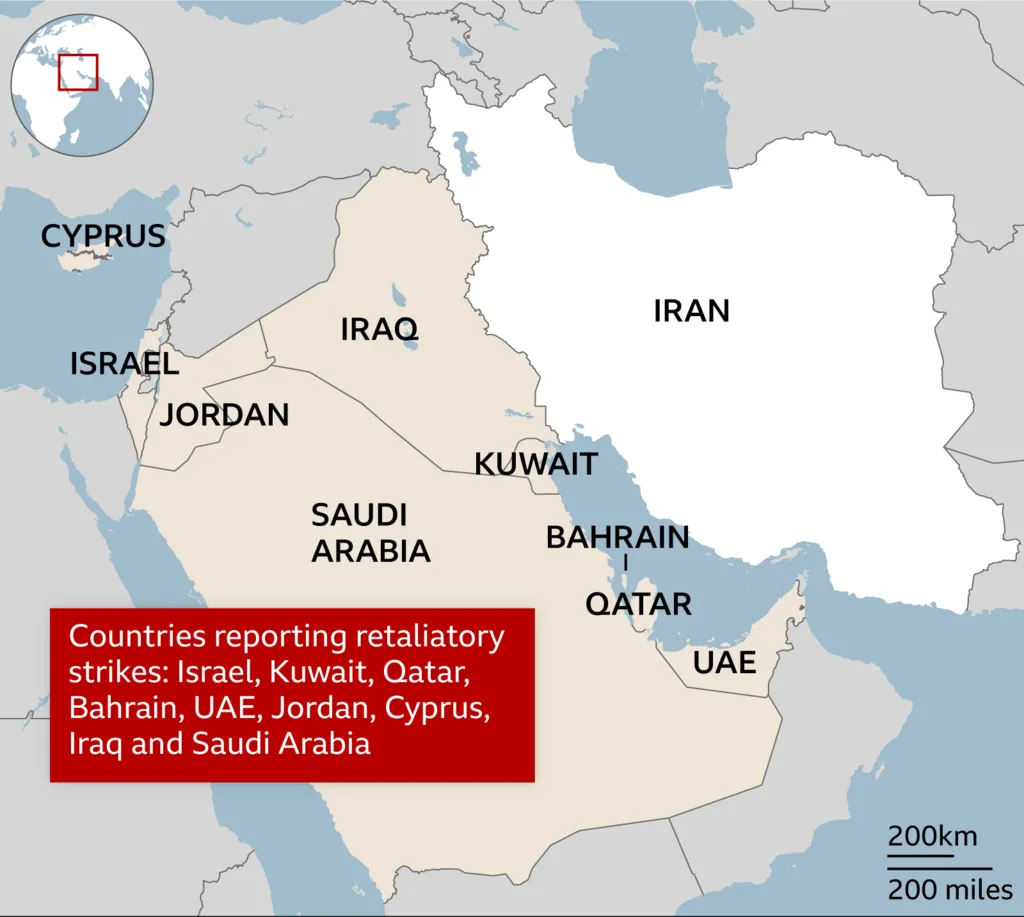
With the air attacks launched by the U.S. and Israel on 28 February leading to the death on that first day, of Supreme Leader Ali Khamenei, at minimum an estimated 1,100 people had perished in the space of the first four days of attacks. Large numbers of government and military buildings were destroyed both in Tehran and around the country. In a strategic bid for survival the Islamic Republic counts itself prepared to absorb and withstand great pain, more, it estimates, than the U.S., Israel and Gulf states combined could absorb.
With that in mind the strategy was developed to overwhelm the Persian Gulf with drones and missiles for the explicit purpose of exacting maximum chaos, exhaust the defensive capabilities of the region along with its political will, while disrupting global energy markets in the hope that this can all be achieved before Iran exhausts its massive store of projectiles. Weakened before the onslaught both by an earlier June 2025 wave of attacks, as well as a nation-wide series of massive protests against the regime, a depleted leadership is left to fight a war despite its polarized population.
"Iran, unlike the United States, has prepared itself for a long war", stated Ari Larijani, secretary of Iran's Supreme National Security Council, reflecting his crucial role in Iran's process of decision making. President Masoud Pezeshkian, judiciary chief Gholam Hossein Mohseni-Ejei, senior cleric Ayatollah Alireza Arafi and Ari Larijani represent the makeup of an interim council. After the decision was made to elevate the deceased Grand Ayatollah's son, Mojtaba Khamenei, and the revelation that he was seriously wounded at the time his father was killed, it is now believed that the Islamic Revolutionary Guard Corps has assumed the power of control in Iran.
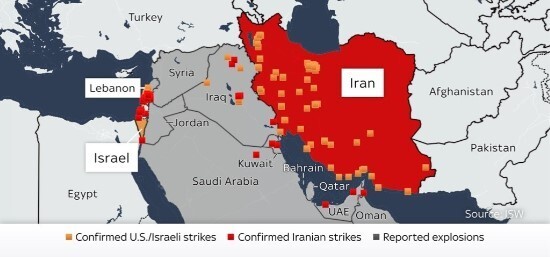
Iranian leadership had determined to institute centralization plans for decision-making called the 'mosaic' defence strategy which includes giving military commanders the power to independently reach decisions reflective of any given situation they encounter. It was undoubtedly they who adopted the strategy of attacking Gulf Arab countries that are allies of the United States who also depend on the U.S. for their own defence, alongside trade and financial agreements.
Iran was estimated to have roughly 2,000 ballistic missiles left in its arsenal following last year's joint assault by the U.S. and Israel. A much larger number of Shahed drones formed an additional portion of their stock of weaponry, and a steady stream of additional drones is being handed over to Iran by its ally Russia, who is also producing them, modified and based on the Iranian design. Russia, according to an analysis through Bloomberg Economics produces the drones at a rate of several hundred daily.
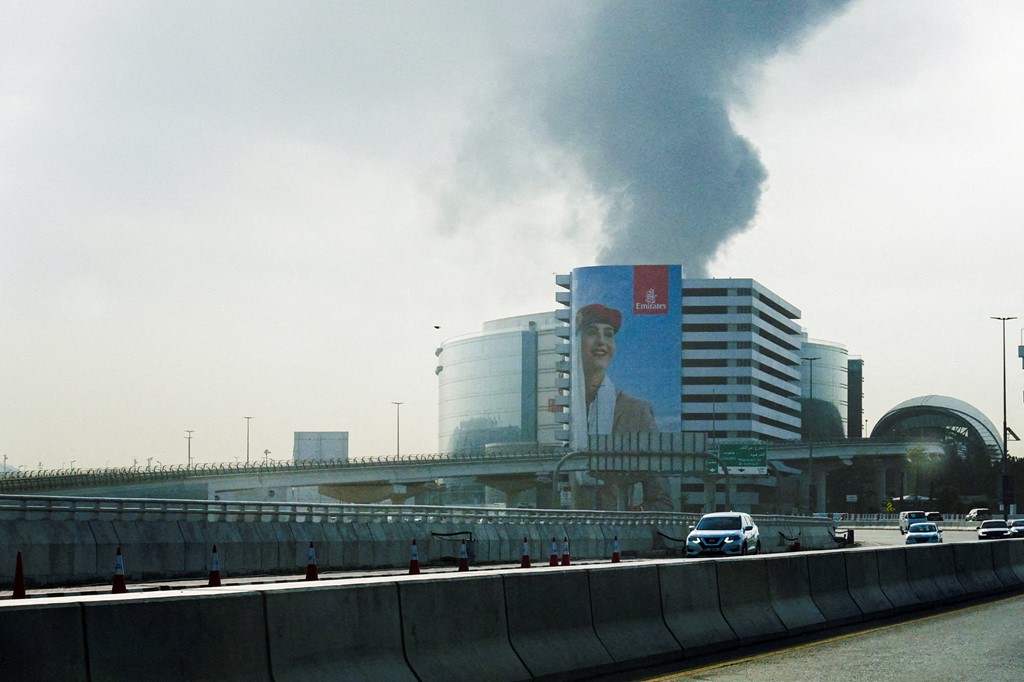 |
"Over recent days we're seeing operations against the launchers, on the one hand, and strikes to cork up the tunnels out of which those launders and missiles are meant to emerge", explained Israel's security cabinet minister Eli Cohen through Israel Army Radio. The U.S. strikes have hit thousands of targets across Iran, while Iran responded with hundreds of ballistic missiles and thousands of drones.
No sign of anti-government protests have re-emerged internally in the country to date, with Iranian civilians likely hoping that foreign outside intervention may succeed where their January mass protests failed, at a steep cost in lives when the regime cracked down with deadly fire, killing tens of thousands of protesters.
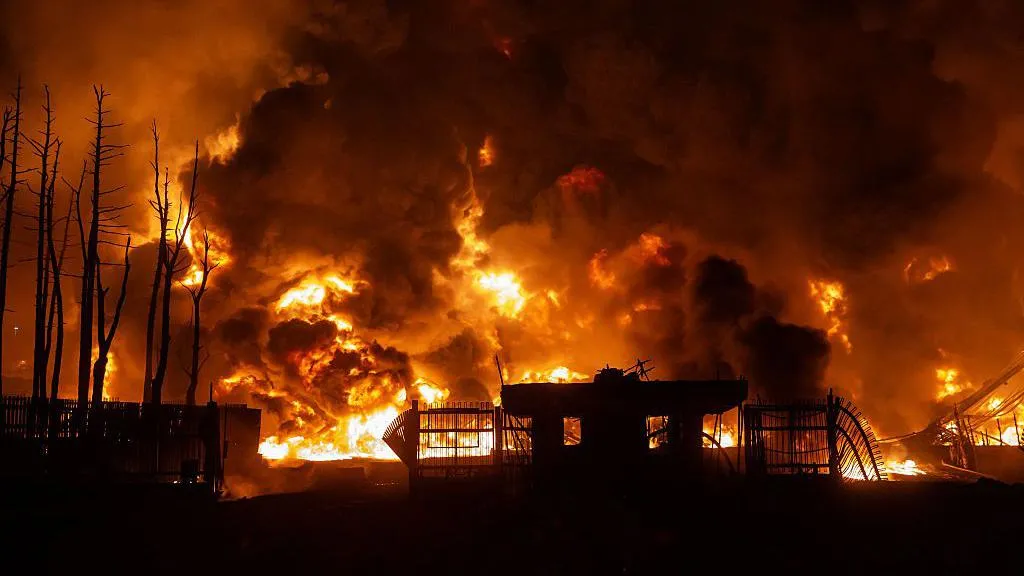 |
| Conflict across the Middle East continues to rage after the US and Israel launched wide-ranging strikes on Iran, killing the country's supreme leader on 28 February. Anadolu via Getty Images |
"For the Islamic Republic as an entity, it's vital to project the uninterrupted functioning of the system.""Decentralization is critical for Tehran. It ensures that in the absence of communication with the central government, the country can continue to function for security political and administrative purposes.""After the June war, Iran made considerable efforts to expand its launcher capabilities. It's unclear how successful they have been. [The entrances and exits of these facilities -- underground] missile cities -- [are also vulnerable to attack].""Although Iranian teams have reportedly worked around the clock to reopen damaged gateways, such efforts require resources that may eventually be depleted. If I had to offer an estimate, I would say Iran may be capable of sustaining the current tempo of attacks for at least another three to four weeks."
Arman Mahmoudian, research fellow, Global and National Security Institute, University of South Florida
Labels: Civilian Protests, Iranian Governing Council, Islamic Revolutionary Guard Corps, U.S.-Israel Airstrikes on Iran
posted by Pieface | 9:19 PM


0 Comments:
Post a Comment
<< Home