Politic?

This is a blog dedicated to a personal interpretation of political news of the day. I attempt to be as knowledgeable as possible before commenting and committing my thoughts to a day's communication.

Wednesday, August 18, 2021

Not Libel, but Accuracy in History
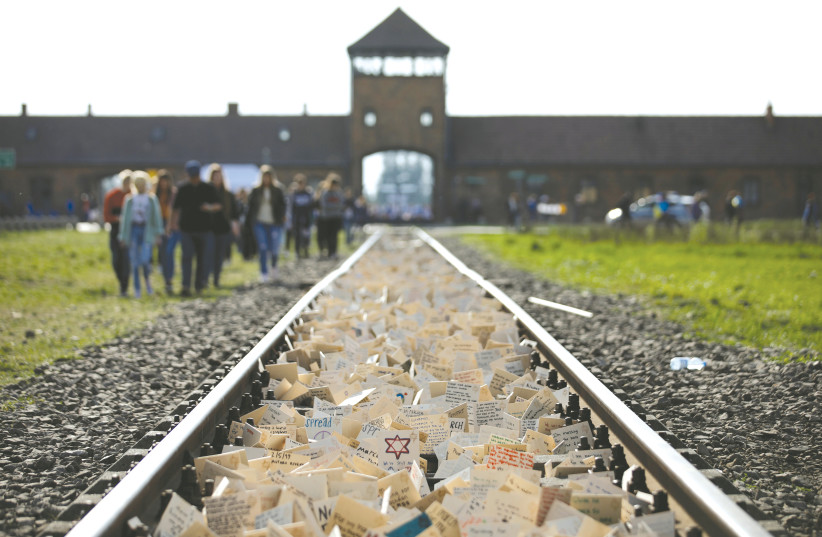
‘March of the Living’ participants leave notes on the tracks leading to the former German Nazi Auschwitz concentration camp near Oswiecim, Poland, May 2, 2019. (photo credit: REUTERS/KACPER PEMPEL)
March of the Living’ participants leave notes on the tracks leading to the former German Nazi Auschwitz concentration camp near Oswiecim, Poland, May 2, 2019.
(photo credit: REUTERS/KACPER PEMPEL)
"Earlier this month Zbigniew Ziobro, the Polish minister of justice, introduced new legislation intended to “defend the good name of the Polish nation.” The new set of laws, already approved by the cabinet, would impose prison terms of up to three years on people “who publicly and against the facts, accuse the Polish nation, or the Polish state, [of being] responsible or complicit in Nazi crimes committed by the III German Reich.” In the governmental narrative, the recently approved law is a penalty for those who talk about the “Polish death camps” of the Second World War. In reality, however, the new law, with its ambiguous and imprecise wording, is meant to freeze any debates which might be incompatible with the official, feel-good, version of the country’s own national past."
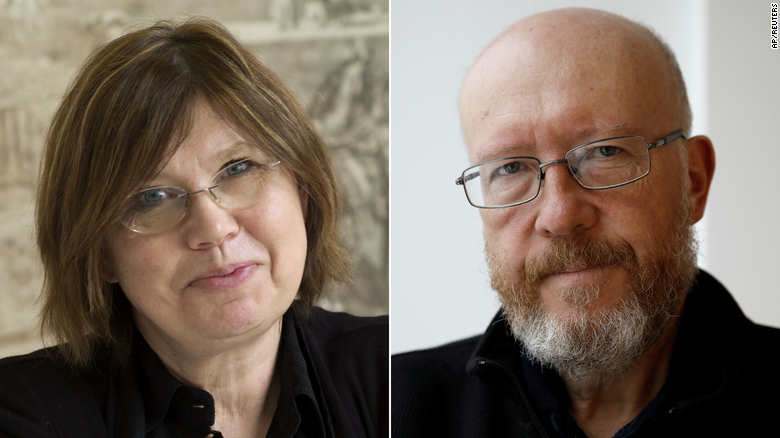
Jan Grabowski
The court ruling on Polish historians Barbara Engelking, left, and Jan Grabowski, right, has sparked concern for future Holocaust research in the country.
The court ruling on Polish historians Barbara Engelking, left, and Jan Grabowski, right, sparked concern for future Holocaust research in the country.
"[The litigation constituted] an unacceptable violation of the freedom of scientific research and the freedom of expression."
"[Verifying research methodology or source material would make for] an unacceptable form of censorship and interference in the freedom of research and scientific work."
"This is of particular importance in matters that constitute an important element of public debate, raising important social issues regarding the history of a given state and nation."
Judge Joanna Wisniewska-Sadomska, Polish Appellate Court 
Two historians who were accused of tarnishing the memory of a villager in Poland through passages of a historical book about the Holocaust whom a lower court had ordered to apologize to the niece of the villager whom she claimed had been wrongly identified as an enabler to the Nazis occupying Poland, by handing over the Jews of the village to be carted off and placed in death camps, have seen the lower-court ruling overturned. The issue was freedom of academic research would be stifled with the success of the libel case.
 
Barbara Engelking and Jan Grabowski who edited "Night Without End: The Fate of Jews in Selected Counties of Occupied Poland" were taken to court by Filomena Leszczynska, niece of Edward Malinowski who took umbrage when her uncle was identified in the book as a Pole who surrendered Jews to the Nazi occupation. She took grave exception to her uncle's naming as someone who was responsible for aiding the Nazis in their campaign to extinguish the lives of Europe's Jews. 
 
Her lawsuit against the historians resulted in a ruling in February that an apology was in order; in effect negating the claims made in the book, resulting in research establishing actors in Poland who gave aid to their Jewish neighbours and those who not only withheld compassion but became partners with the German occupation in consolidating the fate of Poland's 3.2 million pre-Holocaust Jewish population. The issue was freedom of academic research, as opposed to a claim of tarnishing the image of a Pole.
 
Copies of the book, "Night Without End: The Fate of Jews in Selected Counties of Occupied Poland".
"The Fate of Jews in Selected Counties of Occupied Poland"
Canadian historian and professor at University of Ottawa, Dr. Grabowski informed Reuters that the new ruling represented "a huge thing not only for myself and my colleagues, but for the entire profession of humanities here". Studies concluding complicity by some Poles in the slaughter of Jews by Nazi Germany, as far as the country's governing nationalists are concerned, are nothing but an effort to dishonour a country whose suffering was intolerable during the war years. 

Unexpectedly perhaps, the independent appeals court justice dismissed the claims of Filomena Leszczynska defending her uncle's reputation in wartime Poland. The historians were freed from the shackles of defiant restraint against historical accuracy in the interests of recognizing the vital role freedom of academic research plays in recording history. With a supporting requirement to avoid the chill that could impede further such studies.

The case was funded by the Polish League Against Defamation, whose role is to oppose any perceived claims of Polish involvement in the genocidal plan to murder Europe's Jews en masse. The League head, Maciej Swirski revealed that Leszczynska would "fight on", planning to file an extraordinary appeal to the Polish Supreme Court. And the League would be more than happy to fulfill its obligations to 'truth' in historical accuracy by continuing to fund the "fight".

Poland's Jewish population represented the largest in Europe pre-World War II. Virtually all of the Polish Jewish community met their end during the war years as the Holocaust unfolded. While thousands of Poles reacted to the death march of their Jewish neighbours by risking their own lives to help Jews, a body of research exists revealing that equal numbers took part in the Holocaust. A reality that Poles in general and their government in particular, reject.
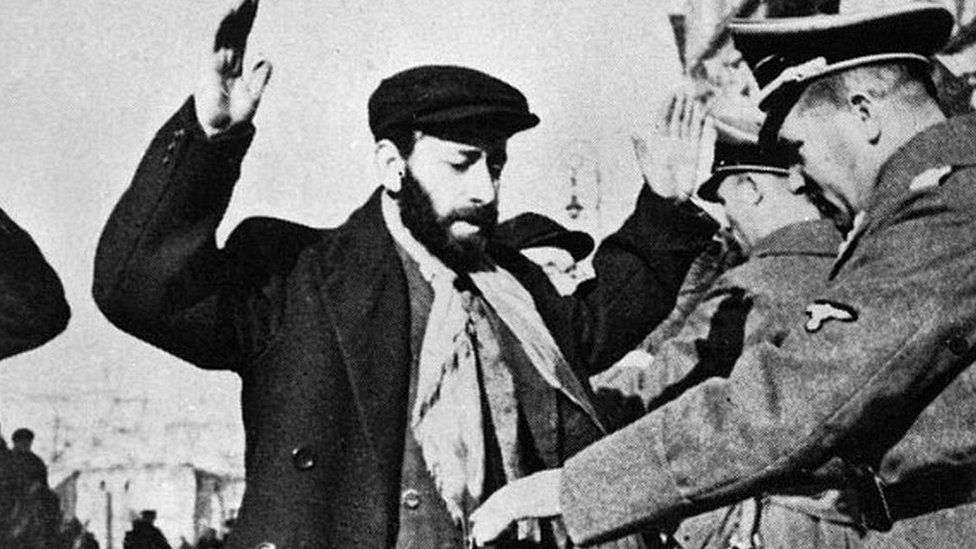
 
German SS searching Jews in Warsaw, Dec 1939
German SS searching Jews in Warsaw in 1939    Getty Images
 

Labels: , , , , , ,

Wednesday, February 17, 2021

Reframing, Readjusting Historical Accuracy

"This is a fairly unprecedented verdict which strikes at the heart of what I as a historian do. This verdict, if upheld on our appeal, which will follow, means an end to independent research of the history of the Holocaust and, I would argue, of many other parts of Polish history which run contrary to the official myths and legends espoused by the Polish state today."
"I became sort of a face to hate. There are bad people out there, with vast support from different states, who want to write themselves a new history."
"The damage probably has already been done.The authorities in Poland have already won."
"Their goal was not actually to talk about history, it was to frighten people."
Professor Jan Grabowski, Holocaust Historian, University of Ottawa
The "Arbeit Macht Frei" gate at the former Nazi German concentration and extermination camp Auschwitz.
The "Arbeit Macht Frei" gate at the former Nazi German concentration and extermination camp Auschwitz.   Credit: Kacper Pempel/ REUTERS
"Anyone suggesting that Poland was complicit in the Holocaust could face fines or even imprisonment of up to three years under a controversial new law approved by president Andrzej Duda. The law makes it illegal to accuse the Polish nation of having taken part in the atrocities and the systematic mass murder of the Jews committed by the Germans during World War II."
"A milestone was reached when scholars felt able to move away from simplified categories of German perpetrators and Jewish victims. They shone light on the complicity of non-German citizens in German occupied territories. Scholars such as Jan Tomasz Gross and Jan Grabowski played a key role in studying Poland. With the help of testimonies from Holocaust survivors, Gross revealed in 2000 that Polish citizens took part in a 1941 massacre in the small town of Jedwabne, helping German occupiers to murder their Jewish neighbours."
"The Polish law gives the government the right to restrict different interpretations of the past. It aims to rewrite that history according to nationalist political aspirations. It will question academic achievements in the field of Holocaust studies and represents a danger to academic freedom, openness and critical reflection."
"The law is an insult to Holocaust survivors and the recognition of their suffering – which was, and still is, a painful process on the individual as well as on the collective level. It could allow powerful political institutions to anchor their narratives on the past and silence those who were not given a voice during the Holocaust."
"Allowing politically motivated, whitewashed versions of history to take hold is the first step in legitimising Holocaust denial. Only by confronting the difficult and painful aspects of the past can we understand how to prevent events like the Holocaust happening in the future."
The Conversation, February 16, 2018
German Chancellor Angela Merkel, Poland's Prime Minister Mateusz Morawiecki and museum director Piotr Cywinski at Auschwitz, December 6, 2019.
German Chancellor Angela Merkel, Poland's Prime Minister Mateusz Morawiecki and museum director Piotr Cywinski at Auschwitz, December 6, 2019. Credit: KACPER PEMPEL/Reuters

"Of course, anti-Semitism was not some foreign ideology imported to Poland by the Nazis in 1939. Many individual Poles participated in pogroms, assisted in turning Jews over to the Nazi authorities, and profited from blackmail and the plunder of Jewish property, while some Polish agencies were used in the management of ghettos and concentration camps."
"On the other hand, thousands of Poles are recognized by Yad Vashem, Israel’s official Holocaust memorial, as “righteous among nations” for their efforts to resist the Nazi occupation and rescue Jews from the Holocaust."
Jonah Shepp, Foreign Affairs, Intelligencer
When the new law criminalizing linking Poland and its citizens to aiding and abetting Nazis in the Second World War round-up of Jews for annihilation during the Holocaust was signed into law, it was feared then, several years ago, that the law's threat would have a stultifying effect on future historians writing of the reality of Jewish existence in Poland, the fragility of living among neighbours long accustomed to slandering Jews who on occasion launched themselves into deadly pogroms to let off steam. The law was a blatant device to disassociate Poland and Poles from accusations of complicity in the death of Jews.

It has never been a secret that Polish society has always been anti-Semitic. Which also does not seek to deny that not all Poles subscribed to the demonization of Jews as set out in the Elders of the Protocols of Zion, a masterwork of racist slander out of Russia at the turn of the 20th Century. It became part of the German school curriculum, and was widely published and distributed, aided by some like Henry Ford who himself subscribed to its anti-Semitic fictional claims. Among Poles and Jews, who lived together mostly in small towns and villages for a thousand years, there was some amity as well as enmity.

During the Holocaust years Poles suffered under German occupation, targeted themselves for exile from Poland and mass murder at the hands of the Third Reich which considered them, like Jews, to be sub-human. They were far from the German Nordic ideal. Many Poles betrayed their Jewish neighbours for a variety of reasons; simply to see them dead, to be able to loot Jewish property, take over their abandoned hovels, to cleanse Polish villages from a Jewish presence.
 
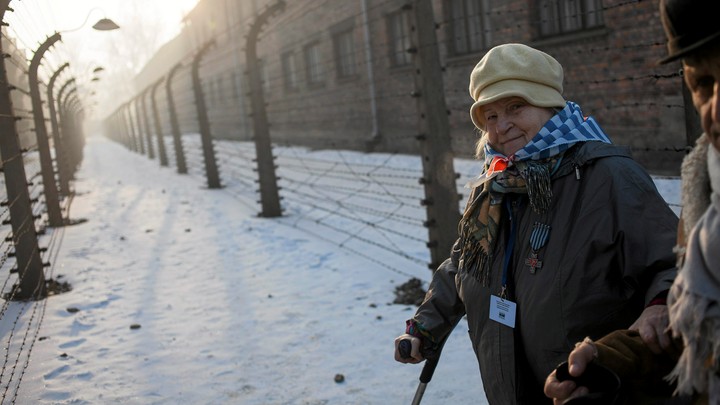
Survivors walk in Auschwitz-Birkenau in Oswiecim, Poland, in 2017.
Survivors walk in Auschwitz-Birkenau in Oswiecim, Poland, in 2017.Agencja Gazeta / Reuters
Renowned Holocaust scholar Professor Jan Grabowski in professional tandem with a Polish scholar Barbara Engelking, co-edited a lengthy tome whose contents they had researched with the assistance of nine researchers to produce 1,700 pages for a book titled Night Without End: The Fate of Jews in Selected Counties of Occupied Poland. The book, which took years of work, was released in Poland the very year the new law came into effect, raising the heated outrage of Polish nationalists among whom the name of Grabowski became a battlecry.

A Polish court recently ordered the pair of scholars to issue an apology to the niece of a Polish man who was mayor of a small town who had been accused of betraying the presence of 22 Jews hiding in a nearby forest, who were then killed. A trial had taken place in 1950 when the mayor had been accused of complicity in the death of the fugitives, with a Jewish woman attesting to his innocence. He was acquitted. When the woman was years later interviewed for the book she admitted having been beholden to the mayor and as a result giving false testimony. Telling her interviewer that the mayor had indeed betrayed the Jews and was complicit in their deaths.

It was that passage in the lengthy book that caught the eye of the mayor's niece who launched a lawsuit against the two co-authors. "The results of this research (for the book) have been greeted warmly by academia, and they were greeted with absolute fury by the nationalists governing in Poland right now and of course their electorate", Professor Grabowski stated, who himself had been born and raised in Poland, and whose father was a Holocaust survivor.

In the lawsuit, the woman claimed that her uncle had been defamed, demanding financial compensation and an apology. She had the support of a nationalist group (funded by the Polish government) formed to defend Poland against any such accusations of aiding the German occupation and most specifically, collaborating with the Germans in their hugely successful bid to rid Europe of the presence of Jews. A week ago the judge ordered a written apology be made for "providing inaccurate information" and "violating his honour". She deliberately failed to order financial compensation as being inappropriate.
 
Polish Prime Minister Mateusz Morawiecki and German Chancellor Angela Merkel at Auschwitz, December 6, 2019.
Polish Prime Minister Mateusz Morawiecki and German Chancellor Angela Merkel at Auschwitz, December 6, 2019. Credit: Krystian Maj / KPRM
"[Dr.Jan T.] Gross told me he didn’t think the law would have many practical consequences for established historians, although he worried that it might prevent younger ones from studying the Holocaust. Above all, he was concerned about the teaching of history in Polish schools."
“'No one will dare to teach the Holocaust,” he said. “The ignorance in Polish society about the Holocaust is extraordinary. There were surveys made and the majority of the people who were asked the question ‘Who suffered more during World War II under German occupation, Poles or Jews?’—the majority of the people responded ‘Poles.’ How ignorant do you have to be?”
Rachel Donadio, The Atlantic, February 8, 2018

Labels: , , , , , ,

() Follow @rheytah Tweet