

Holding the Yellow Line in Gaza
"Their only mission allowed when they cross the Yellow Line is to look for hostages. We've seen them cross, armed, and use this as n opportunity to hide explosives.""We went to a spot, a house on our side of the Yellow Line -- it was filled with explosives, fighting ammunition that they placed in the guise of searching in the area.""We've found them placing new weaponry across the Yellow Line.""[It's a daily occurrence to] test us, to test the agreement. Pushing it to the limits.""They failed to return the hostages within 72 hours. That deadline passed a month ago.""They've failed to disarm. On the contrary they've tried to rearm. They have made multiple attacks against our troops.""They threw a body from a window, covered it, and pretended to find it [a hostage body].""We are committed to the agreement. The problems right now are that Hamas needs to finish returning all the hostages, and Hamas needs to disarm — two things that are vital parts of the agreement that Hamas is refusing to do."Lt.-Col. Nadav Shoshani, international spokesman, Israel Defense Forces
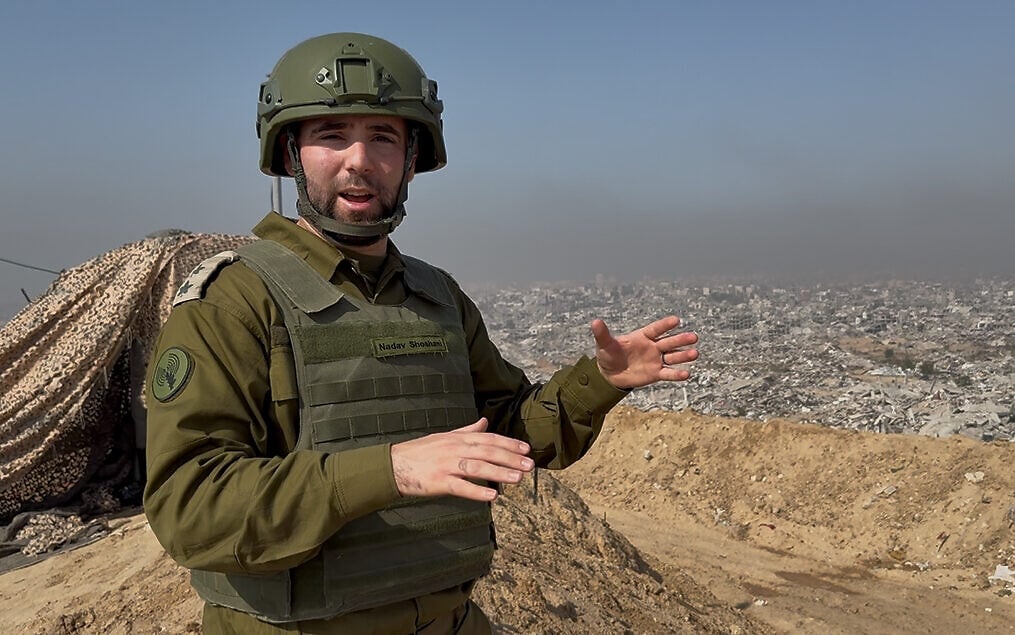 |
| Lt. Col. Nadav Shoshani speaks to The Times of Israel at an IDF post in the Shejaiya neighborhood of Gaza City, November 19, 2025. (Nava Freiberg/Times of Israel) |
President
Trump's much-vaunted 'peace' agreement recognized as an international
agreement to end hostilities between Israel and Hamas is tested
constantly by Hamas terrorists whose dedication to death and destruction
-- that of Israel, and inclusive of their own citizenry as victims of
'Israeli genocide', when they fall as 'collateral damage' when Hamas
continues to use them as human shields; the numbers useful in the
terrorist group's public relations apparatus as proof-positive that
Israel is the aggressor and they the victims.
On
the outskirts of Gaza city is Shejaiya, with its concrete rubble, and
twisted steel -- completely destroyed, a grim shell of what it once
was, housing thousands of Palestinians. Hamas contends that it has
'fully complied' with the restrictions of the peace agreement, accusing
Israel of constant infractions. Hamas, points out Lt.-Col. Shoshani, "has killed three Israeli soldiers since the ceasefire began".
Hamas committed to returning hostages and to remain behind the
demarcation point called the Yellow Line that separates the two sides.
The bodies of three Israeli hostages are yet to be delivered back to
Israel.
Under
the pretext of searching for the bodies of hostages, Hamas has on
numerous occasions broken the agreement. On one occasion Hamas
operatives staged the 'discovery' of an Israeli hostage body. Pretending
to discover the body they had just covered, that they had thrown from
the window of a destroyed building. Israeli hostage remains of Ofir
Tzarfati had been moved from one location, reburied and then uncovered
with Red Cross personnel witnessing in the pretense it was discovered
for the first time. Not to mention returns supposedly of an Israeli
hostage, but found to be a Palestinian.
Hamas
has returned to Shejaiya to rearm, speculation being it means to
resume its attacks on nearby Israeli territory. The IDF base at Shejaiya
is a buffer zone to ensure that deadly fire launched by Hamas cannot
reach Israeli civilians. A mere two kilometres distant from Shejaiya is
Nir Oz, the farming community target of one of the terrorist attacks on
October 7, 2023. A pleasant walk under 20 minutes, two minutes by car.
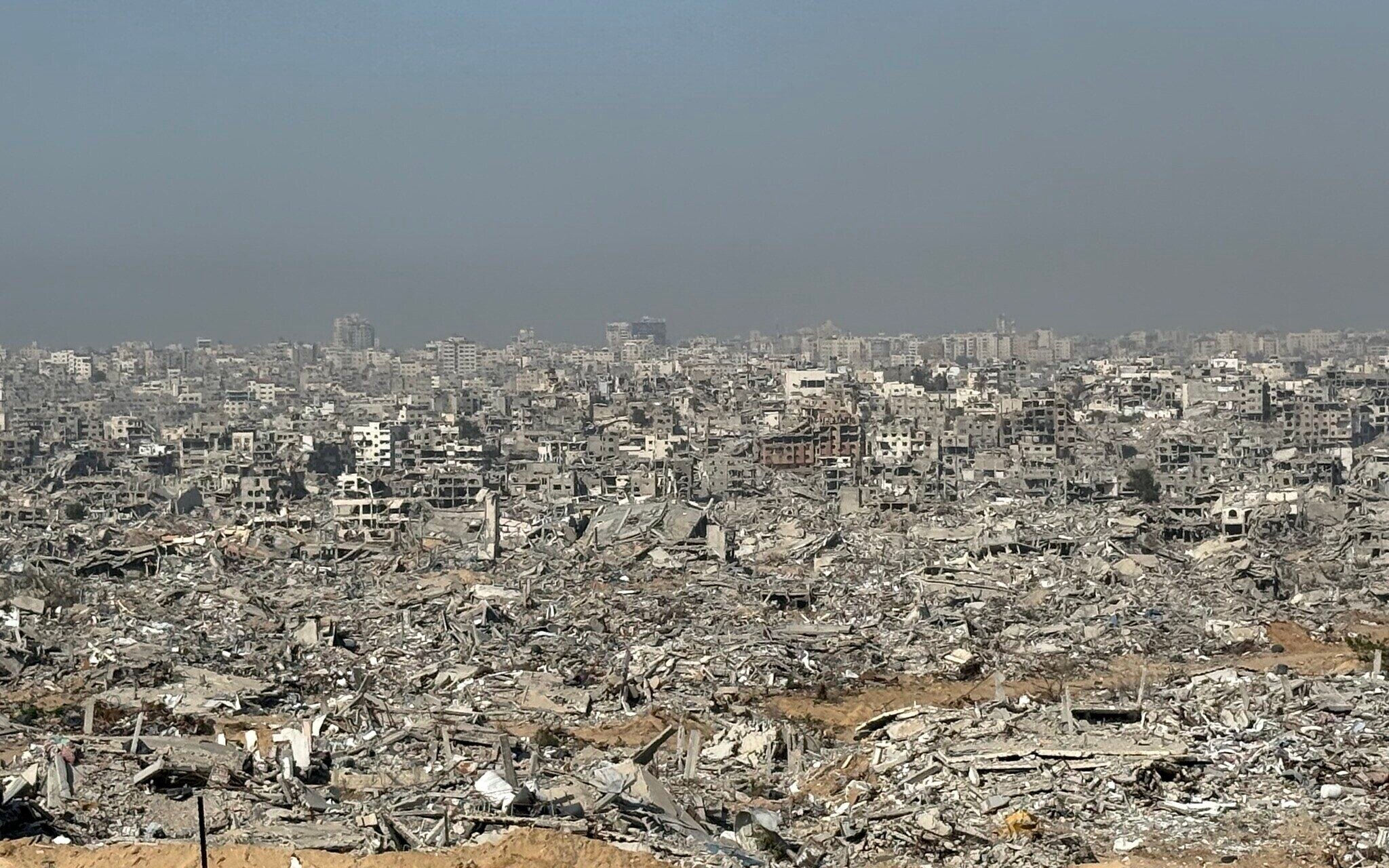 |
| The view of Gaza City seen from the suburb of Shejaiya, November 18, 2025. Nava Freiberg/The Times of Israel |
At
Nir Oz, sixty of its residents were killed that fateful day by the
marauding terrorists. The port city of Ashkelon is about 15 kilometres
away. Rockets from Gaza can reach the city in under 40 seconds. Shejaiya
once had a population of 90,000, "one of the main focal points of Hamas even before October 7, just because of the main proximity" to Israeli towns. Few of its former residents have returned to makeshift tents. "Civilians had a chance to get out of harm's way and remove themselves", observed Lt.-Col. Shoshani. The city, he pointed out, was the site of "some of the heaviest battles, one of the most heavy-fought areas [with] thousands of terrorists".
Hamas had "some sort of presence" all across the city, "in every home". Dozens of senior IDF soldiers lost their lives in the area. IDF soldiers had "dealt
a significant blow to Hamas Shejaiya Battalion, involved in attacking
communities close to the Gaza Strip on October 7. During the combat,
terrorists, some of whom were involved in the brutal massacre on October
7, were eliminated in coordinated operations", according to an IDF Telegram posting. "When you speak to commanders in this area, they’ll tell you that every
single house had a history of booby traps, of a tunnel underneath it or a
tunnel shaft, or Hamas fighting within it."
"Extensive tunnel" infrastructure "in hundreds of kilometres" are contained in Shejaiya. Their elimination causes the collapse of buildings above the tunnels. "New tunnels are still being found to this date",
Lt.-Col. Shoshani explained. In the near distance, the heart of Gaza
City has intact high-rises, homes and various buildings. As the
ceasefire took hold, the IDF wound up its campaign.
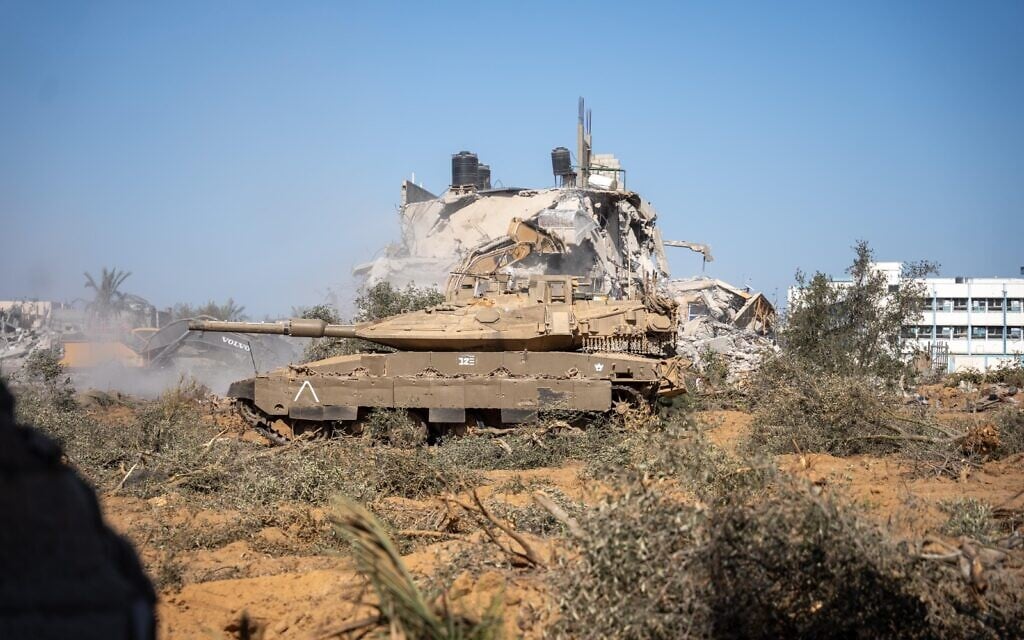 |
| IDF troops operate on the eastern side of the Yellow Line in southern Gaza's Khan Younis, in a handout photo issued on November 9, 2025. (Israel Defense Forces) |
Labels: Disarmament, Gaza Ceasefire, Hamas Infractions, Hostage Return, Israel Defense Forces, October 7/23
posted by Pieface | 9:17 PM


0 Comments:
Post a Comment
<< Home